Delhi Minister Parvesh Verma has blamed the previous AAP government for the design of the Barapullah Phase-III flyover, amid a growing traffic problem following the inauguration of the project.
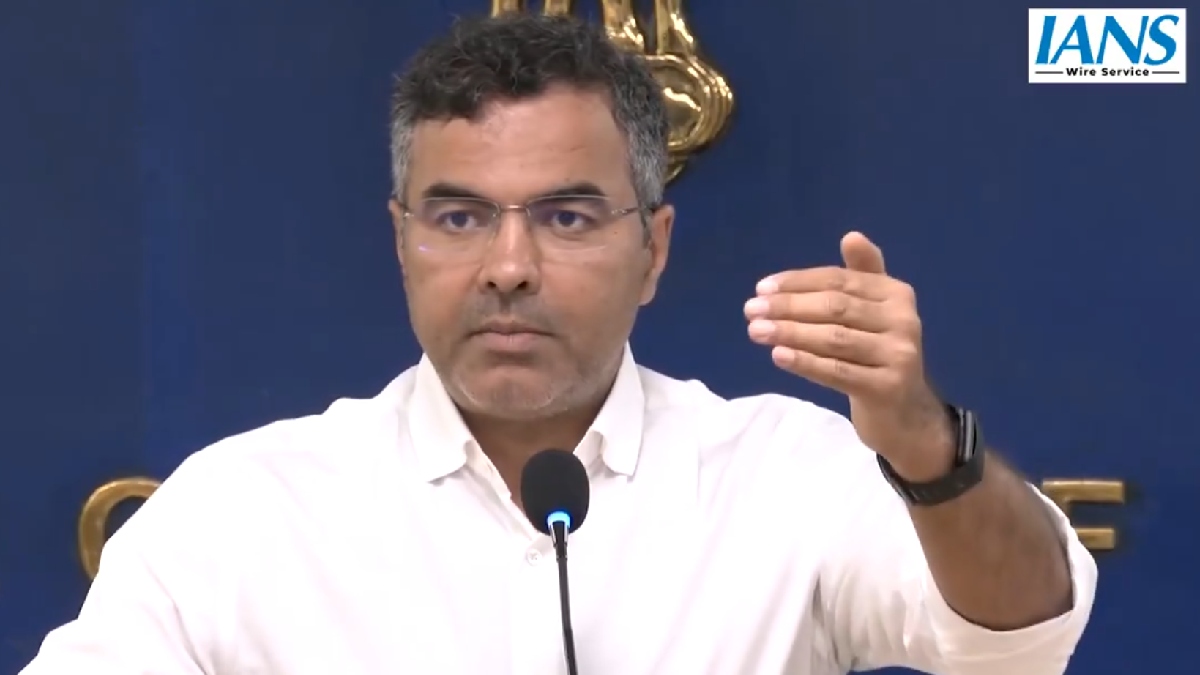
Verma said the design of the flyover had been approved in the past by the AAP government and asked why the structure was built with only two lanes on each side despite the road network.
At a press conference, Verma said that traffic around the Barapullah Phase-III flyover had become a concern soon after its inauguration. Opposition leaders, especially from AAP, had raised questions on the project's design and alleged that the current traffic problems were being used to target the government.
Verma said that the project had started in 2015 and argued that its design had already been approved in 2014-15 as the AAP government had come to power in Delhi. The project timeline and design decisions therefore need to be seen in the context of the decisions taken during the previous administration, he said.
“The Aam Aadmi Party is an expert at proving lies as truth,” Verma said while criticising Opposition claims of the flyover. He accused the AAP of repeatedly presenting its version of the issue as fact.
The minister also questioned the planning in the project, particularly the project’s capacity to handle future traffic growth. He said large infrastructure projects involving public money should be developed for future growth of traffic and population when considering the long-term growth over many decades.
Verma referred to the estimated cost of the project and questioned whether a structure built using around Rs 1,000 crore of public money should have been planned only according to traffic conditions at the time of its construction.
Verma Questions Flyover's Two-Lane Design
What Verma’s problem was with the width of the Barapullah Phase-III flyover. He questioned why the structure was designed with two lanes on each side when other major roads in the surrounding area have considerably greater capacity.
Verma pointed to the DND Flyway and Delhi-Meerut Expressway as examples of wider transport corridors in the region. He said the contrast raises questions about the planning decisions made for the Barapullah project.
“If we are seeing a traffic jam situation there today, was Kejriwal's vision so limited that on one side there is the DND Flyway, which is twice as wide, and on the other side is the Delhi-Meerut Expressway, whose width is also twice as much?” Verma said.
He also questioned why the flyover was designed with only two lanes on each side despite being constructed over the Yamuna, where he argued that space constraints were less significant than they might have been in other parts of Delhi.
Verma believes infrastructure planning should account for future requirements rather than merely look at current traffic volumes. Traffic studies typically examine current traffic levels and population levels and how those numbers will increase over the following decades, he said.
Traffic Congestion Sparks Political Row
The Barapullah Phase-III controversy is now emerging in light of traffic congestion in the area after the inauguration of the project. The congestion has triggered political debate and revived the debate on planning and execution of large infrastructure projects in Delhi.
The Opposition has been questioning the flyover’s design and the ease of traffic flow. The BJP government has tried to shift responsibility for the design decisions to the previous government.
Verma’s remarks put the Barapullah Phase-III dispute in the context of the political debate between the BJP and AAP over Delhi's infrastructure. By recalling when the project was conceptualised and designed, the minister said that the present government should not be held solely responsible for decisions taken during the previous administration.
The project also demonstrates the challenges of planning urban infrastructure in the city’s rapidly expanding population. Traffic patterns can change dramatically as new residential areas, commercial centres, expressways and transport corridors are established. A road structure that is quite adequate when first conceived may be more under pressure as the connectivity is expanded around it.
The minister’s comments are probably to remain focused on the current traffic situation and the decisions made during the project’s planning stage. While Verma has claimed that the design was done by the AAP government earlier in the project, the Opposition is focusing on the performance of infrastructure since opening.
As the political debate continues, it remains to be seen if any new initiative can be taken to improve traffic flow on the Barapullah Phase-III corridor in particular.
The episode has also raised questions about how big public infrastructure projects need to take into account long-term traffic projections in the future and urban mobility changes as well as changing urban mobility patterns.
For commuters, the immediate concern is the congestion around the newly opened corridor. But for the political parties, the Barapullah Phase-III dispute has become another point of contention over Delhi’s infrastructure planning, public expenditure and the legacy of the previous government.