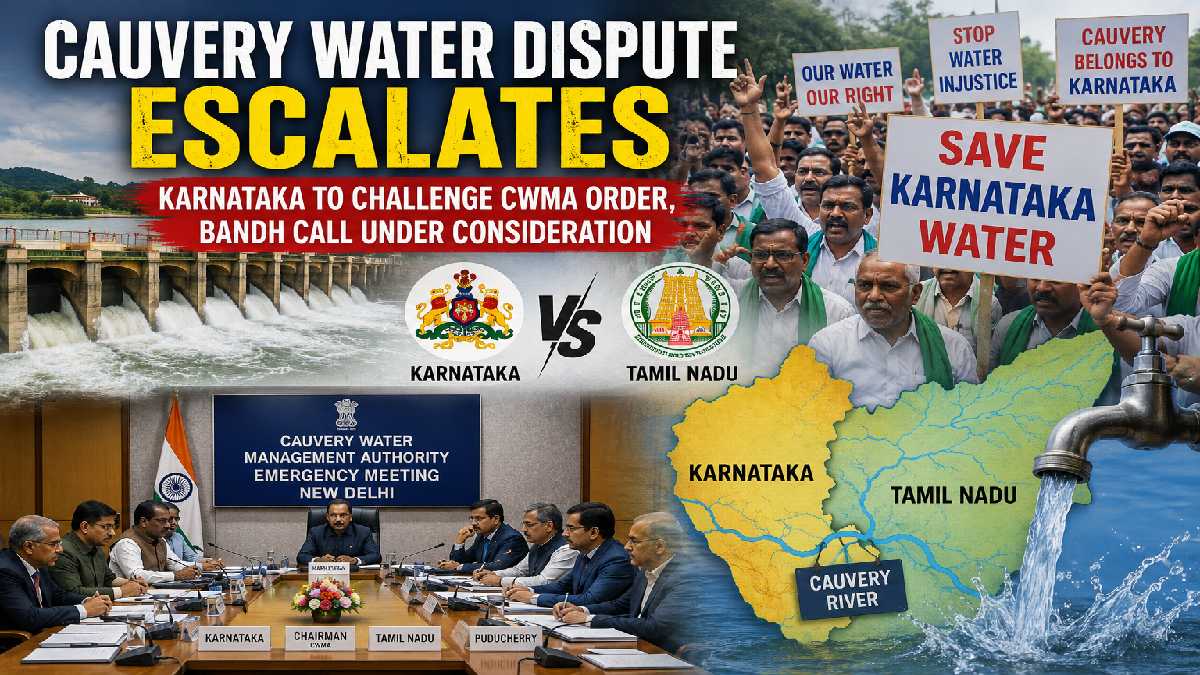
The Cauvery water-sharing conflict in Karnataka is causing Chief Minister D.K. Shivakumar to face one of the most difficult political and administrative problems of his tenure, as the state is dealing with extreme drought and farmers are becoming increasingly worried.
The current situation has presented a dilemma for the Chief Minister. If water is released to Tamil Nadu, farmers and pro-Kannada organisations can protest, and the state could be subject to a court order. The Cauvery dispute has once again come to light.
Echoes of the 2002-03 Cauvery Crisis
The situation has drawn comparisons with the tenure of the former Karnataka Chief Minister S.M. Krishna, who is regarded as D.K. Shivakumar's political mentor.
During the 2002–03 drought, Karnataka faced a similar crisis. Water scarcity conflicted with legal direction on the release of Cauvery water to Tamil Nadu. The dispute fueled protests across the state and in the Cauvery basin.
At that time, the Supreme Court directed Karnataka to release water to Tamil Nadu. S.M. Krishna expressed concern for the farmers in Karnataka and undertook a padayatra from Bengaluru to Mandya, highlighting the state's water shortage and the concerns of the farming community.

But after legal challenges and allegations of non-compliance with court orders, the Karnataka government eventually released water in accordance with judicial directions.
A Similar Test for D.K. Shivakumar
Today, D.K. Shivakumar is facing a similar situation.
With below-normal rainfall affecting reservoir storage in the Cauvery basin, concerns have grown over the availability of drinking water for Bengaluru and irrigation for farmers in southern Karnataka.
To farmers’ organisations, Karnataka should rather focus on drinking water and irrigation in the state should be prioritised for drinking water and irrigation needs in the state before releasing water downstream, they argue, but it also has to be done at the same time, which must be done within the framework of judicial orders and the Cauvery Water Management Authority's guidelines.
The Chief Minister has been put under huge political pressure to balance Karnataka’s interests with legal requirements.
Political and Legal Challenges
The Cauvery conflict has always been one of the most sensitive ones in Karnataka politics.
Any decision on water release is frequently criticized by one side or the other. Political parties, farmer organisations, and regional groups monitor every move made by the government.
Experts say that even though governments may have concerns about water availability, compliance with binding judicial and statutory directions could prove a constitutional responsibility. At the same time, state governments should report relevant hydrological data and drought conditions to the relevant authorities and seek assistance where needed.
Farmers Await Government's Decision
Farmers in the Cauvery basin remain worried about water availability for agriculture, especially during a drought-induced year in which many are facing anxiety about water availability, especially in the crop seasons. NGOs have asked the government to protect Karnataka’s drinking water requirements and keep standing crops.
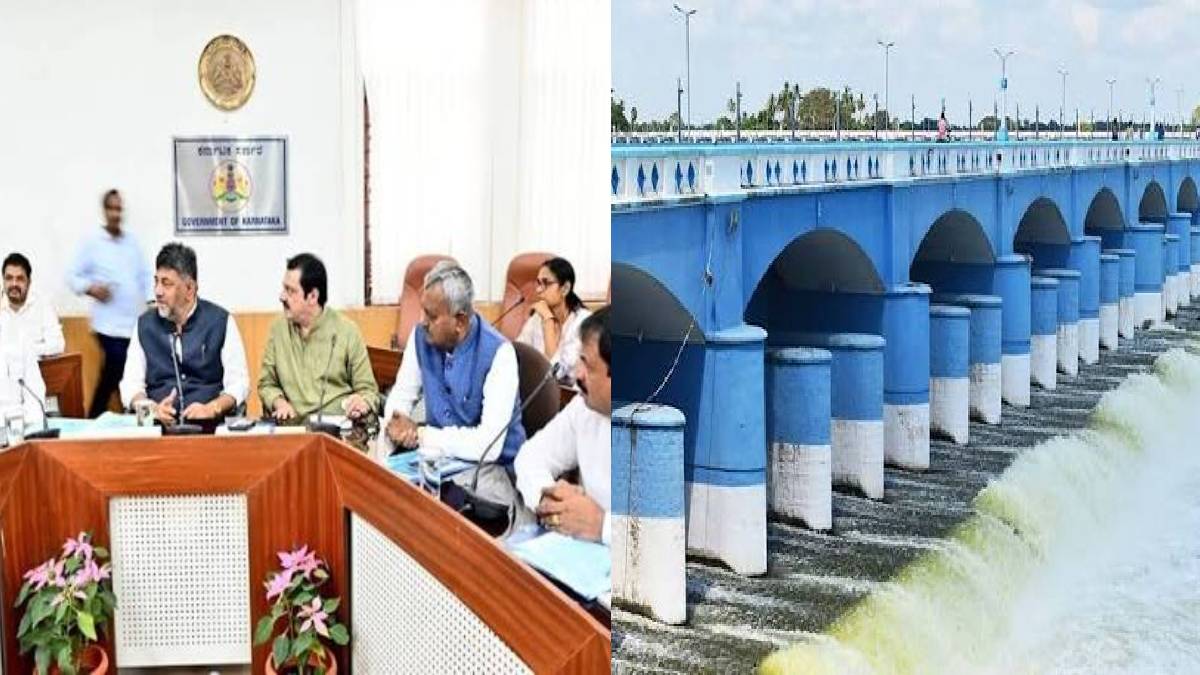
The government will continue discussions with legal counsel, water resource managers, and the Cauvery Water Management Authority to study reservoir storage and rainfall forecasts that will affect reservoir storage and rainfall forecasts, and will also make decisions on future actions.
A Defining Moment
The current Cauvery dispute could be a defining test for Chief Minister D.K. Shivakumar's leadership. Just like S.M. Krishna more than two decades ago, the government is now caught in the middle of legal obligations, federal relations, and the interests of Karnataka’s farmers and citizens.
As the water-sharing issue continues to evolve, all eyes remain on the Karnataka government and how it will manage one of the state’s most politically and emotionally charged issues.