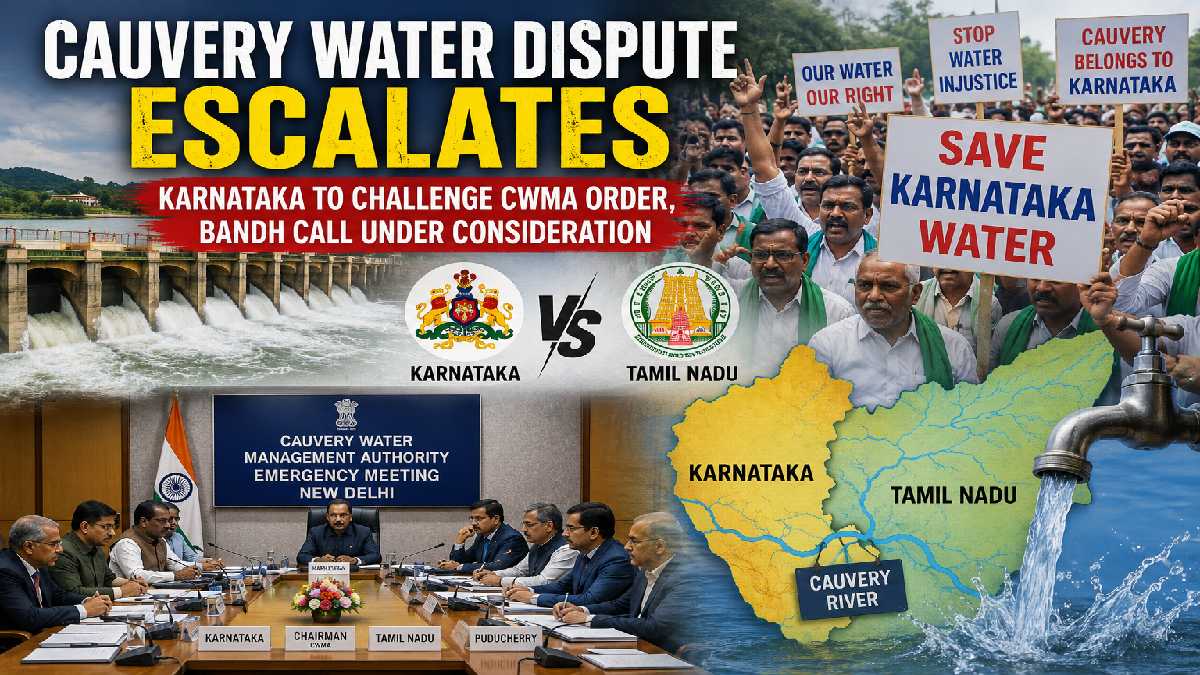
Karnataka Chief Minister has called an all-party meeting on Sunday to discuss the escalating Cauvery water dispute following the latest directions about the release of water to Tamil Nadu.
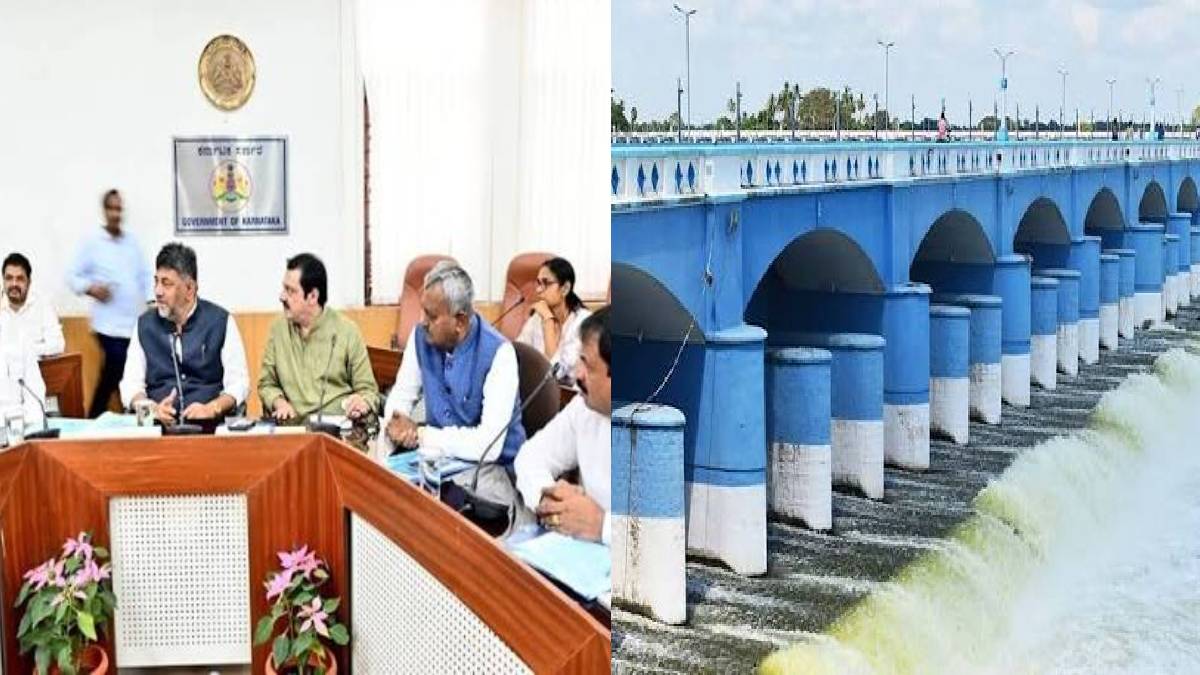
The meeting will be attended by leaders from all political strata of Karnataka, and as the state comes under pressure over sharing of Cauvery river waters, there will be a political reaction from the state.
The Cauvery dispute has been one of the most sensitive inter-state water-sharing issues in southern India. Karnataka and Tamil Nadu have had problems in the amount and timing of releases of water from the reservoir, especially in the rainy season and when reservoir levels are under pressure.
The latest directions on water release have again triggered concerns among farmers, political leaders and various organisations in Karnataka. Many have argued that the state should first protect the drinking-water and agricultural needs of its own people before releasing additional water downstream.
The proposed all-party meeting will be focused on legal, political and administrative options for Karnataka. Leaders may discuss the state’s water availability, reservoir levels, agricultural requirements and the impact of the latest directions on communities living in the Cauvery basin.

The meeting is also likely to examine the state government’s position before the relevant legal and regulatory authorities.
Karnataka government is seeking a consensus on the issue by appointing leaders from different political parties. The Cauvery conflict has traditionally brought political parties in the state together, despite differences on other issues.
A united position can enhance Karnataka’s representation in the institutions dealing with the dispute and show that issues around water availability are not limited to party politics.
The Cauvery river is an important source of water for agriculture, drinking water supply and economic activity in Karnataka and Tamil Nadu. The river feeds millions of people throughout the basin and is crucial for farmers' livelihoods.
However, sharing of water is very contentious during weak monsoon rains or diminished inflows into reservoirs.
Karnataka has frequently contended that water-release directions need to take into account the availability of water and the needs of farmers and residents of the state. Tamil Nadu has maintained that it is entitled to receive its allocated share under the existing water-sharing scheme.
There have been many legal and political disputes over the years over these competing claims.
The latest round of tension has resulted in protests and demonstrations in Karnataka. Farmers’ organisations and other groups also worry about the effects of water releases on irrigation and drinking-water availability.
The state government should take a strong stance and safeguard Karnataka’s interests, protesters have said in an appeal directed at the state government to take a strong stand so that Karnataka's interests can be defended.
The growing public pressure has put the all-party meeting at a higher level. Political leaders will discuss how the state can act and to make sure the constitutional and legal solutions are made.
The meeting may also consider the need for accurate and transparent data on rainfall, reservoir storage, inflows, and water needs. Water availability as well as release directions have to be determined, and the impacts of such information are important.
The Cauvery dispute has involved a variety of institutions, including the Cauvery Water Management Authority and the Cauvery Water Regulation Committee, with judicial intervention in the process as needed.
Any decision taken by the Karnataka government following the all-party meeting is likely to be examined in the context of the existing legal framework.
The Chief Minister's decision to convene leaders on party lines is of particular importance in this context, as this issue is of political importance. The government may ask for support for further legal action, talks, or other representations to the authorities in question.
Opposition parties may also bring up their concerns and proposals to solve the crisis.
While political differences are likely to arise during the discussions, the state government will insist on a common-sense solution that is in line with Karnataka’s stance on water sharing.
The dispute has also made long-term solutions to water management a concern. Better storage, better irrigation, watershed development and better use of water might relieve pressure during periods of low rainfall.
Climate change and changing rainfall patterns have thrown more uncertainty into water planning. States dependent on shared rivers may need better systems to share data and forecasting data and cooperative management.
For now, we’re focused on Sunday’s all-party meeting and the response that will result from that.
The outcome could determine Karnataka’s next political and legal steps as public protests continue and pressure grows over the release of Cauvery water to Tamil Nadu.
The meeting will also stress the need for unity among Karnataka’s political leaders in order to find solutions for farmers, residents and communities dependent on the Cauvery basin to be resolved.