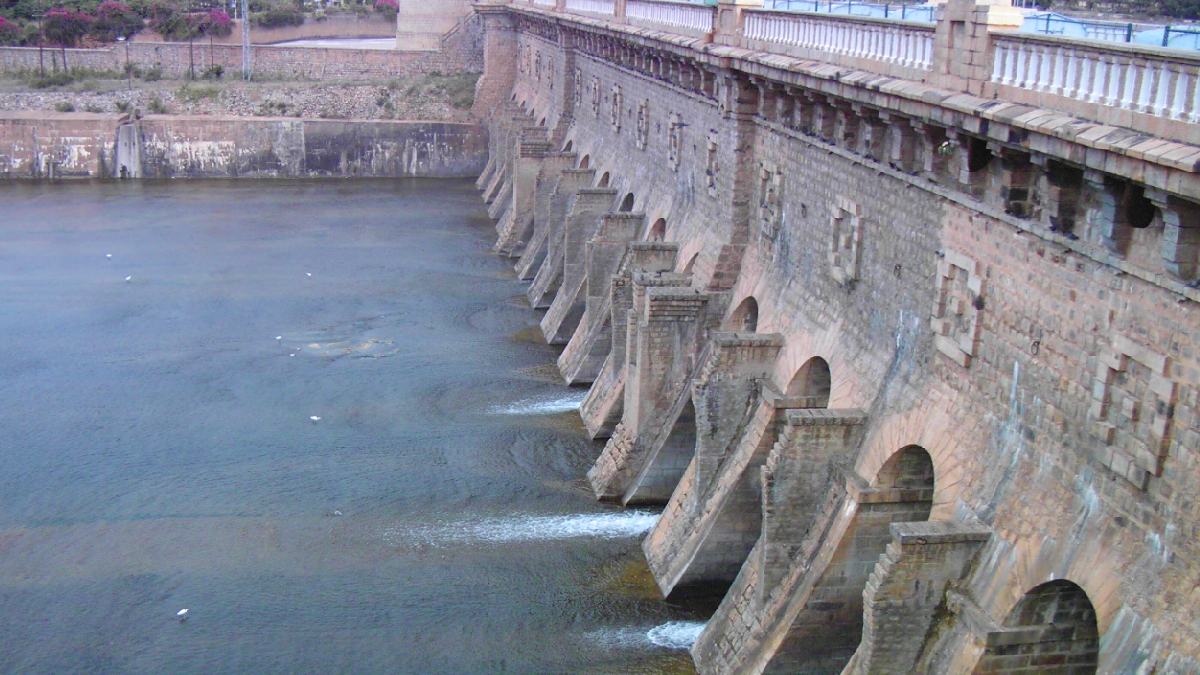
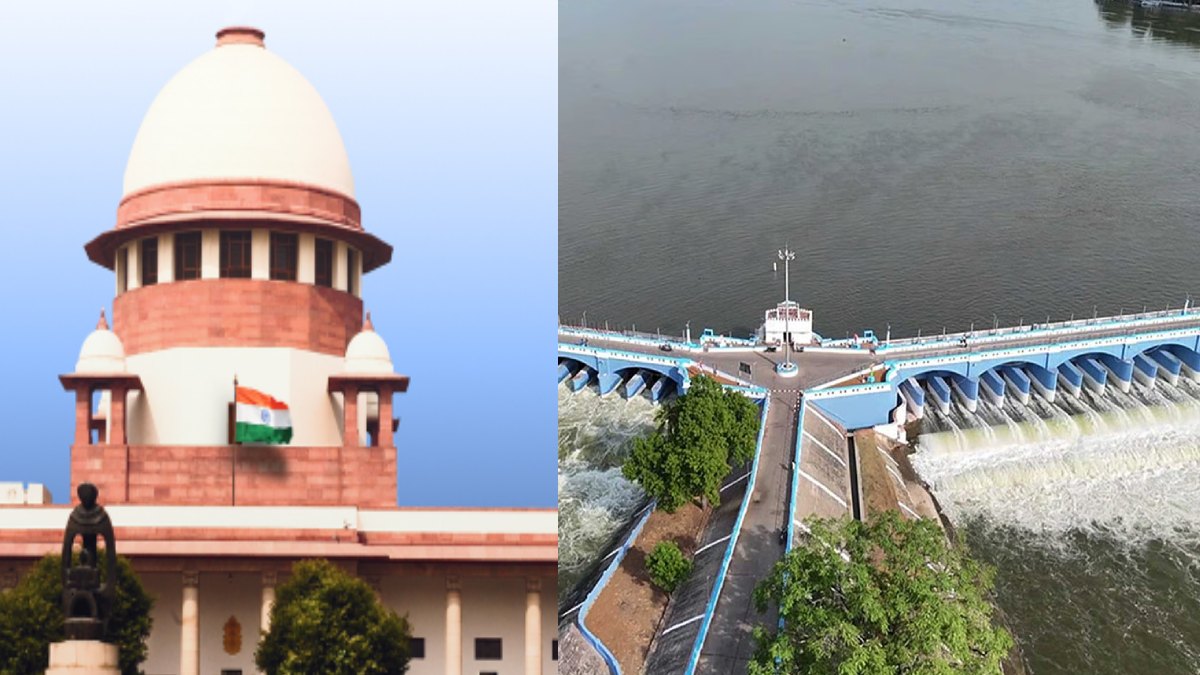
The Supreme Court will hear Tamil Nadu’s plea against Karnataka on August 13 on the Cauvery water-sharing dispute. Tamil Nadu has moved the court to compel Karnataka to follow the Cauvery Water Management Authority’s (CWMA) decision to release 3,500 cusecs of water every day for 15 days from the Kabini and Krishna Raja Sagara (KRS) reservoirs.
However, Chief Justice Surya Kant agreed to list the matter for hearing after senior advocate C.S. Vaidyanathan of Tamil Nadu put the matter before the court. The application has been filed amid increasing concerns over water availability for agriculture in Tamil Nadu’s Cauvery Delta region. A separate application by the DMK seeking similar directions to Karnataka is also expected to come up before the Supreme Court on the same day.
Tamil Nadu has said Karnataka has “wilfully” failed to comply with the CWMA’s July 30 decision. The authority had approved the recommendation of the Cauvery Water Regulation Committee (CWRC) that Karnataka release 3,500 cusecs of water per day for 15 days beginning on July 29. In Tamil Nadu, the required amount was to provide enough flows downstream at Billigundulu, the measurement point on the Cauvery.
The Tamil Nadu government has told the Supreme Court that the CWMA’s order would require Karnataka to release about 4.536 TMC of water over the 15-day period. This is based on a daily release of 3,500 cusecs through August 12. But Tamil Nadu has said that even strict compliance with this direction would not cover the larger shortfall in its water share.
The state has therefore asked for an additional release of 26.954 TMC, which is its pro-rata entitlement in terms of the distress-sharing formula from June 1 to August 12. Tamil Nadu has also asked the Supreme Court to direct Karnataka to make up for the accumulated deficit in water releases and ensure that the required amount actually reaches Billigundulu.
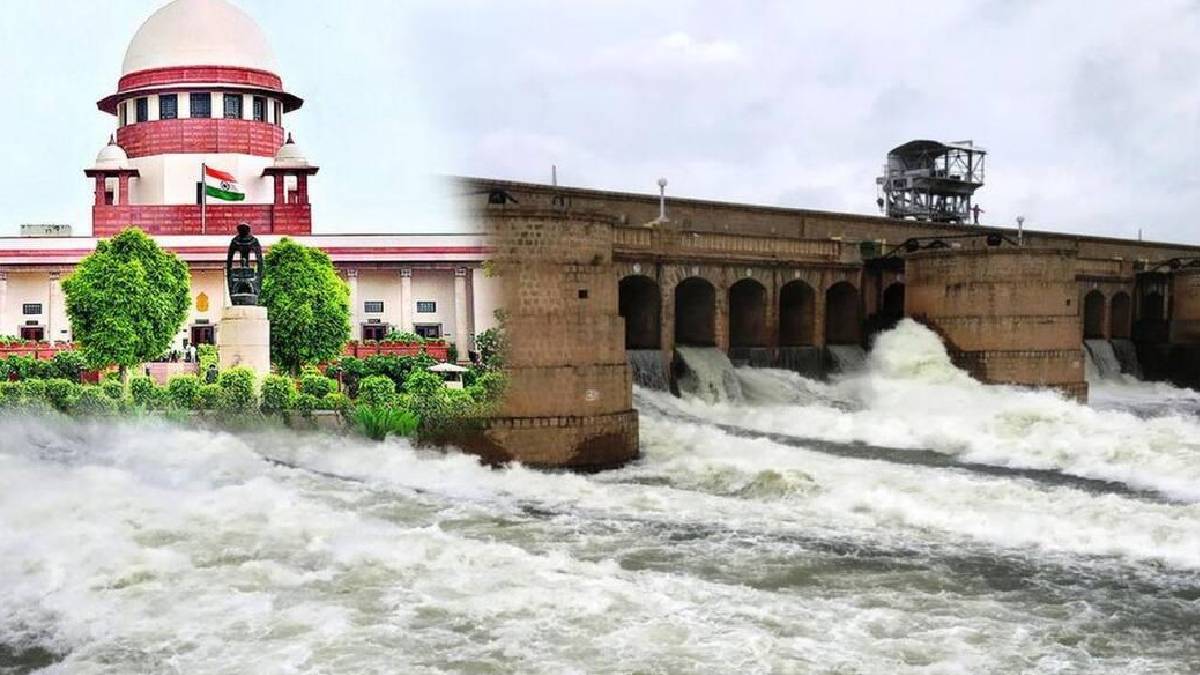
One of the key arguments by Tamil Nadu is the actual flows recorded at Billigundulu. The state-generated flow between July 29 and August 2 ranges from 158 cusecs to 530 cusecs, it said. Tamil Nadu has argued these numbers were considerably lower than the 3,500-cusecs daily release of the CWMA.
The state has described the alleged non-compliance as deliberate and has claimed that Karnataka has enough water resources to comply with the authority’s direction. Tamil Nadu has pointed to recent rainfall and improved storage levels in Karnataka’s major reservoirs to support its claim.
As of August 3, Karnataka's four main reservoirs had a combined gross storage of 77.537 TMC, the application says. The KRS reservoir had 23.078 TMC and Kabini 18.610 TMC. Harangi had 7.827 TMC and Hemavathy 28.022 TMC. These numbers have been cited by Tamil Nadu to counter arguments that Karnataka is facing severe water scarcity.
The state also wants more monitoring of Karnataka's reservoir levels. It wants the CWMA to monitor the reservoirs every 10 days and ensure that the stipulated monthly and daily releases are maintained at Billigundulu. Such monitoring, Tamil Nadu has claimed, would help to ensure that decisions taken by the water management authorities are carried out properly.
The dispute is particularly important because of the agricultural calendar in the Cauvery Delta. Farmers in the region depend heavily on Cauvery water for irrigation, especially for the Kuruvai paddy crop. Water availability during this period is also important for preparation and transplantation of Samba crops, the major agricultural season in the Delta.
The DMK has approached the Supreme Court separately and stressed the urgency of the situation for farmers. The party has maintained in its application that failure to ensure adequate flows of water at Billigundulu would put Kuruvai crops at risk and create problems for Samba farming.
The party has also pointed out that the 3,500-cusecs release ordered for 15 days would amount to only around 4.5 TMC. This is considerably lower than Tamil Nadu’s claimed entitlement under the distress-sharing arrangement.
Tamil Nadu has also highlighted Karnataka's annual release obligations under the current Cauvery allocation scheme. According to the state, Karnataka's release obligation at Billigundulu between June and January is 167.25 TMC. This includes 123.14 TMC between June and September and 44.11 TMC between October and January. Tamil Nadu has also mentioned an additional 10 TMC earmarked for environmental flows, taking the total annual requirement to 177.25 TMC.
If so, the August 13 hearing will be crucial to determine how the latest CWMA directive is implemented and whether more directions are required to ensure downstream water flows. The Supreme Court will have to examine Tamil Nadu’s allegations of non-compliance and Karnataka’s position on reservoir levels, rainfall, inflows and water availability.
The recent proceedings underscore the continuing challenge of the Cauvery dispute where water sharing is the main factor in agriculture and drinking water requirements in the two neighbouring states. As the Cauvery Delta’s cropping season begins, Tamil Nadu is looking for immediate judicial intervention to secure the flow of water it says is required by the allocation system.
The Supreme Court’s hearing on August 13 is expected to draw close attention from farmers, state authorities and political parties in Tamil Nadu as well as Karnataka to the dispute over sharing and releasing the Cauvery waters.