Chhattisgarh High Court has ruled that a daughter's marital status cannot by itself be used to deny her compassionate appointment when the applicable employment scheme does not distinguish between married and unmarried daughters.

The court directed Chhattisgarh Rajya Gramin Bank to make compassionate appointments to two married daughters of deceased employees. It said that rejecting their claims just because they were married is arbitrary, discriminatory and legally unsustainable.
The judgment was announced by Chief Justice Ramesh Sinha and Justice Ravindra Kumar Agrawal on July 30. The court was hearing separate appeals filed by Sheena David, 33, of Bilaspur, and Ankita Mishra, 32, of Raipur, after their applications for compassionate appointment were rejected.
Court Says Dependency, Not Marriage, Must Be The Test
The two women had sought compassionate appointments after their fathers died while still in service with Chhattisgarh Rajya Gramin Bank. Their claims were rejected because they were married.
The women challenged this decision in the High Court, arguing that the decision to exclude them because of their marital status was discrimination. The division bench accepted their appeals and overturned a single-bench order dated May 7 and the subsequent rulings dismissing their applications.
At the heart of the court’s reasoning was the wording of the bank’s compassionate appointment scheme. The scheme defines a dependent family member to be a “wholly dependent son” and a “wholly dependent daughter” but does not classify daughters as married or unmarried.
So the High Court ruled dependency, not marital status, should be the deciding factor. If marriage did not automatically preclude a son from being treated as a dependent family member, the court said, so should a daughter.
The court said the question is whether the applicant was actually dependent on the deceased employee. Marriage alone cannot be considered as proof that a daughter is no longer dependent on her parents.
The bench also found that denying compassionate appointment to married daughters and allowing married sons to receive the same benefit violates Articles 14 and 15 of the Constitution. Article 14 guarantees equality before the law, whereas Article 15 prohibits discrimination on specific grounds, including sex.
The court therefore directed the bank to issue compassionate appointment orders in favour of both women for suitable posts based on their educational qualifications. The appointments should be made within 90 days of the date the bank receives the court's order.
The ruling follows another recent Chhattisgarh High Court decision regarding a married daughter who was denied compassionate appointment by the Bank of Maharashtra. In that case, the court also ruled dependency is a fact and cannot be determined just by assuming that a married woman is financially dependent on her husband.
The latest judgment strengthens the view that marriage cannot automatically change a daughter’s eligibility where the governing scheme itself doesn’t create such an exclusion. The court’s reasoning is based on the applicant being in a unique situation rather than her marital status.
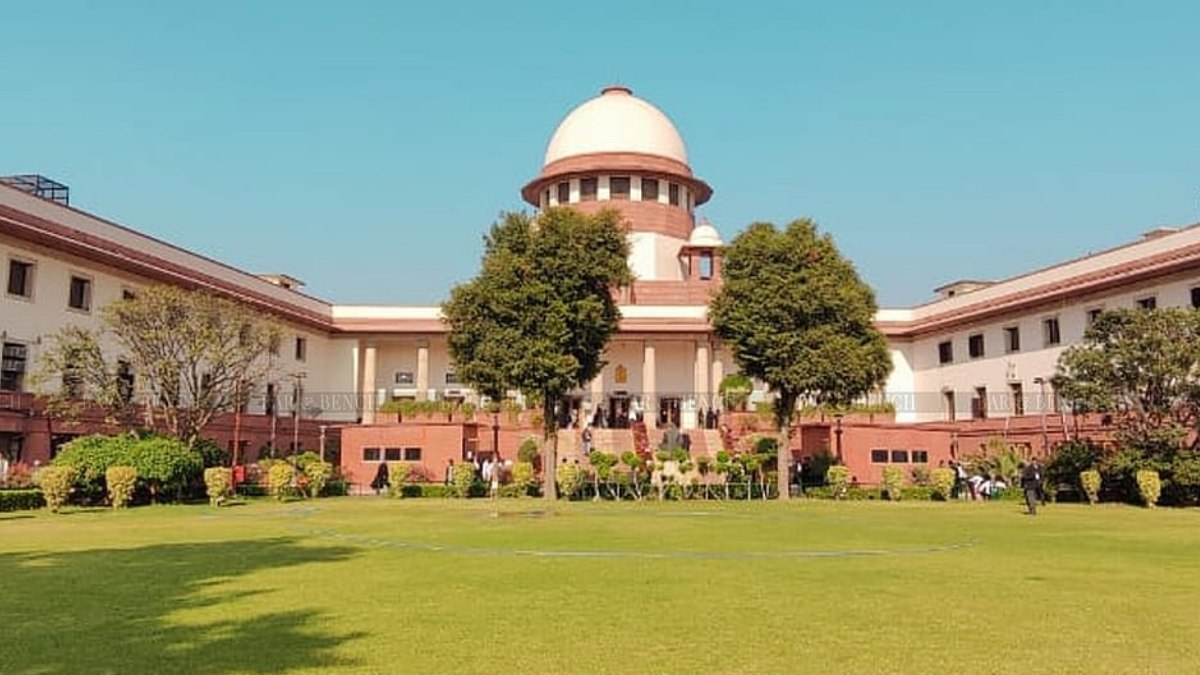
In fact, the ruling also comes shortly after the Supreme Court addressed a similar issue in another context, holding that excluding married daughters from a dependent quota based solely on marriage is rooted in gender stereotypes and can violate constitutional guarantees of equality.
For the two women who brought the appeals, the High Court’s decision means their applications must now be acted upon by the bank. Their marital status should not be considered to be a disqualification when they are being considered for appointment, the court specifically said.