A recent conversation between a worker of the Cockroach Janata Party (CJP) and a reporter has reignited a debate over the necessity of adhering to official procedures when visiting villages and other sensitive local areas. The conflict came after a reporter and a CJP worker spoke about whether the group had permission to enter a village.
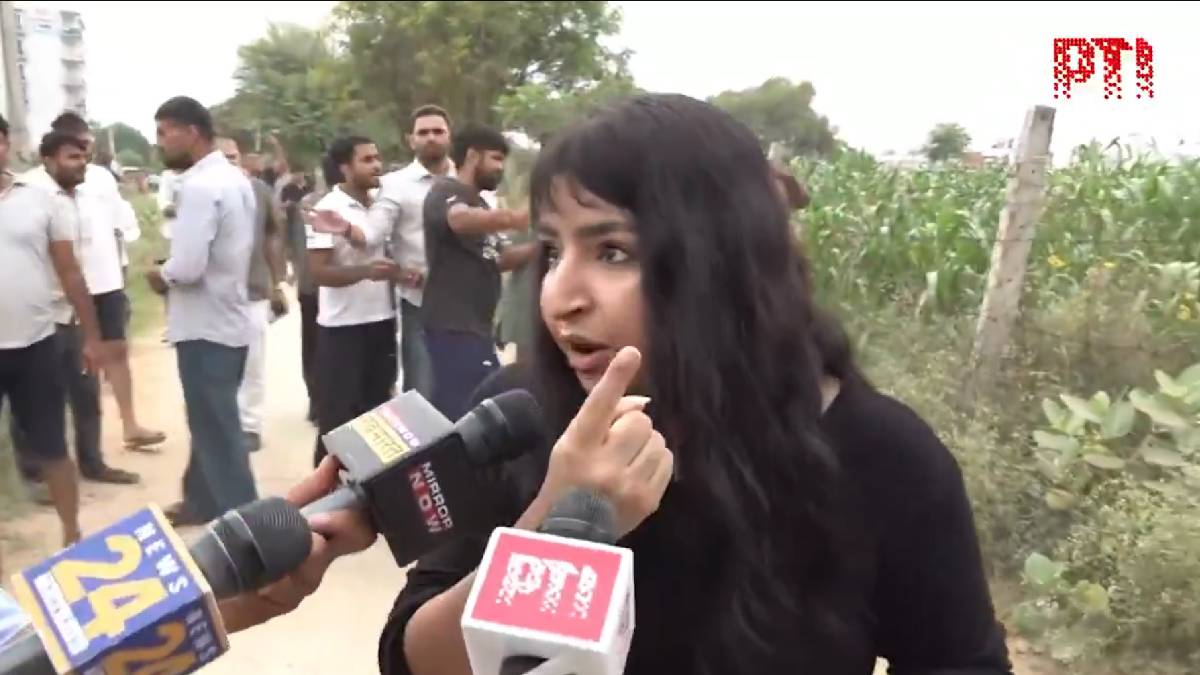
The CJP worker in the exchange said that villagers called CJP members “Pakistani” and that local residents did not allow them to enter the village. When the reporter asked whether the group had access to its own land and permission to visit it, the worker seemed confused about the question before saying that their leader had informed people via social media.
So this has since prompted criticism and questions about whether a social-media announcement can be considered official permission.
The reporter’s question “Did you take permission?” directly raised the question of whether the group had received authorization from the relevant local or administrative authorities. The worker’s response that the leader had informed people through social media has become a key point of discussion.
A social-media post can publicise an organisation's plans, schedule or intended visit. But depending on the circumstances and applicable local rules, simply announcing a visit online does not automatically constitute permission from government authorities, local administration, property owners or other legally responsible bodies.
So the distinction between information and authorization is important. An organisation can tell the public that a certain group of its members is going to visit a certain place, but it does not necessarily mean that the officials or residents have approved that visit.
The incident has also raised questions about how political or social organisations should approach visits to villages where there may already be opposition or tension. Residents may be concerned about the existence of an organisation, so organisers may need to coordinate with local authorities and follow established procedures to avoid confrontation and maintain public order.
At the same time, the allegations of the incident should be independently verified before any conclusions are drawn. It is important to establish whether CJP members actually tried to enter the village, whether formal permission was given, if an application for permission had been made, and what response was received from local authorities.
The reference to the CJP members being referred to as “Pakistani” by villagers has also become a topic of discussion. These types of allegations need not be taken as fact without independent verification. If residents did use the language, the circumstances and context would need to be taken into account as opposed to whether the group had obtained permission.
The bigger issue is due process. Political organisations, protest groups, social organisations and other public-facing bodies operate under the same legal and administrative framework as everyone else. Public visibility or social-media reach does not automatically create an exemption from applicable rules.
🚨 CJP WORKER : Villagers called CJP Pakistiani. Locals didn't allow us to even enter village.
— News Algebra (@NewsAlgebraIND) August 21, 2026
REPORTER : Did you take permission?
CJP WORKER : Kya What? 😳
REPORTER 🔥 : Where is permission?
CJP WORKER : Our leader informed on Social Media 🤯
=> Social media posts are NOT a… https://t.co/GAEOKQoGzS pic.twitter.com/lvrQ7Ssy4o
If it is necessary to allow event permission in a particular gathering, procession, public meeting or entry into a controlled place, then the organisers will be expected to comply with the relevant requirements. Like a rule in any organisation and as there is a rule in any organisation, rules should be applied proportionately and equally.
So the incident allows Rajasthan authorities to clarify the applicable rules and what actually happened. Rather than relying solely on social media claims or edited video clips, authorities could establish the facts, such as whether permission was sought, whether permission was granted or not, and if any rules were broken.
The controversy also sheds light on how social media is such an important part of political mobilisation. Now organisations can announce visits, rallies and campaigns to big crowds instantly. While that helps in communication, it shouldn’t give rise to confusion between an announcement and formal authorization.
The episode will also put CJP’s employees’ coordination of visits and public events under greater scrutiny from the public. For local authorities, it underscores the need to have clear lines of communication on permission requirements and public order laws.
Finally, the question is very simple: did you get permission before a visit? If the required permission was necessary and if there wasn’t any, then how would the law be applied? If there wasn’t the necessary permission, yes, to avoid misinformation and controversy, then yes.
The reported exchange has therefore become a larger debate than one between a reporter and a CJP worker. It has raised questions of administrative procedures, the public’s access to information in the public domain and political activism, and the limits of social media announcements. Whatever the final findings may be, any response must be based on fact and law, not on political prejudice or online claims.