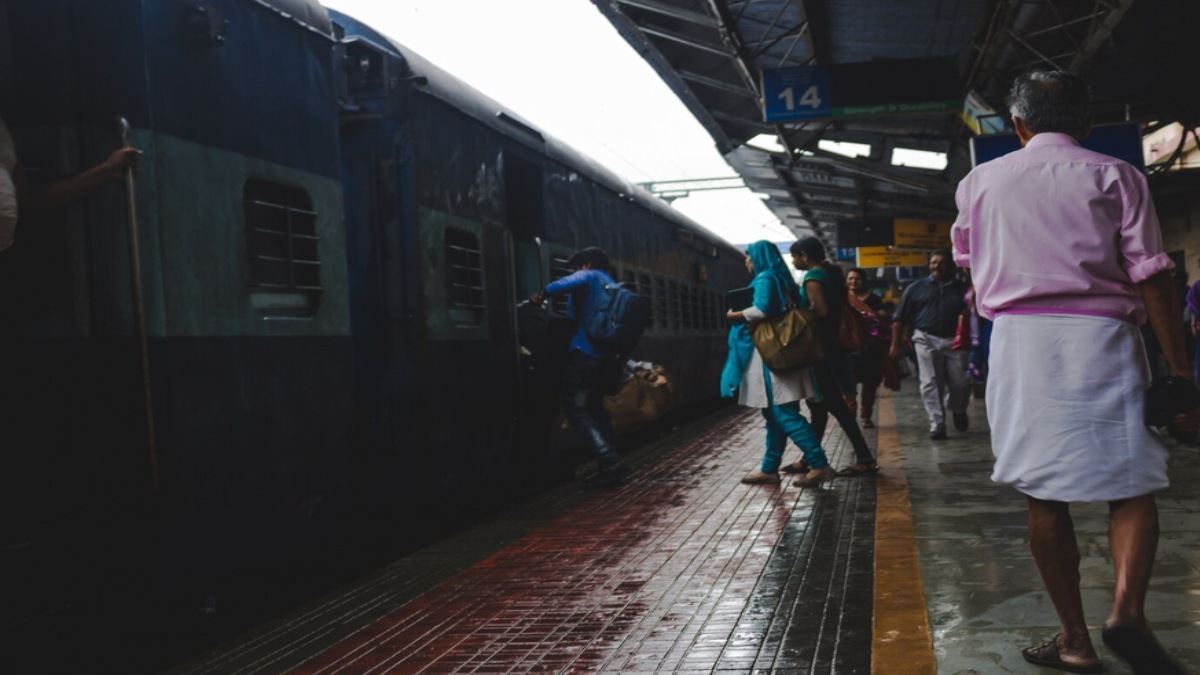
Puri police have beefed up security measures around the historic Shree Jagannath Temple by conducting Facial Recognition System (FRS)-based spot checks and special verification drives aimed at screening individuals and identifying potential suspects in and around the temple area.

The increased security exercise is part of efforts to enhance surveillance around one of Odisha’s most important religious and cultural landmarks. There are many devotees and visitors to the Shree Jagannath Temple in Puri all year round, and effective crowd management and security screening is a huge challenge for law enforcement officials.
Police now use facial recognition technology to identify people in the field of security to help detect people during spot-checking. The system is supposed to match captured photos to the databases on hand and identify those who might need to be added to the database and flag those people in need of further verification.
FRS-based checks are conducted along with police verification and surveillance. Police are conducting drives in places close to the temple, where large crowds of devotees often gather. All individuals identified for further scrutiny can be subject to verification procedures as part of the security exercise.
Technology is being used to assist security forces in identifying suspicious individuals and wanted people without manually identifying them. Facial recognition can help to deal with large numbers of visitors to the temple efficiently during peak periods when numbers of people around the temple are high.
Puri police conducts Facial Recognition System(FRS)-based spot-checking and special verification drives around Shree Jagannath Temple to screen individuals and spot suspects. [Odisha Reporter] pic.twitter.com/FioVtJ0xMK
— Manas Muduli (@manas_muduli) August 28, 2026
The security of the Shree Jagannath Temple has been a sensitive issue since it is of religious importance and as many as many lakhs of people visit Puri to pray there. The temple is one of India’s most cherished Hindu pilgrimage spots and is at the heart of the city’s religious and cultural identity.
Police security arrangements throughout the temple tend to be multiple layers, with personnel being deployed, surveillance cameras and access monitoring, crowd control, and even monitoring of suspicious activities. Facial Recognition System technology adds to these existing security arrangements.
Police teams will also be concerned about people whose activities or identities may need to be further investigated during the special verification drives. Not just responding to an event, but also looking for security threats early on.
Technology policing has become more and more common in large cities and large public places, transport hubs, religious places, and large gatherings. Facial recognition systems are being explored by law enforcement agencies in different parts of India as a tool to identify people of interest to help in public safety.
However, facial recognition technology is also about responsible use, identification, and precautions. A technology-based alert should be seen as a starting point rather than proof of wrongdoing. It is still necessary to have human verification because facial recognition systems can provide wrong matches.
For devotees visiting Puri, the increased security measures might put more security checks on the temple premises and outside of it in case they are found to be in danger. Police will be checking and screening the visitors and the pilgrims with police officers at all times and will be able to check them for anything.
Police agencies in an increasingly crowded public place have to deal with this; the security drive is one of the few that can be done in physical deployment with technology. The ability to quickly identify possible security threats would be particularly useful for a major pilgrimage center like Puri, where thousands of people can gather in a relatively concentrated area.
The Shree Jagannath Temple is still one of India’s largest religious destinations and security of the shrine is a continuing responsibility of the Odisha administration and police. The recent FRS-based spot-checking exercise shows how technology is now a huge part of that effort.
Police will be closely monitoring the situation and taking action in case of suspicious persons or activities when the verification drives are going on.