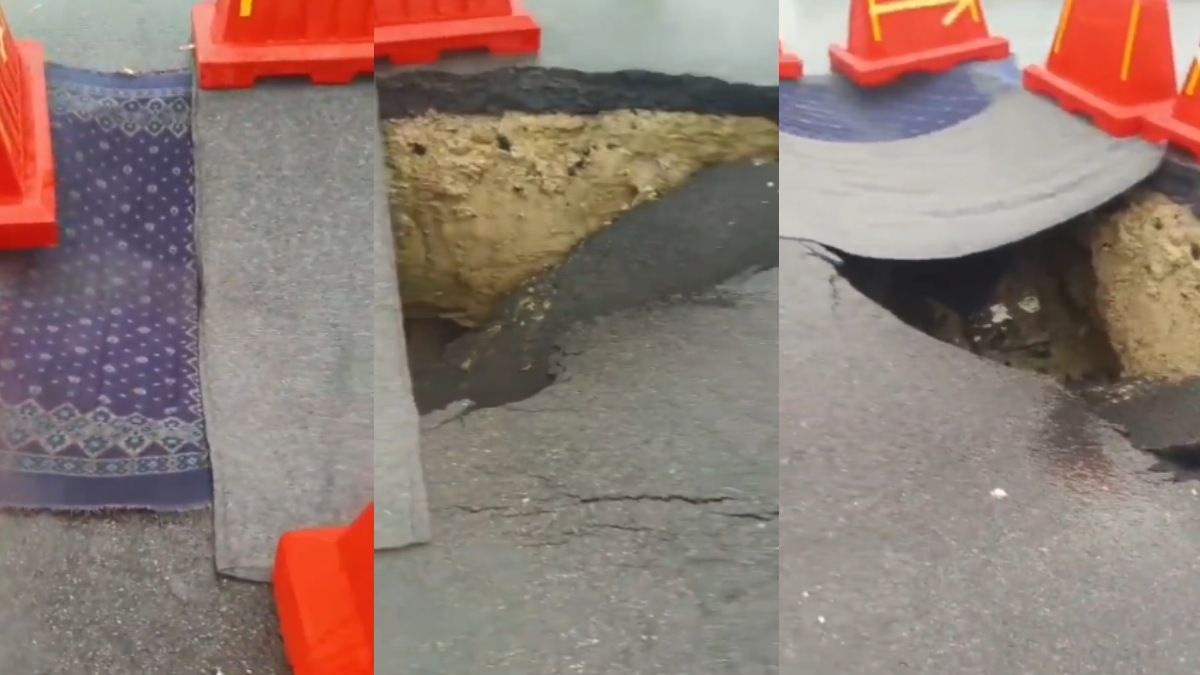
One of the state’s major infrastructure projects has been damaged after a cave-in in Ganga Expressway in Unnao, Uttar Pradesh, was reported. According to social media images, the damaged part of the road was carpeted and that a carpet was put over or placed on it to cover the damage.
The Ganga Expressway is one of the most ambitious road infrastructure projects in Uttar Pradesh and is estimated to cost at least ₹36,230 crore. The expressway is to alleviate the traffic congestion in the state and connect big areas and cut down travel time between eastern and western parts of Uttar Pradesh. The extent of investment is very high so the damage soon after inauguration has attracted immense public and political attention.
According to media claims about the Unnao incident, the road suffered a severe depression or cave-in, which was worrying for motorists and local people. Images of the area covered by a carpet were also made public and it has fuelled controversy. Why would a temporary cover be used instead of immediate security of the area, investigation of the causes and corrective work?
The reported incident is particularly pertinent since expressway construction is not easy: there are several layers of engineering involved in the construction process, including the subgrade, drainage systems, embankments, pavement layers and surface treatment. A sudden cave-in can be a result of water accumulation and drainage failure and soil settlement, erosion, construction defects or other structural problems. The real reason should be determined professionally rather than solely from photographs or videos floating around the internet.
The Ganga Expressway has been linked with major infrastructure companies like Adani Enterprises and IRB Infrastructure in its development and construction packages. A confirmed structural or pavement-related defect would therefore raise questions about construction quality, supervision, maintenance responsibilities and mechanisms used to monitor the road after completion.
The expressway was inaugurated by Prime Minister Narendra Modi on April 29, 2026, according to the allegations. Since its inauguration there have been a number of allegations of damage and there have been discussions about the durability of the project and quality of construction. But the individual reports of road damage should be verified independently and the true sources of the damage should be established via an official technical investigation.
For drivers it is safety first and foremost. A small depression in a very fast expressway can be dangerous if it is not clearly marked or properly barricaded, and if not properly secured. Drivers travelling very fast may not have much time to react to sudden changes in the road surface. The expressway managers must be able to secure damaged sections on the expressway immediately and to give motorists the necessary warnings.
The reported use of a carpet has become the most striking aspect of the controversy because it creates an impression of a cosmetic response to a potentially serious infrastructure problem. If the road surface was actually covered in such a manner, authorities should clarify who ordered the action, why it was considered appropriate and whether the damaged area had already been examined in a technical inspection.
Public concern will be answered if there is transparency. The cave-in location should be disclosed, the extent of damage, the probable cause and the steps taken to fix it. If the damage is caused by construction or engineering deficiencies, responsibility should be established on the contractual and regulatory level.
It also raises broader questions about India’s rapidly expanding expressway network. Large sums of public and private investment are poured into highways to improve connectivity and stimulate economic activity. But long-term success of such projects will be dependent not only on the completion of them in a fast-moving manner but also on the high quality of construction, drainage, quality control and post-construction monitoring.
Water conditions, the environment can affect road infrastructure and road infrastructure to be particularly vulnerable to environmental factors. Heavy rainfall, groundwater movement and poor drainage can affect embankments and pavement structures and embankments. In unstable or poorly compacted soil and in low-density areas of unstable or poorly compacted soil settlement also creates depressions over time. These are typically mitigated through engineering assessment, construction techniques, and maintenance work (e.g., the development of a clear and reliable construction plan of good quality and inspections).
The Unnao incident is therefore worth a technical analysis as opposed to a political debate. If the cave-in is confirmed, investigators need to determine whether it was caused by natural conditions, maintenance issues, construction problems or another factor. Such an assessment would determine if the problem is a small one or is part of a wider problem.
The controversy also highlights the importance of independent quality audits for major infrastructure projects. Regular inspections can identify early signs of pavement deterioration, drainage problems and structural weaknesses before they become serious hazards. Preventive maintenance is especially important for a high-speed expressway because even minor defects can create significant risks.
For residents and commuters, the expectation is straightforward: a major expressway built with a huge investment should provide safe and dependable travel. Temporary measures may sometimes be necessary during emergency repairs, but they should not substitute for proper investigation and permanent rectification.
A carpet was used to "hide" the massive cave-in on the Ganga Expressway in Unnao. This was built at a cost of ₹36,230 crores. Built by Adani Enterprises and IRB infrastructure. The expressway has sustained multiple damages since its inauguration bhai Prime Minister Narendra Modi… pic.twitter.com/5Oa66QrPK5
— Piyush Rai (@Benarasiyaa) September 1, 2026
While questions continue to swirl about the cave-in in Unnao, the Uttar Pradesh government, highway authorities, contractors and maintenance agencies are likely to continue to be at the centre of focus. But whether damage is quickly investigated and repaired and how people are able to understand why it has happened will be the key question for the public.
The Ganga Expressway is a major investment in Uttar Pradesh’s transportation infrastructure. So the reports of damage after the inauguration should be very relevant and authorities should take the lead in reporting on damage and be transparent to the public, and take action when necessary. The safety of motorists and the durability of the project should be the first priority.