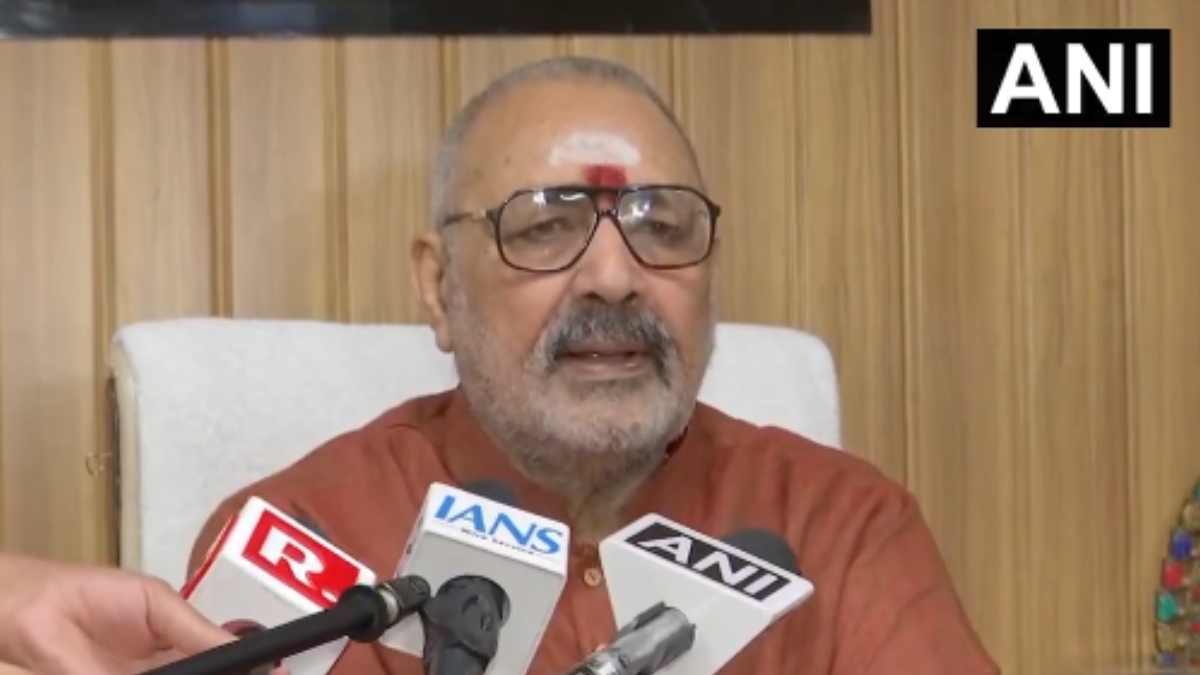
Union Minister Giriraj Singh has attacked Congress leader and Leader of Opposition in Lok Sabha Rahul Gandhi for not having parliamentary decorum and his approach to political debates. Speaking in Delhi, Singh compared Gandhi's political criticism to the record of Union Home Minister Amit Shah and also raised issues like Article 370, Article 35A, Citizenship Amendment Act and NEET.
Singh spoke as the ruling Bharatiya Janata Party and Congress were at loggerheads over various issues under discussion in Parliament and outside it. The Union minister used strong language while he criticized Gandhi’s public statements and attacked Gandhi for dealing with issues of politics in a confrontational manner. Singh said the Leader of Opposition is central to the constitution and parliament and has a constitutional role and is required to participate in debates while adhering to the conventions of parliamentary procedure.
The minister also took exception to Gandhi’s use of the phrase “challenge karta hoon” during political exchanges. He was critical of an aggressive tone that he called confrontational and said parliamentary politics takes discipline and decorum. The comments also demonstrate the increasingly heated exchanges between BJP and Congress - both sides often accuse each other of undermining parliamentary standards.
Singh also compared Gandhi's political record to that of Amit Shah. He cited some major decisions made by the Union Home Ministry on abolishing Article 370 and Article 35A and the Citizenship Amendment Act as some of the major reforms. These actions are evidence that BJP Government has been able to take major policy decisions in spite of opposition, he said.
The Minister’s comments on Article 370 and Article 35A relate to the move by the Centre to remove Jammu and Kashmir’s special constitutional status and reorganise the former state into two Union Territories in 2019. Modi government’s decision is one of the most important political and constitutional decisions of our time and it is still a point of political debate between the BJP and the opposition parties.
Singh also mentioned the Citizenship Amendment Act as another major policy to be adopted by the BJP government, another major government’s policy that has been put into place by the BJP.
The government's Citizenship Amendment Act has been politically controversial in India too: the government has held the Citizenship Amendment Act as a step taken to provide citizenship opportunities for persecuted religious minorities from neighbouring countries to be granted citizenship as it is a step to the nation’s persecution of persecuted religious minority and opposition parties and other opposition groups have voiced reservations about the legislation as well as broader implications for the country’s society.
In his criticism of Rahul Gandhi, Singh also accused the Congress leader of playing an “urban naxal” role. Such terms are commonly used in the political rhetoric of BJP leaders against opponents and activists who they believe support or promote ideological positions of the Left-wing extremist movement. Congress leaders and other opposition figures have often rejected such characterisations as politically motivated.
The Union minister also brought the NEET issue into his speech. The National Eligibility cum Entrance Test has been a big political issue, in particular, the National Eligibility cum Entrance Test has become a big political debate, especially about abuse of examination processes, paper leaks and irregularities. Opposition parties have repeatedly called for accountability and reforms and the government has defended and said action is being taken against wrongdoing.
Singh said that a wider parliamentary discussion would include issues outside NEET and concerns in different states. Punjab, Karnataka, Himachal Pradesh and Jharkhand would be among those, and different political and administrative matters could be raised during debates.
These remarks also reflect the BJP’s much larger political agenda to highlight governance and policy achievements in response to opposition criticism. Singh presented Amit Shah as a leader whose political career is linked to major policy decisions and administrative actions.
At the same time, Congress leaders have continued to challenge the BJP government on a number of issues including unemployment, examination irregularities, federal concerns, economic policy and functioning of democratic institutions. Rahul Gandhi as Leader of Opposition in Lok Sabha has often used parliamentary, public platforms to question government policies and demand answers from ministers.
The role of Leader of Opposition is of great importance in India’s parliamentary system. It is not only to criticize the government but also to be an alternative political voice in parliament and to take part in parliament debates on legislation, national policy and public concerns. There are many times when the office becomes the site of a political fight between the ruling party and opposition.
Singh’s criticism of Congress President Mallikarjun Kharge was also part of his broader attack on the opposition leadership. He accused the veteran Congress leader of excessively supporting Rahul Gandhi. Congress has always defended its leadership structure and argued that its leaders are working collectively to hold the government accountable.
The exchange shows how political discourse in India is increasingly aggressive, especially in parliamentary debates. Statements by senior leaders easily become political flashpoints and both supporters and opponents clash on the substance and tone of the remarks.
The controversy also illustrates how major policy decisions made by the BJP government still affect political debates years after their implementation. Article 370, the Citizenship Amendment Act and national security are at the heart of BJP’s political messaging, and Congress and other opposition parties constantly assess the government’s actions.
For the BJP, such leaders as Amit Shah are frequently depicted as examples of decisive governance and policy implementation. For the opposition, the same policies remain in the political and constitutional discourse. This divide means that issues such as Jammu and Kashmir’s constitutional status and citizenship policy stay in the political discussion.
Rahul Gandhi’s position as Leader of Opposition also means that clashes with senior government ministers are likely to continue to be a part of parliamentary politics. The opposition will have to be able to raise questions but also present alternative policy positions and maintain parliamentary engagement.
So Singh’s recent comments are a part of a much bigger political battle between the BJP and Congress. His remarks on Gandhi, praise for Amit Shah and reference to NEET and other state-level issues illustrate the competing narratives being presented by the ruling party and opposition.
#WATCH | Delhi: Union Minister Giriraj Singh says, "Rahul Gandhi is the name of a man who is like an unruly child in a village. Look at his expressions and words. What one of our MPs said is right. He is the LoP, he says, 'challenge karta hoon.' What challenge are you posing? A… pic.twitter.com/KcXjwVCuyy
— ANI (@ANI) August 13, 2026
With parliamentary debates going on now, both sides will be drawing on each other’s arguments over governance and public policy and political accountability to keep going.
The BJP will be pointing to its major policy decisions and administrative record to keep on highlighting and the Congress will continue to press the government on issues it regards as more significant and needs more scrutiny. The latest debate shows that parliamentary debate is still essential in Indian democracy.
Political disagreements are inevitable but how elected representatives present their arguments is still central to public debate. Singh’s comments have added more fuel to the BJP-Congress political fire and Rahul Gandhi’s position as Leader of Opposition is still at the centre of the debate.