Union Education Minister Pralhad Joshi has reviewed the steps being taken by the National Testing Agency (NTA) to strengthen and reform its examination system following recent concerns about the conduct and security of examinations.
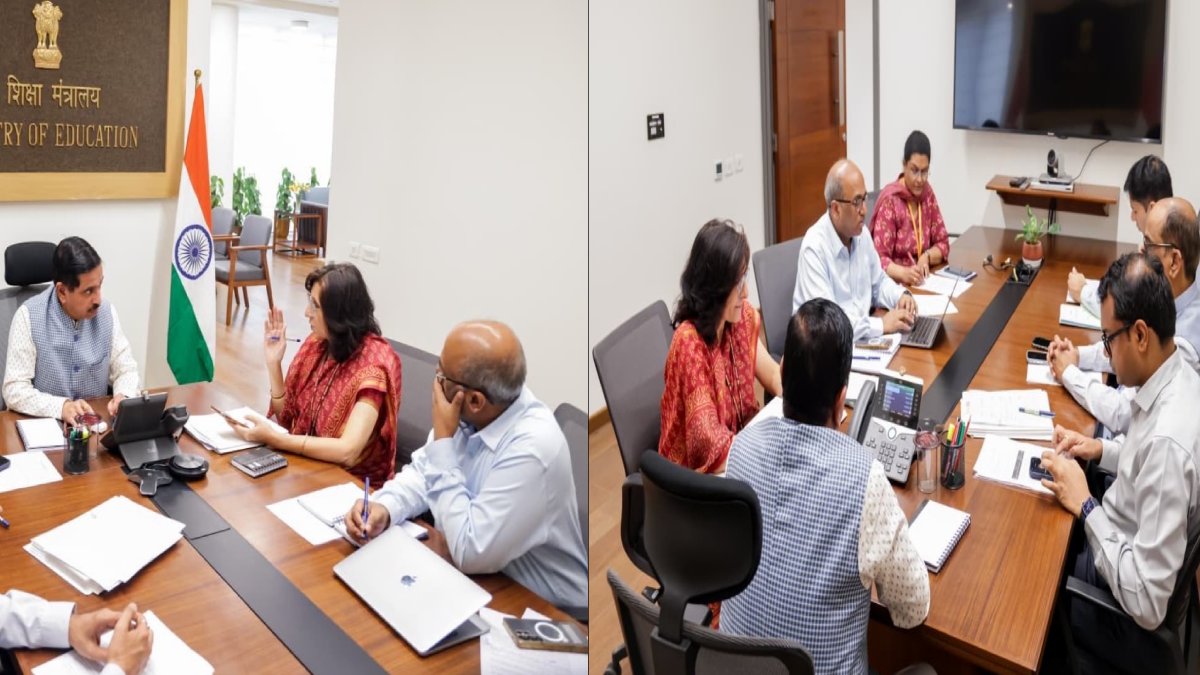
During the meeting with the Secretary of the Department of Higher Education, NTA Director General and other senior officials, the Minister was briefed on measures already taken by the testing agency and the wider reforms being planned to improve the examination process.
The meeting was aimed at strengthening the entire examination system, security and ensuring that established protocols are followed rigorously. The review is being conducted at a time when examination agencies are under increasing pressure to conduct competitive and entrance examinations in a transparent, secure and reliable manner. The NTA conducts a wide range of important exams for students across the country, and in this regard the integrity of its systems is of great importance to millions of candidates.
Since the NTA was established in 2000, it has already been downsized (more than 50 people have been removed from the organisation at this time). And that shows that the body is trying to bring accountability in its operations and a more professional examination ecosystem together. Staffing has changed, but it is also the right time to hire experts in areas of focus for modern examinations.
The NTA has also advertised 10 new professional leadership positions as part of its restructuring programme. These include Chief Technology Officer, Chief Finance Officer, Chief Information Security Officer and senior positions related to test security, research and development, psychometrics and other specialised functions. The onboarding of these positions is reportedly ongoing.

The creation of specialised leadership roles could transform the way the NTA handles examinations. Modern computer-based and hybrid examination systems require expertise beyond administration. Cybersecurity, data protection, technology infrastructure, financial management, question-paper development and psychological assessment are all components of a secure and effective examination system.
The NTA is also bringing domain experts from the private sector into specialist industry areas. In cybersecurity, psychometrics, question-paper design, and other technical areas, officials told the Minister, experts are being brought in. Specialised industry experience and expertise of specialist professionals would help the agency strengthen areas where technical expertise is needed.
Cybersecurity is now one of the most important areas for examination management. As more examinations rely on digital infrastructure, safeguarding examination data, candidate information and question papers is a crucial part of the job. Any weakness in the digital ecosystem can damage an examination. So strengthening the NTA's cybersecurity capabilities is likely to be part of the larger reform process.
During the meeting, Minister Pralhad Joshi told officials to adhere to the established examination protocol. “A standard procedure should be followed in all the steps of the examination from question-paper preparation and storage to transportation, distribution, candidate verification and examination centre management,” he said.
The Minister has also instructed the agency to complete a complete redesign of its Confidential Operations, or CONOPS, architecture. The proposed improvements are expected to cover some sensitive areas of examination operations (e.g., secluded rooms, air-gapped systems and strict device-deposit procedures). Such measures are meant to minimize the possibility of unauthorised access and data leakage or interference with confidential examination material.
Air-gapped systems, for example, can help in providing another layer of security in the protection of information by isolating sensitive systems from external networks. Control of access to secluded areas and security of electronic devices, as well as tight control of access to electronic devices, can also prevent compromising information from being leaked. The focus on these measures reflects the growing need to protect examination infrastructure against increasingly sophisticated technological threats.
The Minister has ordered the NTA to carry out these changes on a war footing and so the reform process must take on a high priority, and the government, it is known, is not only looking at individual cases but also a broader structural examination of how examinations are organised and secured.
Another major directive is to thoroughly review all processes conducted in any examination. The NTA was asked to review its systems and identify areas of improvement. The audit will be made public, and the agency will need to submit a report on the corrective measures implemented.
An audit could also help to identify vulnerabilities in the entire examination chain. This could involve technology systems, physical infrastructure, staffing, question-paper security, examination-centre procedures, communication protocols, and emergency response mechanisms. The detailed review may also help to establish clearer accountability at the various stages of examination itself.
For students and families, it is vital because competitive exams can affect academic and professional opportunities. Any disruption, security concern or procedural fault can create considerable uncertainty for candidates who spend months or even years preparing for examinations. So strengthening the system might be enough to rebuild students and parents’ trust in the system.
The NTA reforms also illustrate how examination management is evolving. Large-scale national examinations require technology, security, specialized personnel and well-rounded procedures. Just expanding infrastructure is no longer enough; agencies need to have strong cybersecurity systems and protect sensitive information from physical and digital threats.
The latest review shows that the NTA is trying to tackle those challenges through personnel changes, specialist recruitment, private sector experience and structural reforms. But how well these measures are applied will ultimately depend on how effectively the agency operates.
Education Minister Shri @JoshiPralhad held a meeting with the Secretary, Department of Higher Education, DG @NTA_Exams, and other senior officials.
— Ministry of Education (@EduMinOfIndia) August 17, 2026
The Minister was apprised on the steps taken by NTA in the wake of recent issues, particularly with reference to reforming the… pic.twitter.com/D5r5jSY0q0
As the NTA implements the proposed redesign, its students and other stakeholders will be on the lookout for improvements in transparency, reliability of the tests as well as examination security. The audit report and the implementation of its corrective measures may give us a better picture of the changes being taken.
Such recent directives from Education Minister Pralhad Joshi are also an important step towards the improvement of India’s national examination system and the country’s national testing system. With more than 50 staff members removed, new professional leadership positions being filled, specialist expertise being brought in and confidential operations being thoroughly reviewed by the government, the government wants a more secure and professional examination process. This is a big step forward for the millions of students who expect national-level exams to be a part of their college education and for the country’s testing system in general.