Now, the government is speeding up its fight against the rapid spread of fake news and misinformation on social media, and ministries are setting up Quick Response Teams (QRTs) to spot and counter misleading content at a much faster pace.
The initiative is to make sure that fake, manipulated, misleading or out-of-context information doesn’t spread through social media. Ministry-level teams will monitor online content, flag problematic posts and coordinate quick responses if false or misleading claims are detected.
The initiative is about speed. Quick Response Teams are expected to act within about two hours when misinformation about their respective ministries comes to light. The quicker response mechanism is meant to avoid misleading posts from taking off on social media before a full clarification is issued.
The Electricity, Agriculture and Commerce ministries have already established QRTs as part of this. Other ministries could also adopt similar mechanisms as the government expands its digital communication and misinformation-monitoring capabilities.
The move comes in a rapidly evolving social media ecosystem. A single post, video, screenshot, or edited video will reach thousands or millions of users in a short period of time. Once a false claim goes viral, it is much more difficult to correct it than to prevent it from spreading.
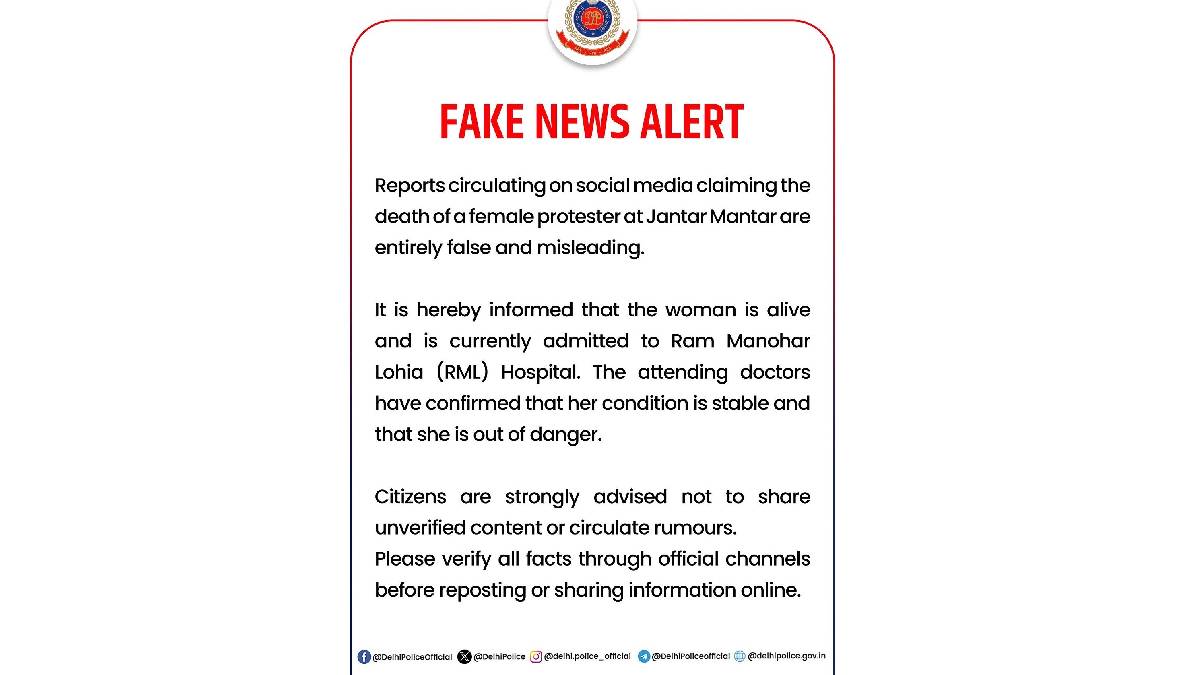
Government departments are particularly vulnerable to misinformation on policies, welfare schemes, regulations, public services, subsidies, economic announcements and other issues that directly impact the citizens. False information in these areas can create confusion and may influence public behaviour.
The proposed QRT system is meant to provide ministries with an operational framework for responding to such situations. Instead of having to wait for a weekly clarification of it, teams can monitor digital platforms and react when distorted narratives are being generated.
The project also demonstrates that official social media communication is more important than ever. Ministries use digital platforms to announce decisions and engage with the public directly. That fast clarification will be needed if false claims are being spread in that environment.
Fake news isn't limited to completely fake stories. Misleading information can also be genuine photographs or videos with false captions, old incidents portrayed as recent events, edited videos that change the meaning of a statement, or selective information being shared without necessary context.
Artificial intelligence has made the problem more pressing. AI-generated images, synthetic videos, manipulated audio, and other types of digitally altered content make it more difficult for everyday users to know if what they see online is authentic.
The QRT initiative thus focuses on rapid identification and verification. The relevant ministry, if it determines that the claim is too questionable, can make a formal clarification or make information public through its communications channels.
But transparent verification will also be crucial to the efficiency of the system. Social media is full of legitimate criticism, political opinions and differing interpretations, and they shouldn’t be treated as misinformation. A distinction between deliberate falsehoods, genuine mistakes, opinions and criticism will continue to be important.
The government’s latest move signals that fighting misinformation is now a more important part of digital governance. And it is not about reacting to false claims once a false claim has become viral, but it is to identify and deal with misleading narratives at an early stage.
With the Electricity, Agriculture and Commerce ministries having already implemented QRTs, the model could serve as the template for other government departments. If it were expanded well, this could be a pathway to social media monitoring, verification and official communication.
For social media users, the development also emphasizes the need for checking information before posting viral posts. Ministry accounts and government communication channels can be a very important source to confirm claims related to government policies and announcements.
The government’s message is simple: misinformation will get a quicker official response. With dedicated teams and an emphasis on a two-hour response window, ministries are preparing to challenge fake, manipulated, and out-of-context content before it can spread further.