Gurugram is often known as India’s ‘Millennium City’ for its glass towers, luxury housing, corporate offices and booming real estate market. Property prices in some parts of the city can reach ₹18,000 per square foot, while homes in premium neighbourhoods can cost several crores.
But heavy rain on August 24 exposed a very different side of the city.
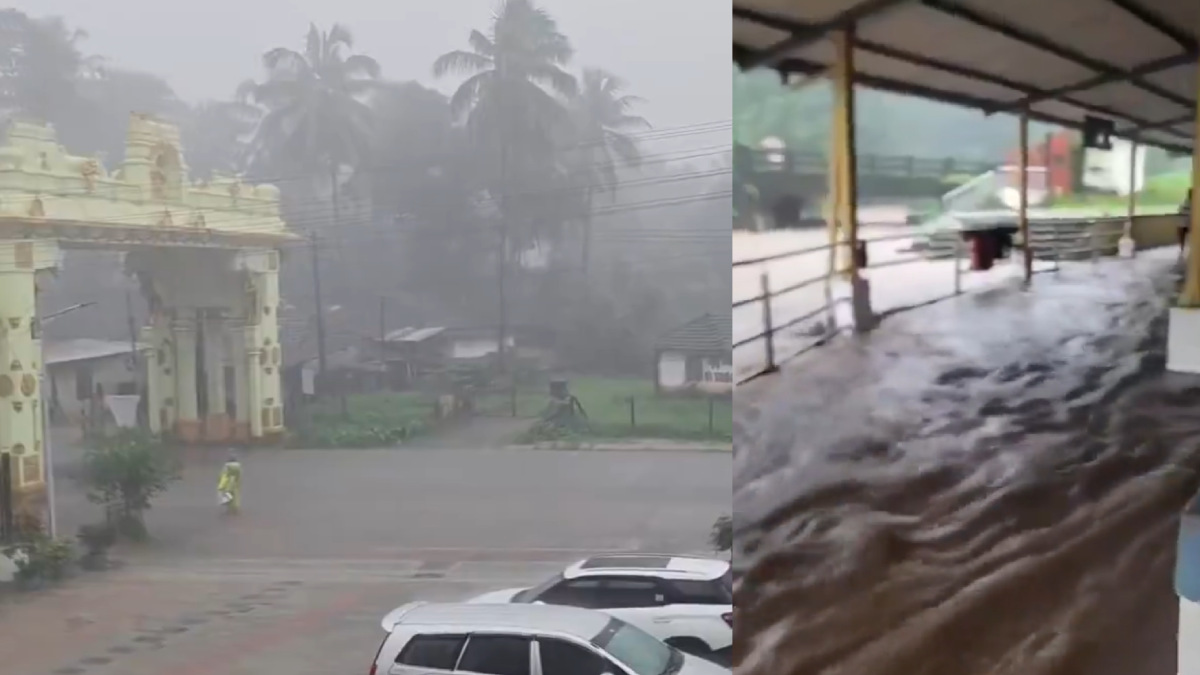
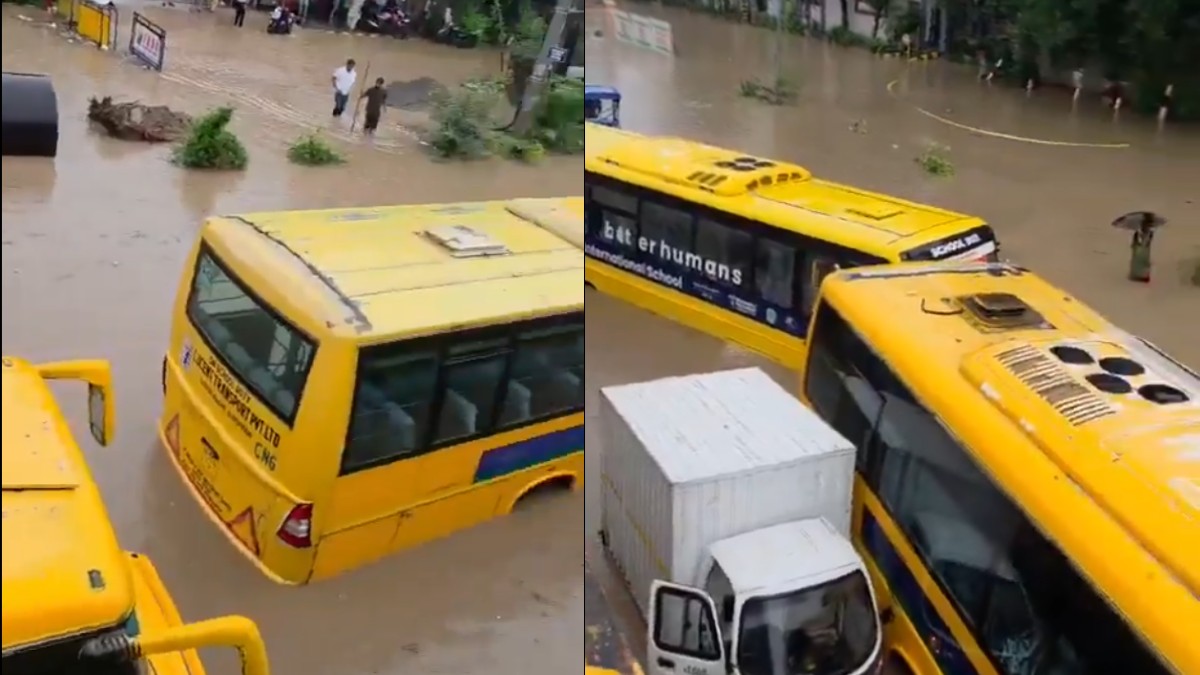
The rains were 70-80 mm in Gurugram, with several roads inundated, causing widespread damage. School buses were shut down, roads were destroyed, and residents were forced to walk through knee-deep water with sewage and drain waste.
The situation raised fresh questions about Gurugram's drainage and civic infrastructure, particularly because authorities have reportedly spent thousands of crores on such projects over the last decade.
🇮🇳| Gurugram: A Glass-and-Concrete Mirage Exposed by One Downpour
— Aprajita Nafs Nefes 🦋 Ancient Believer (@aprajitanefes) August 26, 2026
They call Gurugram the “Millennium City,” a showcase of towers, luxury housing and booming real estate. Property prices can reach ₹18,000 per square foot, while homes in elite neighbourhoods sell for tens of… pic.twitter.com/9FgfHB5jgT

Heavy Rain brings Gurugram traffic to a standstill
The effects of the rain were visible in different parts of the city but not only in one part of the city.
Nine school buses were stranded for nearly two hours as floodwater poured over them. A second-grade student who was taken home at 12:30 p.m. after the heavy traffic sent him home was able to reach home around 8:30 p.m.
It was particularly concerning to parents who were trying to find their children with roads still heavily waterlogged.
Drivers and attendants were also forced to climb onto bus roofs while waiting for help, in some areas.
Damage to roads also came from rain.
A road near IFFCO Chowk collapsed, creating a sinkhole around 10 feet wide. A cement-loaded truck also sank into a damaged section of road.
Some residential districts were also affected, as well. Roads outside expensive apartment complexes were reported to be shrinking into sections of stagnant water.
People, in some areas, had to walk through knee-deep water. The water was also said to be mixed with sewage and drain sludge, raising hygiene and public health issues.
Open manholes and potholes became particularly dangerous because they were difficult to see beneath the floodwater.
But the disruption wasn’t restricted to traffic delays for residents. Flooded roads kept schoolchildren, office workers, elderly residents and people who needed to get to their homes in trouble.
The scenes also served as a stark contrast to Gurugram’s image as one of India’s most modern urban centres.
Infrastructure Spending of ₹14,000 Crore Raises Questions
The flooding has also brought new attention to the estimated amount of money spent on Gurugram’s infrastructure and drainage.
The government has cited infrastructure and drainage spending of around ₹14,000 crore in the past decade.
Even with all this expenditure, however, residents are still experiencing waterlogging from heavy monsoon rainfall.
Congress leader Randeep Singh Surjewala criticised the administration over the condition of Gurugram's infrastructure. He asked how the city could continue to face waterlogging, stranded school buses and traffic chaos despite the reported expenditure.
The main question is not so much how much money has been announced or spent.
It is whether that spending has created infrastructure capable of handling heavy but foreseeable monsoon rain.
Gurugram's rapid development has resulted in huge construction, with high-rise residential complexes, commercial buildings, offices and roads.
But urban development is more than buildings and investment. Drainage systems, roads, sewage networks and other basic civic infrastructure need to expand with the population and construction.
The recent flooding again has revealed the gap between those two sides of Gurugram’s development.
The city has some of India’s most expensive homes and large corporate offices, but residents can still find themselves walking sewage-filled roads after heavy rains.
The problem has also been raised repeatedly by residents over the years. Poor drainage, waterlogging, potholes and inadequate maintenance have been a recurring part of Gurugram’s monsoon season.
The latest incident has therefore revived a larger question of accountability.
If billions of rupees have been poured into rebuilding infrastructure, why are we still facing the same problems every monsoon?
Heavy rainfall can overwhelm any city’s drainage system and extreme weather can create real problems for urban authorities. But recurring flooding after predictable seasonal rainfall raises the question of whether drainage capacity, road construction and maintenance are keeping pace with the city’s growth.
In Gurugram, this is ultimately a matter of priorities.
The city’s economy is a place of foreign investment and high-end residential development by multinationals. The skyline has changed so much in the past two decades.
But the infrastructure that is beneath that skyline has not always been developing that way.
The latest rain has once again exposed that contradiction.
A city can have expensive apartments, expensive property, modern offices and private schools, but residents still need functioning roads and drainage systems to move safely through the city.
That stranded schoolchildren are particularly hard to ignore.
Children should not have to spend hours trapped in buses because ordinary monsoon rain has brought a major urban centre to a standstill.
The flooding also illustrates why infrastructure spending is to be measured by results rather than the amount of money allocated.
When it rains, residents would be wondering: can we get home safely when it rains?
Gurugram’s reputation as the “Millennium City” is mainly based on its skyline and economic growth. But the strength of a city is also measured by how well its basic systems function.
The August 24 rainfall has once again exposed the gap between those two realities.
Gurugram may have the towers of a modern global city, but its recurring monsoon problems show that parts of its basic civic infrastructure still need major improvement.