A tragic landslide in Himachal Pradesh's Lahaul-Spiti district has left 13 people dead after a passenger taxi was buried beneath a massive avalanche of rocks and mud.
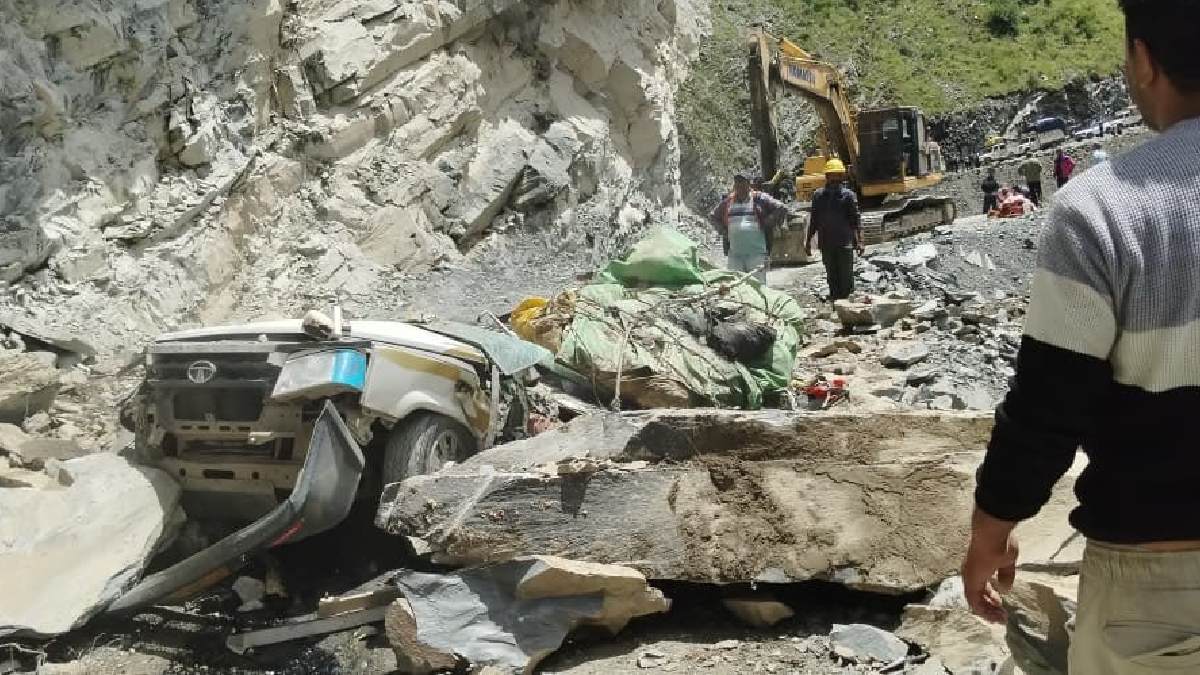
The heartbreaking incident occurred on the Tindi-Pangi road, a mountainous stretch known for frequent landslides during the monsoon.
According to officials, the taxi was passing through the area when huge boulders suddenly broke away from the hillside and crashed onto the vehicle. The impact buried the taxi under thick layers of debris, leaving the passengers with no opportunity to escape.
Local residents immediately alerted authorities, prompting a large-scale rescue operation involving police, district officials, and disaster response teams. Heavy machinery was deployed to clear rocks and mud while rescue personnel searched for survivors trapped beneath the debris.
After several hours of intensive efforts, officials confirmed that all 13 occupants of the vehicle had lost their lives. The bodies were recovered from the crushed vehicle and sent for identification before being handed over to the victims' families.

The state administration expressed grief over the tragedy and assured support for the affected families.
The accident has once again exposed the risks associated with travelling through the Himalayan region during the rainy season. Continuous rainfall over the past few days has weakened mountain slopes across Himachal Pradesh, increasing the chances of landslides and rockfalls.
Authorities have repeatedly advised residents and tourists to avoid unnecessary travel on vulnerable mountain roads whenever heavy rain warnings are in effect.
The Tindi-Pangi route, which connects remote villages in the district, is considered one of the most challenging roads in the region. Although it plays a crucial role in connecting local communities, it is frequently affected by landslides, road blockages, and falling rocks during the monsoon months.
Experts have long warned that climate change, intense rainfall, and the fragile Himalayan terrain are making landslides more frequent and severe. They believe that better slope stabilization, regular geological monitoring, and stronger early-warning systems are essential to reducing the risk of such disasters in the future.
Following the incident, local authorities inspected nearby stretches of the road to ensure no additional vehicles had been caught in the landslide. Rescue teams also remained on standby as unstable weather conditions continued in the region.
The devastating loss of 13 lives has sent shockwaves across Himachal Pradesh and serves as another reminder of the dangers posed by monsoon-related disasters in mountainous areas. Officials have urged travellers to closely monitor weather updates and road advisories before planning journeys through landslide-prone regions.
As Himachal Pradesh continues to witness heavy rainfall, disaster management agencies remain on high alert to respond quickly to any further emergencies.
The latest tragedy underscores the importance of improved infrastructure, disaster preparedness, and strict adherence to travel advisories during the monsoon season.