Hyderabad Metropolitan Water Supply and Sewerage Board (HMWSSB) will implement Japanese Bio-Lace technology in polluted nalas in the city after a pilot project resulted in a 90% reduction in organic pollution. It could be a major step towards improving water quality in Hyderabad and preventing untreated sewage from entering the Musi River.
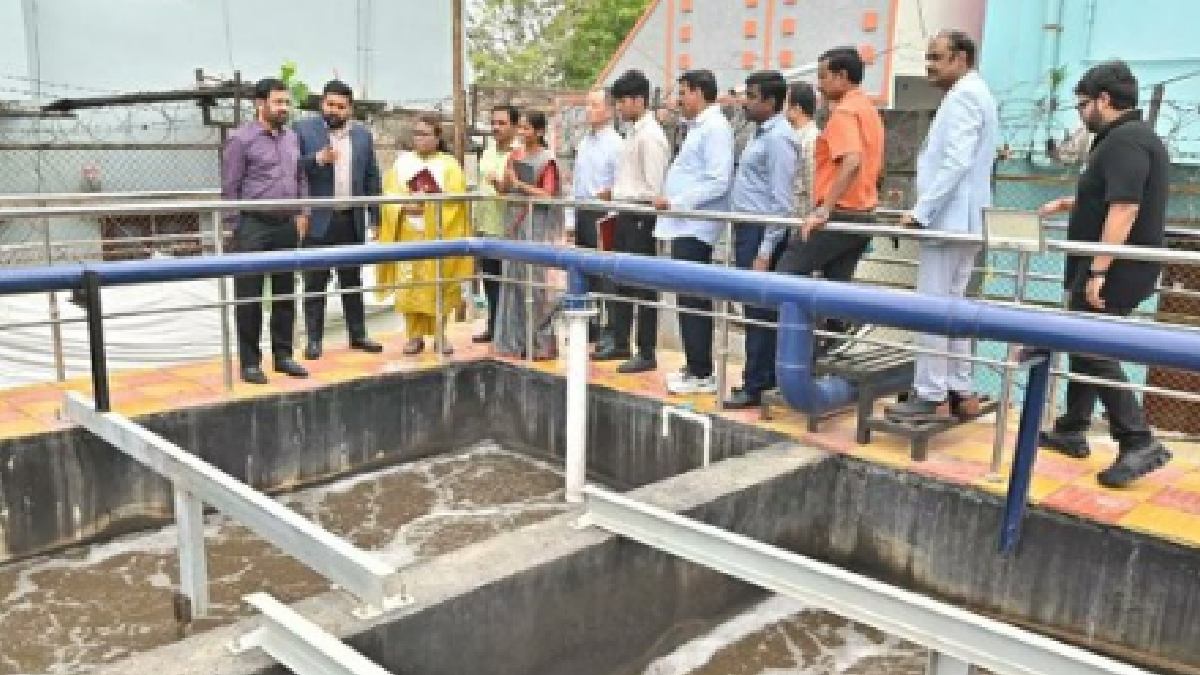
The pilot project, led by the HMWSSB and Japan International Cooperation Agency (JICA), is the first in India to use Bio-Lace technology for polluted flowing drain water treatment. A 1 million litres per day (1 MLD) pilot plant was established at the Sewerage Treatment Plant (STP) in Fatehnagar where the technology was tested in real life.
At the review meeting chaired by JICA, HMWSSB Managing Director K. Ashok Reddy was informed that the pilot had reduced Biochemical Oxygen Demand (BOD) - a key indicator of organic pollution - by 90%. In addition, the project has reduced Total Suspended Solids (TSS) by 85% without chemical additives.
The advantages of Bio-Lace technology over conventional sewage treatment systems are noted by officials. It consumes less than half the electricity required by traditional sewage treatment plants, occupies only 10-20% of the land area, produces much smaller volumes of sludge, and avoids the need for chemical dosing. Such features make it an energy-efficient and environmentally sustainable approach to treating polluted urban waterways.
Originally developed in Japan, Bio-Lace technology has been used to restore more than 400 rivers and waterways. The Hyderabad project, which was conducted by Japan-based TBR Co., is the first to be implemented in India for the treatment of polluted flowing drains.
At the review, K. Ashok Reddy said the pilot had been able to significantly improve water quality and that with that technology, it would be an effective means of overcoming pollution in Hyderabad's nalas. However, he advised the technical team to conduct a thorough review of the technology and to consider it to be extended to other parts of the city. This will also need to be assessed by the Telangana Pollution Control Board before any large-scale implementation of the plan.
The initiative fits in with the Telangana government's larger plan to restore the Musi River by making sure untreated sewage does not flow into the water body. Chief Minister A. Revanth Reddy has directed authorities to ensure 100% treatment of sewage generated in Hyderabad and HMWSSB is working towards this goal by next year.
Ashok Reddy also said that the Water Board is examining the feasibility of putting Bio-Lace technology in flowing nalas and streams instead of just having one or two centralized treatment facilities. If successful, this move will not only improve water quality in Hyderabad but also reduce infrastructure costs and energy consumption.
Hyderabad is increasingly urbanizing and producing a lot of wastewater, so the use of Bio-Lace for wastewater treatment as a solution could really be a part of that. The pilot project has shown that a system with low-energy wastewater treatment solutions can be used to reduce pollution and make use of the city’s resources better.