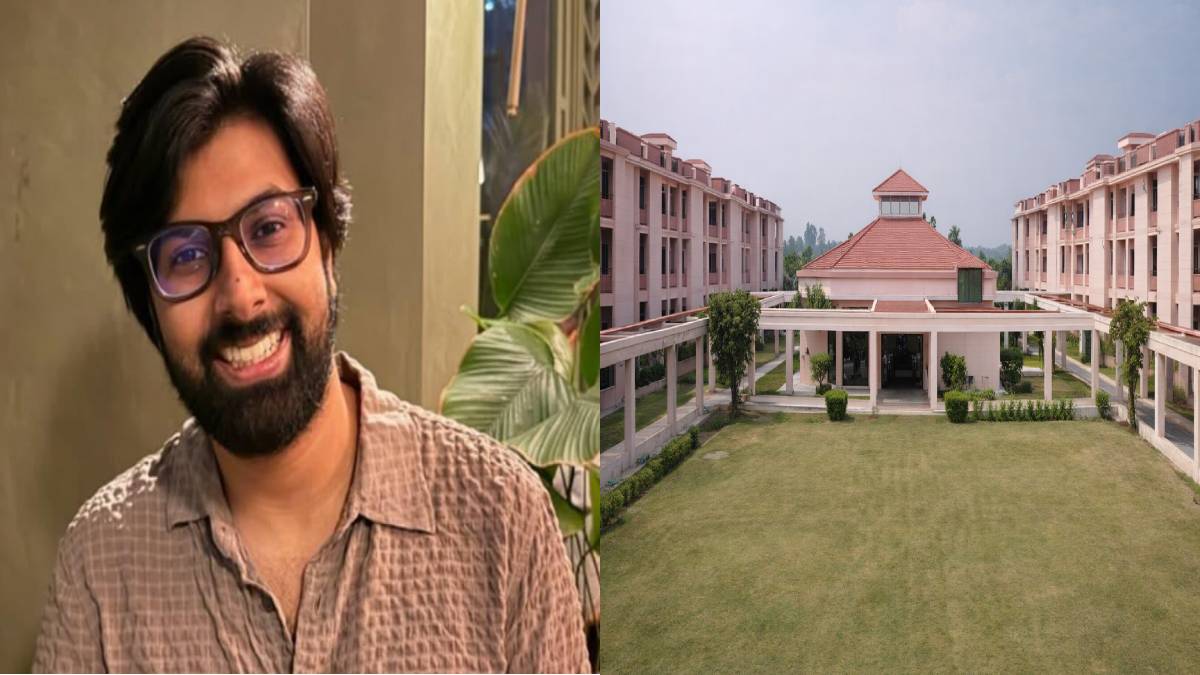
AI entrepreneur Siddhartha Saxena has stirred a debate on social media after he told Times Now that admission to the Computer Science and Engineering (CSE) programme at IIT Kanpur is “20 times harder” than getting into Harvard University. His remarks have reignited an old debate about the competitive nature of India’s top engineering schools and how the situation compares to that of top global engineering schools.
Although the statement is an opinion, not an official statistical comparison, it illustrates the fierce competition among students aspiring to study computer science at the top IITs in India.
While every year millions of students prepare for engineering entrance exams across India, only a few are eligible to enter the Joint Entrance Examination (JEE) Advanced for admission into IITs. And among all IIT programs, Computer Science at IIT Kanpur, IIT Bombay, IIT Delhi, IIT Madras, and IIT Kharagpur has the highest closing rank, and it is one of the top undergraduate programs in India.
IIT Kanpur's CSE program requires good performance in JEE Advanced, one of the world's most challenging engineering entrance examinations. Some students work for two to four years in preparation, with extensive study, coaching, mock tests, and extensive practice, and are expected to score a rank high enough to be admitted.
On the other hand, Harvard University follows a holistic admissions process that takes into account multiple factors beyond academic success. Applications are evaluated on school grades, standardized test scores where allowed, extracurricular achievements, leadership experiences, essays, recommendations, research, and personal accomplishments. Harvard's acceptance rate is very low, but the admissions process is essentially different from the rank-based selection for the IITs.
This distinction makes it difficult to compare. Harvard assesses applicants in many aspects, and IIT admissions are based on one highly competitive national examination. So, saying one institution is categorically harder to enter than another is up to the criteria being used.
Saxena's supporters say the probability of getting a top JEE Advanced rank for IIT Kanpur CSE is extremely small because there are so many students competing for so few seats. But the comparison is not apples to apples to a specialized engineering program with a university that has students from all different backgrounds.
IIT graduates’ global recognition has contributed to this discussion. Alumni from IIT Kanpur and other IITs have gone on to conduct advanced technology projects, build successful startups, conduct pioneering research, and have been promoted to top jobs in the university and industry globally. Their achievements have enhanced India’s engineering education system worldwide.
The increasing demand for computer science education has also intensified competition. The growth of artificial intelligence, software engineering, cloud computing, cybersecurity, semiconductor technology, and data science has made CSE one of the most preferred fields among students.
Learning experts stress that admission difficulty is not the only metric of educational quality. There should be no doubt that a student’s success is ultimately dependent on the opportunities they get, the skills they learn, the ways that they have to innovate and change, and the way they adapt in school.
Saxena’s comment has once more highlighted the extraordinary effort required to secure admission to India’s top engineering institutions. Whether or not one agrees with Harvard, there is little doubt that earning a seat in IIT Kanpur’s Computer Science program is one of India’s most competitive academic achievements.