Generation Z is expected to become India’s largest voting group by the time the country is about to enter the Lok Sabha elections of 2029, a demographic shift that will affect political campaigns, public policy and political parties’ communication with voters.
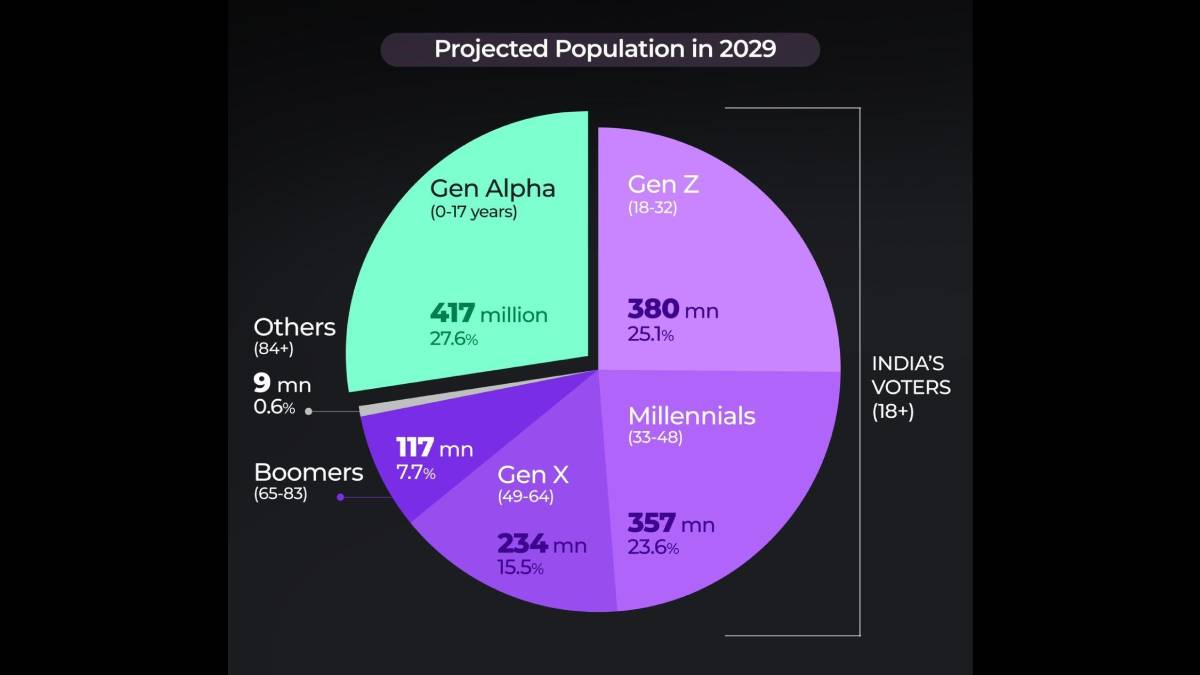
Gen Z usually refers to people born between the late 1990s and the early 2010s. By 2029, a large share of this generation will have reached voting age, and young citizens will be one of the most influential groups in India’s electoral system.
India already has one of the youngest populations in the world, and the increase in young voters will help change the political conversation. The rise of Gen Z as a major voting bloc will push political parties to take a more active role in the fields of employment, education, skills development, technology, affordable housing, climate change, mental health and cost of living.
The 2029 general election could then be a watershed moment for youth participation in Indian democracy.
Like previous generations, Gen Z has grown up in an environment of smartphones, social media, digital payments, online education and rapid technological transformation. Their political knowledge is often affected by a mix of news channels, digital media, short-form videos, online discussions and direct political correspondence from political leaders.

Such a shift in the tactics of political parties would likely mean that they would rely more on digital campaigning and social-media outreach to reach younger voters. Online platforms would be more important to influence public opinion and communicate messages to voters as well as to get them involved.
But the growing influence of Gen Z does not mean that young voters will automatically support one political party or ideology. The generation is diverse, including students, first-time voters, young professionals, entrepreneurs, workers and people living in urban and rural areas.
Their priorities can vary as income, education, community and job opportunities are affected. Jobs and economic growth are at the core of some people’s political beliefs, while others are concerned with social welfare, education, public infrastructure issues, environmental concerns or issues affecting their local communities.
Gen Z’s increasing numbers of voters could also put pressure on political parties to make clear policy commitments. Young voters will demand detailed answers about job creation, examination reform, access to quality education, start-up support and the impact of artificial intelligence on future employment.
The issue of employment remains very important. As millions of young Indians enter the workforce, political parties could find more and more challenges in providing better job opportunities, stronger skill-building programmes and policies that promote entrepreneurship.
Education may also play a central role. Competition examination issues, paper leaks, university opportunities and the affordability of higher education have already generated public debate. These issues could become more politically significant as the number of young voters increases.
The rise of Gen Z might also change the style of election campaigning. Political messaging might become more interactive, with live streams, podcasts, online town halls and direct engagement through digital platforms becoming more prevalent. Traditional rallies and television campaigns are likely to continue to be a priority, but political organisations may spend more on data-driven and youth-centric outreach.
At the same time, the growing role of social media could pose challenges. Misinformation, manipulated content and online polarisation might affect political discussions. Better digital literacy and persuading voters to verify information may be very important.
The 2029 election will not be decided by one age group alone. Older voters will continue to play a major role, and factors such as regional politics, caste, community, economic conditions and local leadership will remain important.
But Gen Z represents a significant demographic expansion. Young voters, if they show up in large numbers, could have a significant effect on campaign agendas as well as electoral results in several states.
Political parties that understand Gen Z’s concerns and provide credible solutions will have a big advantage. The generation’s growing electoral power could make youth-focused policies more central to India’s political debate.
Gen Z will become more than just an important voter class in the months ahead of India’s 2029 general elections, as it will be a political driver of the country’s future and could emerge as the country’s largest and most closely watched electoral group, with the potential to shape the future of Indian politics.