India is seeing an increase in international students who come here for higher education, with 58,134 foreign students from 173 countries in educational institutions throughout the country. Studies show India as an emerging global education hub, with inexpensive, high-quality academic programs, a diversity of cultures, and international collaboration.
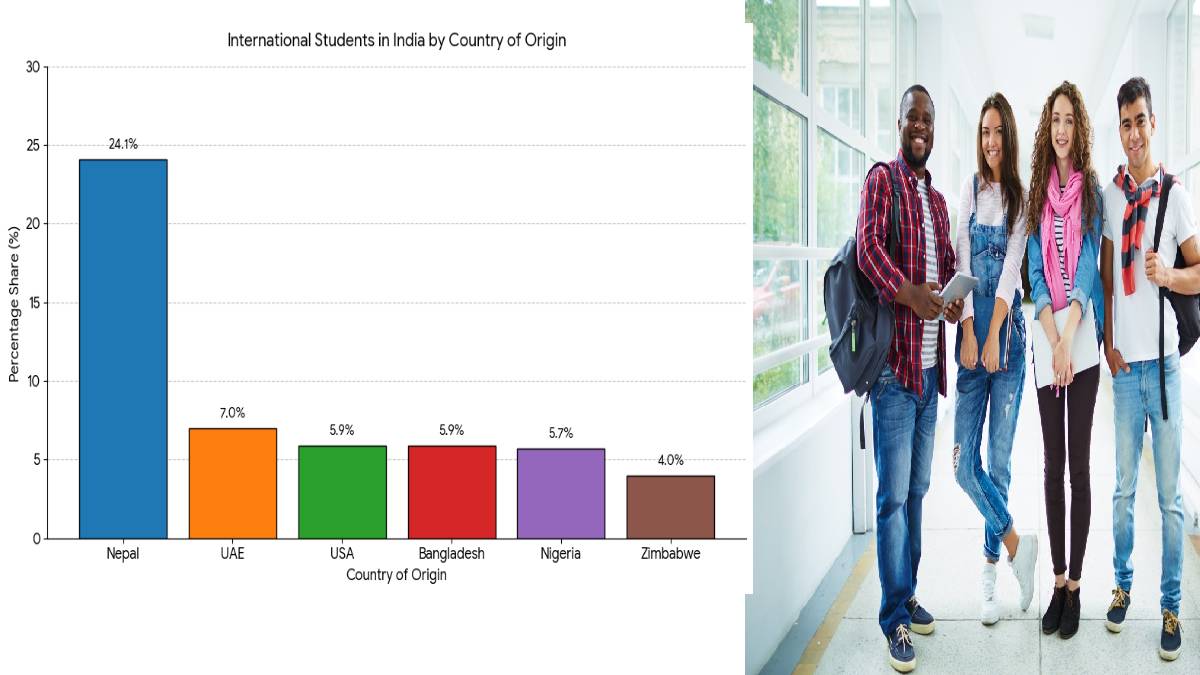
International enrollments have increased in India. This is because of better education facilities, universities with an international reputation, government programs, and competitive tuition costs. The international students from neighboring countries like Nepal, Bangladesh, Bhutan, Sri Lanka, and Afghanistan can be found in a large part of the international student population. At the same time, India is also drawing students from Africa, Southeast Asia, the Middle East, Europe, and the Americas.
Government-led initiatives such as the “Study in India” program have played an important role in promoting Indian higher education worldwide. It offers scholarships, simplified admission procedures, and dedicated support services to make studying in India more accessible to foreign students. Most universities also have international student offices to assist with admissions, accommodation, visas, and cultural integration.
India’s strength lies in the wide variety of academic opportunities that international students get. For example, engineering, medicine, information technology, business management, humanities, agriculture, law, and new technology fields like artificial intelligence, data science, renewable energy, and biotechnology are options for international students in India. English is the primary language of instruction in most of these institutions, and so India’s international students want to learn globally.
India's cultural diversity offers a unique learning environment beyond academic studies. Students are exposed to languages, traditions, cuisines, festivals, and historical heritage as part of one of the most active societies. Cultural immersion is a necessity in the learning process for them, and also helps them to learn about other cultures and become international students.
India hosted a total of 58,134 foreign students from 173 countries, marking a significant rise in international enrollment. pic.twitter.com/61SJQOarpZ
— BRICS and G20 (@BRICSANDG20) July 14, 2026
Moreover, several Indian universities have established international relations through exchange programs (e.g., joint research projects, faculty partnerships, and dual degree relationships) and have developed international partnerships. These efforts are helping to develop Indian universities, enhance the quality of the education system and increase India’s visibility in the world education system. Modern campuses, research facilities, digital learning platforms, and student support systems are being built to be in line with international standards.
As there are so many international students coming to India, it adds to the Indian economy and the education system as well as to the knowledge base. International students contribute to the education system - they pay for tuition, and they create culture in the country. Indian students are also in touch with students from other countries and learn from them. The world of learning is on the rise.
Education experts believe sustained policy support, better campus infrastructure, shorter visa procedures, and greater global engagement will help India to grow its share in the global education market. With countries all over the world struggling to attract global talent, India is gradually positioning itself as a place with a good mix of high-level education and cheap but rich culture.
Students from 173 countries, with enrollment reaching 58,000, are helping India to continue to rise as a world education center. The bright future of Indian higher education is the result of growing international confidence in Indian universities, and the future growth of the field is bright.