The debate over what constitutes proof of Indian citizenship has resurfaced after the Centre reiterated a long-standing legal position: an Indian passport, despite being one of the country’s most rigorously verified documents, is not conclusive proof of citizenship.
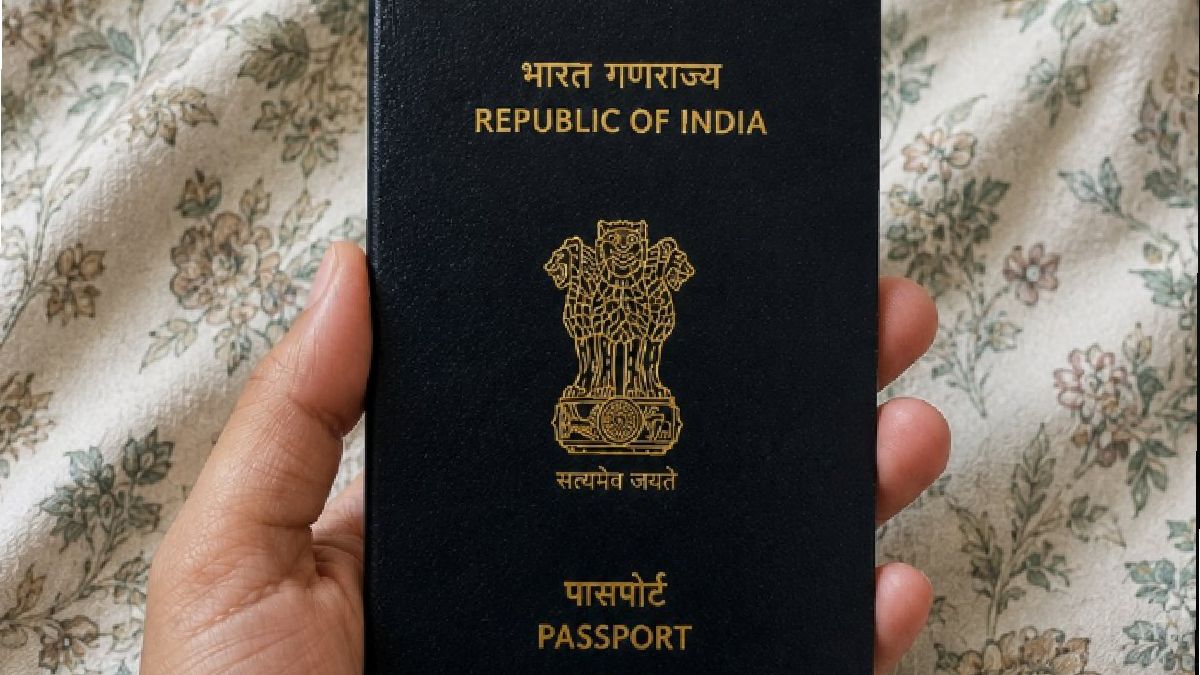
The clarification on Passport Seva Divas has already led to a great deal of discussion and confusion on social media and some people have questioned whether a document issued mainly to Indian citizens cannot be considered a proof of citizenship.
But legal experts point out that this position is not new nor unprecedented. Indian courts, government guidelines and existing laws have always been in agreement between nationality, identity, and citizenship.
Why isn't an Indian passport proof of citizenship?
At first glance, the clarification seems contradictory. Under Section 6(2)(a) of the Passports Act, 1967, authorities are required to refuse a passport application if the applicant is not an Indian citizen. This naturally leads many to assume that possession of an Indian passport should automatically establish citizenship.
But in legal terms it is more complicated.
Section 20 of the Passports Act allows the government to issue a passport to a non-citizen if doing so is considered to be in the public interest. Furthermore, Indian passports explicitly state that they remain the property of the Government of India and may be surrendered whenever directed by authorities.
Because of these provisions, courts have repeatedly held that a passport is primarily a travel and identity document rather than a conclusive certificate of citizenship. The government's Passport Manual also describes a passport as a document issued largely to facilitate travel and establish a person's nationality abroad.
What Have Indian Courts said?
Indian courts have consistently emphasized that citizenship cannot be determined only through identity documents. In an important 2013 ruling, the Bombay High Court said documents such as passports, Aadhaar cards and birth certificates may not be enough by themselves to establish citizenship, especially in disputed cases involving allegations of illegal immigration.
More recently, in the Babu Abdul Sardar vs State of Maharashtra case, the Bombay High Court reaffirmed that questions of nationality must be examined under the provisions of the Citizenship Act, 1955.
The court also noted that identity documents such as Aadhaar cards, PAN cards, voter identification cards, or passports can establish identity, residence, or administrative status but do not independently determine citizenship.
If not a passport, then what proves citizenship?
And this is where India’s legal system becomes complex.
Unlike several countries that issue dedicated citizenship certificates or national citizenship cards, India does not currently have a universal document that conclusively establishes citizenship for every citizen.
Different documents have different purposes:
Aadhaar identifies a person's identity and his/her residence. PAN cards are used for taxes and financial transactions. Voter ID cards certify voter registration and inclusion in electoral rolls. Ration cards allow for welfare schemes eligibility. Passports allow for international travel.
None of these documents, by themselves, provide absolute proof of citizenship in every legal situation.
The Election Commission has also argued before the Supreme Court that Aadhaar cannot be treated as proof of citizenship because it can be issued to eligible residents who are not Indian citizens.
What does the Citizenship Act say?
The Citizenship Act, 1955 is still the primary law of citizenship in India.
According to the Act:
It is assumed that people born in India between January 26, 1950 and July 1, 1987 will be citizens by birth. People born between July 1, 1987 and December 3, 2004 can claim citizenship if at least one parent was an Indian citizen. People born after December 3, 2004 must prove that both parents were Indian citizens or that one parent was a citizen and the other was not an illegal immigrant at the time of birth.
However, the law does not prescribe any single universal document which is a proof of citizenship.
How is citizenship determined in practice?
In citizenship disputes, courts frequently look at a number of records and not a single document.
These may include:
- Birth certificates
- School records
- Class 10 certificates
- Parental documents
- Citizenship certificates obtained through registration or naturalization
- Residence and lineage documents
- Passports and other supporting documents
The focus generally is on establishing a chain of evidence of birth, parentage and lawful status.
The Larger Citizenship Debate
The recent clarification of India’s legal and administrative structures by the govt has highlighted the long-standing gap on the part of India’s legal system. While the country has numerous identity documents, it lacks a universal citizenship document that can definitively answer citizenship questions in all scenarios.
Legally, with all the arguments over citizenship verification and electoral rolls and identity documentation, it seems that India could need a more unified and systematic citizenship certification framework.
For now, the government’s position is unchanged: the Indian passport is a powerful identity and travel document, but it is not a basis of proof of Indian citizenship alone.