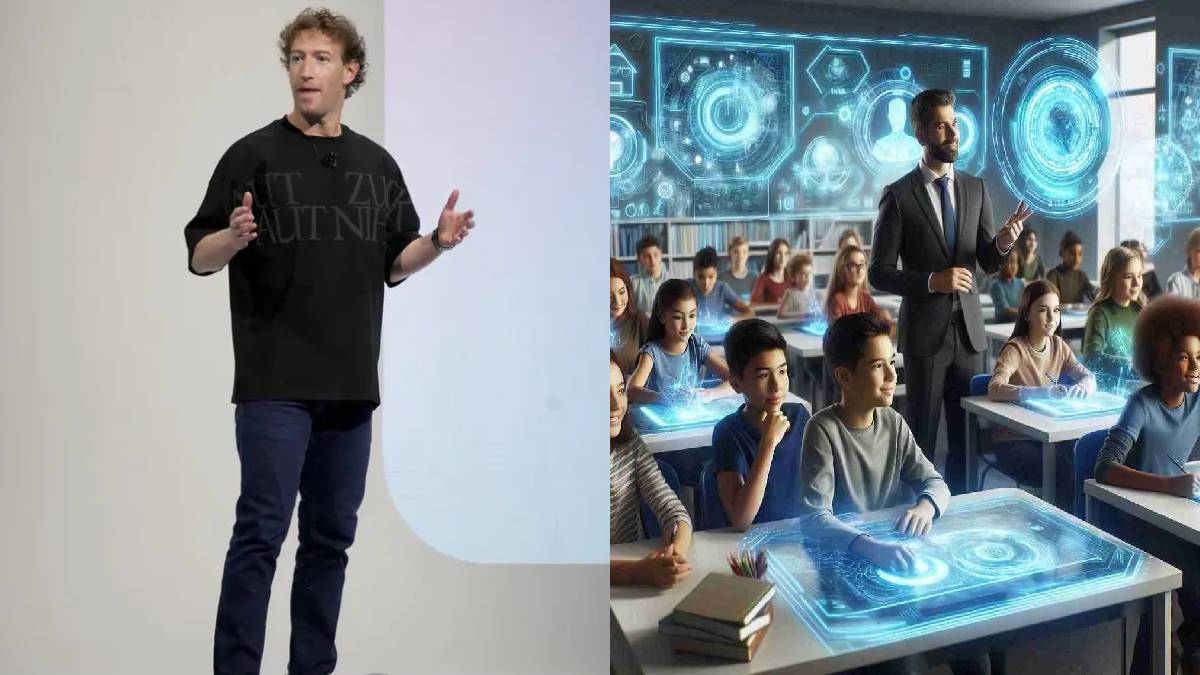
Meta CEO Mark Zuckerberg has pressed for a more widely distributed future for artificial intelligence, arguing that superintelligence’s benefits shouldn’t be limited to just a few tech companies or institutions. In an essay last week, Zuckerberg said the question is not whether superintelligence will ever be achieved and who will have access to it.

Zuckerberg’s argument comes as competition among large technology companies to develop more able AI systems is growing. He believes that concentrating the most powerful AI systems within a handful of organisations would lead to a huge imbalance of economic and social power. Instead, he believes that advanced AI should be a tool that is available to people, entrepreneurs, researchers, and businesses.
The Meta chief has described “personal superintelligence” as a future where people can use highly capable AI systems to pursue their own goals. Rather than viewing AI primarily as a replacement for human workers, Zuckerberg argues that it should increase individual capabilities and help people create, discover, learn and build new businesses.
One of Zuckerberg’s main themes is how the access and distribution of power of AI is based. If only a few companies or governments control the most advanced systems, he has warned, they may exercise disproportionate influence over economic activity, research and other areas of society. His preferred approach is broader access which he believes is better for competition and innovation.
This position is directly tied to Meta’s long-running focus on open AI models. The company has released open-weight AI models as part of its strategy to encourage developers and businesses to build their own applications. Zuckerberg has once again argued that an open ecosystem can prevent advanced AI from being dependent on one provider.
But Zuckerberg’s vision does not mean that every highly capable AI model should automatically be released without restrictions. And he has admitted that more powerful systems could raise new safety issues and that companies need to be careful about what they make publicly available. Meta’s current approach brings in more access and safety protections and governance mechanisms.
A debate over open vs closed AI has become one of the biggest issues in technology. Companies building frontier AI systems must balance the potential advantages and disadvantages of allowing the use of these technologies and how we will have to balance the need to protect our data, privacy and security and how to manage the scope of our technology when our data is out there.
Zuckerberg’s recent position puts Meta firmly on the side of greater AI diffusion. He argues that individual empowerment should be one of the primary purposes of superintelligence and AI should help people achieve their ambitions instead of just automate existing tasks.
He also sees economic benefits from this approach. AI would be more widely available so that people and small businesses could have access to capabilities that have previously been difficult to access with big teams and very much money. Then new business opportunities could be created.
Meta is investing heavily in AI infrastructure and research. The company has established Meta Superintelligence Labs and has been investing in more advanced AI capabilities. And so Zuckerberg’s argument is more than just philosophical; it is also associated with Meta’s larger competitive strategy in the rapidly evolving AI market.
At the same time, questions remain about how “personal superintelligence” would work in practice. Privacy, data ownership, safety, affordability and user control are likely to become increasingly important as AI systems become more capable.
The grand question is whether AI could eventually be widely available to everyone, with appropriate protections. Zuckerberg believes that spreading AI power can in effect help with less risk of over concentration. But opponents still argue whether more access automatically results in safer or more just results.
For now, Zuckerberg’s message is crystal clear: he wants the future of superintelligence to be about individual empowerment, not institutional control. As the global AI race accelerates, who controls the technology and who gets to benefit from it will be at the heart of the debate.