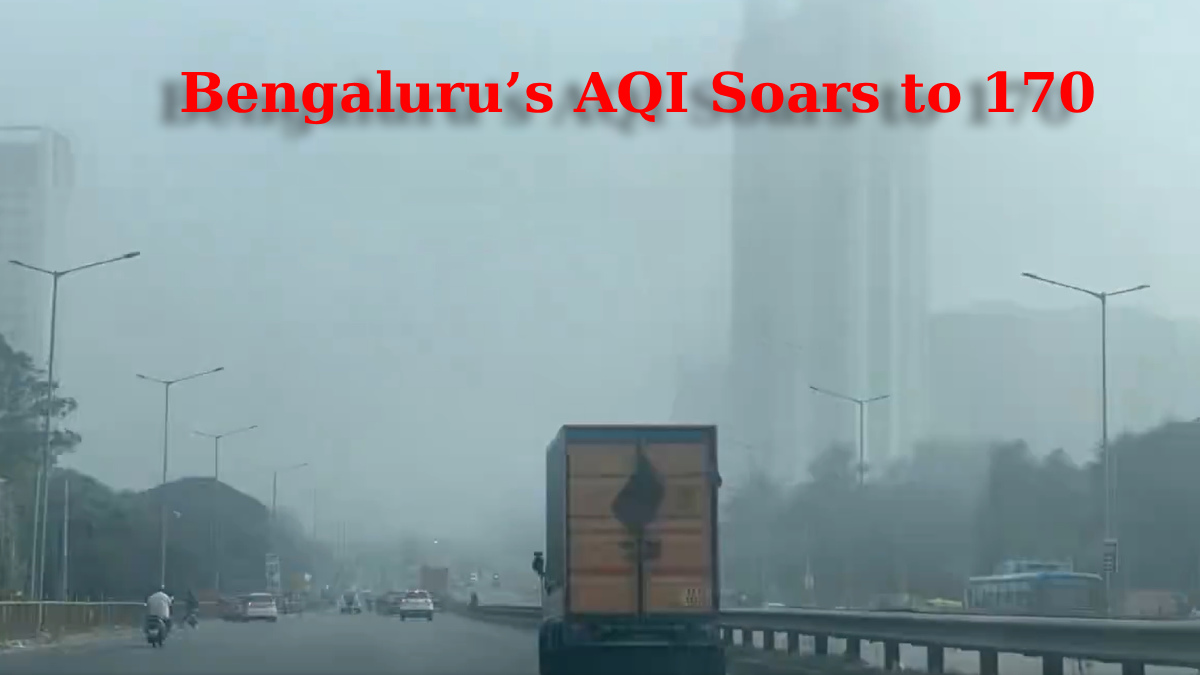
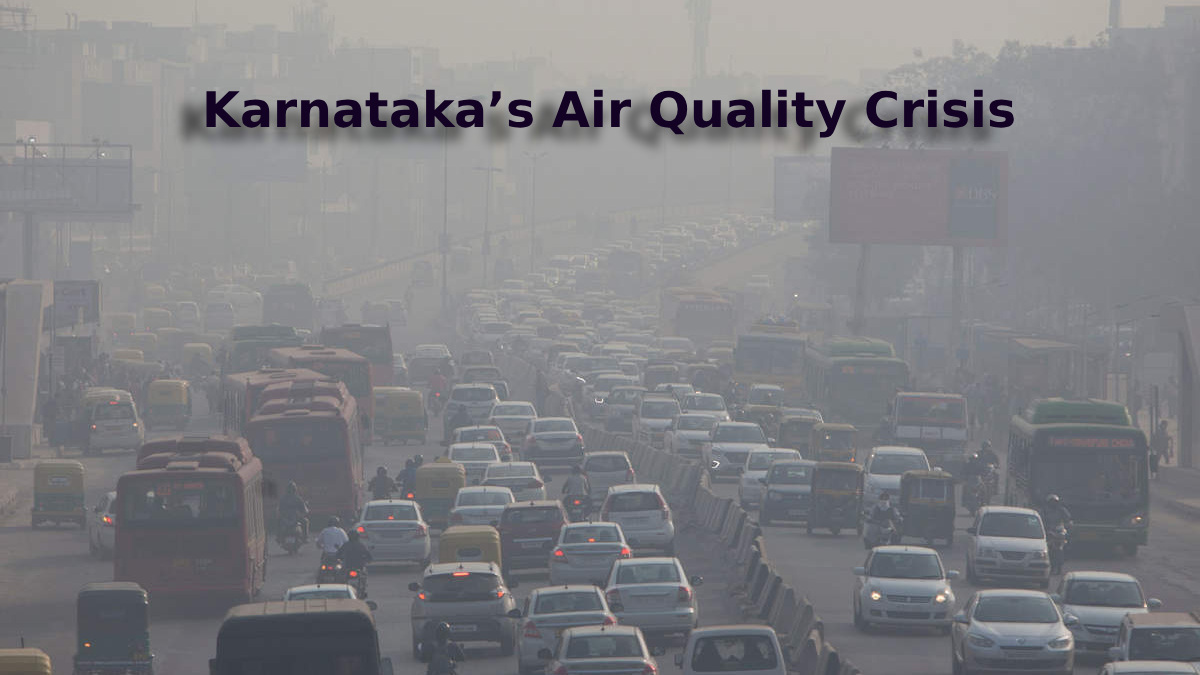
For years, Bengaluru’s pleasant climate and "Garden City" status were its pride. However, this winter, the city is making headlines for a grimmer reason: a rapidly deteriorating air quality that is increasingly drawing comparisons to the hazardous conditions in the national capital, Delhi.
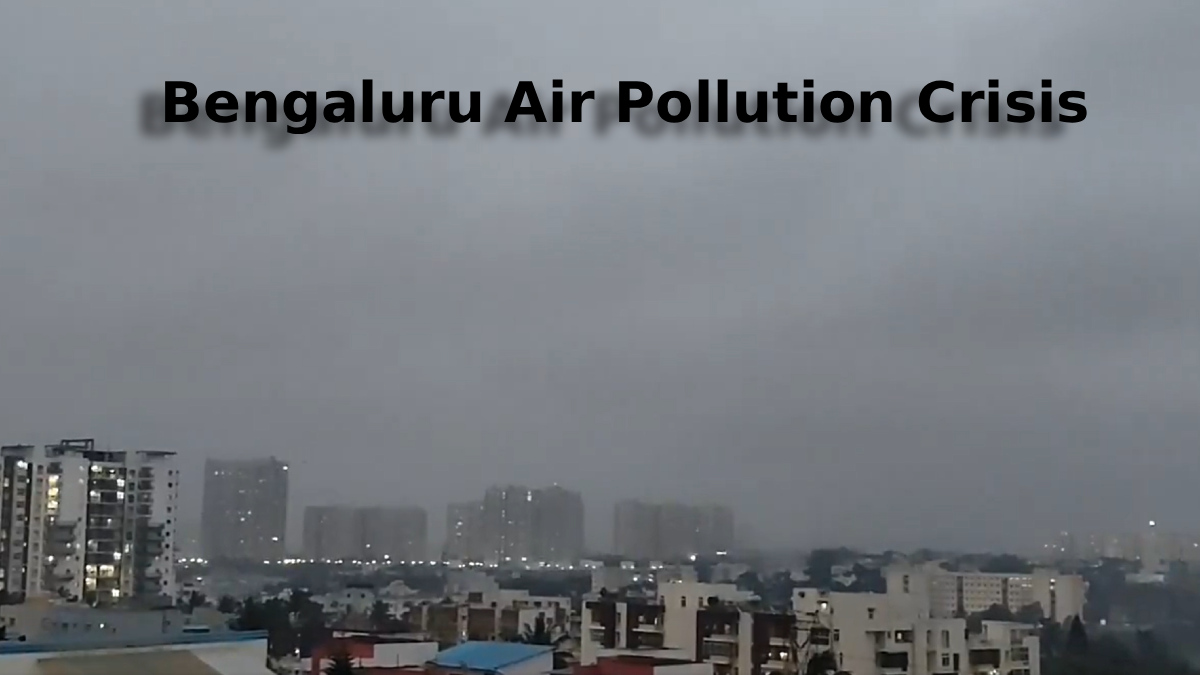
On Wednesday morning, several neighborhoods in Bengaluru recorded AQI levels surpassing 170, pushing the air into the "Unhealthy" category. While Delhi remains in the "Severe" range (AQI 400+), the steep trajectory of Bengaluru’s pollution, driven by PM2.5 and PM10 particles, has sparked an urgent health advisory for the city's residents.
Hazardous PM Levels: The Unseen Threat
Data from December 2025 shows that Bengaluru’s PM2.5 levels are currently averaging 68 µg/m³ to 85 µg/m³, which is nearly 6 times the WHO-recommended safety limit. In hotspots like Silk Board, Bellandur, and RVCE (Mysuru Road), the levels have frequently spiked even higher.
The health impact of breathing this air is staggering. According to environmental analysts, spending a day outdoors in these conditions is equivalent to smoking roughly 3.2 cigarettes.
Why Bengaluru is Losing its "Green" Status
The shift from "Moderate" to "Unhealthy" air quality is not accidental. Experts attribute the crisis to a perfect storm of urban factors:
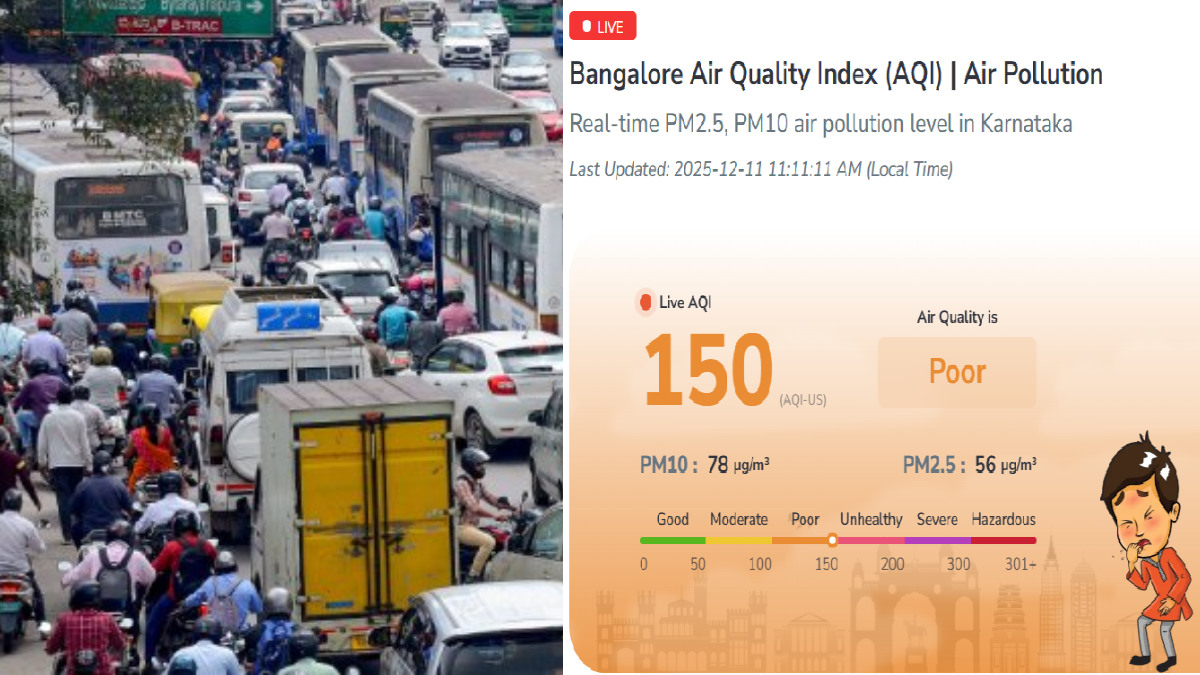
- Vehicular Surge: Bengaluru now has over 1.5 crore registered vehicles. Traffic congestion at major junctions leads to prolonged idling, which accounts for nearly 40% of the city’s emissions.
- Construction Dust: Massive infrastructure projects, including Metro expansion and high-rise developments, contribute to 25% of the PM10 load through road dust and loose debris.
- Winter Inversion: The drop in temperature during December traps pollutants closer to the ground, creating a "grey haze" that residents are now waking up to every morning.
- Waste Management: Illegal open burning of garbage in peripheral areas adds toxic fumes and VOCs (Volatile Organic Compounds) to the atmosphere.
| Metric | Bengaluru (Avg) | Delhi (Avg) | Safety Limit (WHO) |
| AQI Status | Poor/Unhealthy | Severe | Good (0-50) |
| AQI Reading | 163 - 175 | 364 - 415 | < 50 |
| PM2.5 Level | 79 µg/m³ | 350+ µg/m³ | 15 µg/m³ |
| Primary Source | Vehicular/Dust | Stubble/Industry | — |
Health Advisory: Protecting Yourself
As the haze thickens, the Karnataka State Pollution Control Board (KSPCB) and health experts have issued the following recommendations:
- N95 Masks are Essential: Standard cloth masks do not filter out PM2.5 particles.
- Limit Outdoor Exercise: High-intensity workouts (running/cycling) should be avoided between 6:00 AM and 10:00 AM when pollutant concentration is highest.
- Indoor Air Quality: Use HEPA-filter air purifiers, especially in homes with children, elderly residents, or those with asthma.
- Reschedule Travel: If possible, avoid traveling through known pollution hotspots like Whitefield and Silk Board during peak hours.
The Road Ahead
While the government has initiated the National Clean Air Programme (NCAP) to reduce particulate matter by 2026, critics argue that the lack of inter-departmental coordination is hampering progress. Without a drastic shift toward public transport and stricter dust-suppression at construction sites, Bengaluru risks losing its status as India's most livable city.