A heated clash erupted at Jawaharlal Nehru University (JNU) during a book reading on Umar Khalid's book by imprisoned activist Umar Khalid, after the Akhil Bharatiya Vidyarthi Parishad (ABVP) group and other students protested the gathering in the presence of JNU students and protesters that was held outside the forum in a book event that took place in the wake of the book and a group in the name of the book with the book that he has been identified as part of JNU by Umar Khalid, which he is associated with. The incident was captured on video.
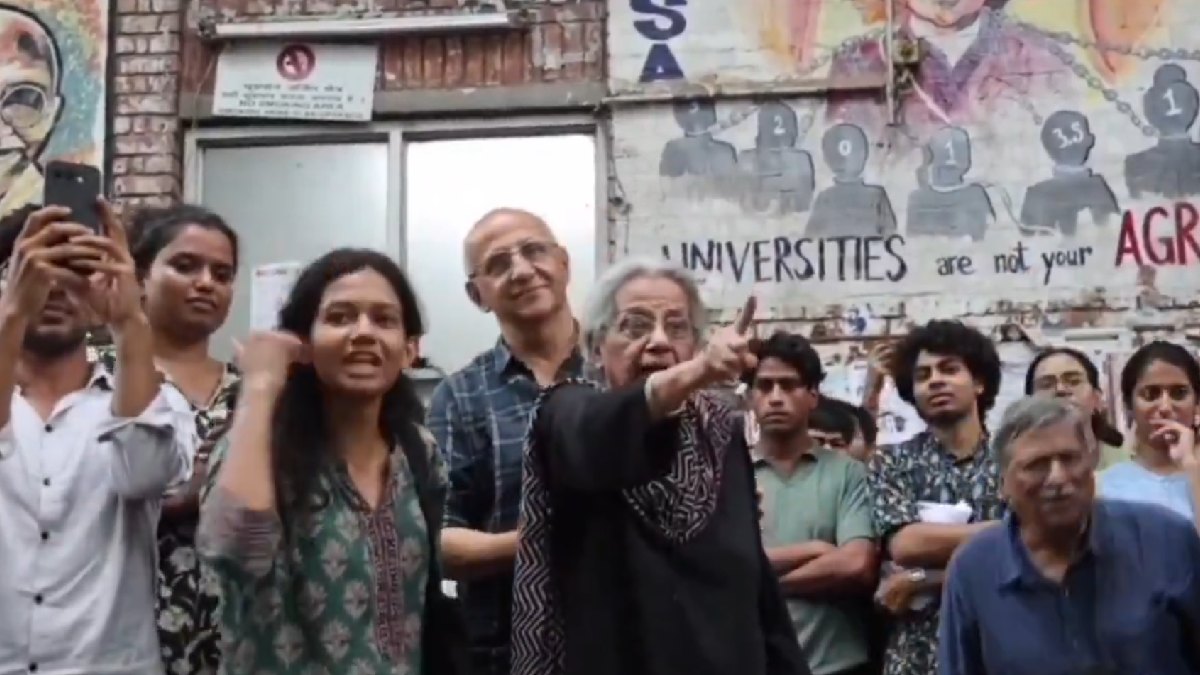
The event was organised by left-leaning student groups and focused on Umar Khalid’s book on Adivasi histories. The gathering was planned in an indoor venue but was moved outdoors after permission for the original venue was canceled over what officials said were insufficient details about the event. The move did not prevent the programme from going on, but it brought protesters and participants near each other.
ABVP members were against the programme and came up with strong slogans against Khalid. Some of the slogans which were used in the protest were “Hang Umar Khalid” as the slogans were against Khalid for what is now an incident in the 2020 Delhi riots. The slogans raised the atmosphere in the venue and at some time there was a standoff between the protesters and those attending or supporting the event.
A video from the event showed a JNU professor confronting demonstrators during the disturbance. Her encounter with the protesters quickly became a topic of debate online, with different sections of social media interpreting the confrontation differently.
Some criticized the professor's reaction—calling it confrontational and accusing her of ideological bias—whereas others defended her intervention, asserting that the protest was aimed at disrupting an academic discussion and that faculty members should have a right to challenge attempts to prevent students from talking.
The issue has once again put JNU at the centre of India’s long-standing debate over campus politics. It has always been very political and student organisations representing various ideological positions often organise protests, debates, and public meetings on the campus. Talks about speakers, events, and political issues have occasionally led to protests and demonstrations.
The Umar Khalid-related event is particularly sensitive because of his ongoing legal case. Khalid, a former JNU student and activist, has been in jail for the 2020 Delhi riots case. He and others have been accused of being part of a larger conspiracy to fuel violence, which he has denied. Khalid has not been convicted of the charges against him.
So the choice to hold an event around his book became a political flashpoint. Supporters of the programme say talking about a book or looking at historical and political ideas should not mean endorsing the position of the author. They have said the movement was an attempt to prevent academic discussion of other views from being discussed on campus.
Opponents, on the other hand, say public institutions like JNU should be sensitive to the political implications of controversial figures. The slogans demanding Khalid’s hanging only confirmed the intensity of the dispute and the polarised view of his name.
The confrontation also raised questions about the boundaries of protest on university campuses. Although peaceful demonstrations are generally considered to be part of campus democratic life, clashes, intimidation, or disruption can lead to concerns about the safety of students, faculty members, and participants. Universities must balance competing interests (freedom of expression, the right to protest, and the uninterrupted conduct of academic activity) to be able to proceed.
An event organized by JNU’s leftist union in support of Umar Khalid was met with widespread protests from the audience.
— Rishi Bagree (@rishibagree) August 13, 2026
The frustrated organizers started spewing abuse at the public.pic.twitter.com/ymyuHVXwZ6
The debate which followed the confrontation online also extended beyond the JNU campus. The footage was used for people to see evidence of their own political culture at the university, and there were arguments for academic freedom and accusations of ideological dominance.
As the latest episode shows, politics at JNU can easily reach the national stage; politics are always the main topic of discussion, so when it comes to politics at JNU, there are political events being held by student organisations (e.g., on some very controversial political and historical issues) there are going to be disagreements between rival groups.
The incident again underlines the delicate balance universities need to keep in place between open discussion, political engagement, and a peaceful university.