Juhu Beach, one of Mumbai’s most popular coastal spots, is a popular place to visit for residents and tourists. The beach is located along the Arabian Sea in the western suburbs of Maharashtra’s capital and has beautiful sunsets, bustling street food shops and a vibrant atmosphere. But despite its popularity, Juhu Beach faces significant environmental challenges.
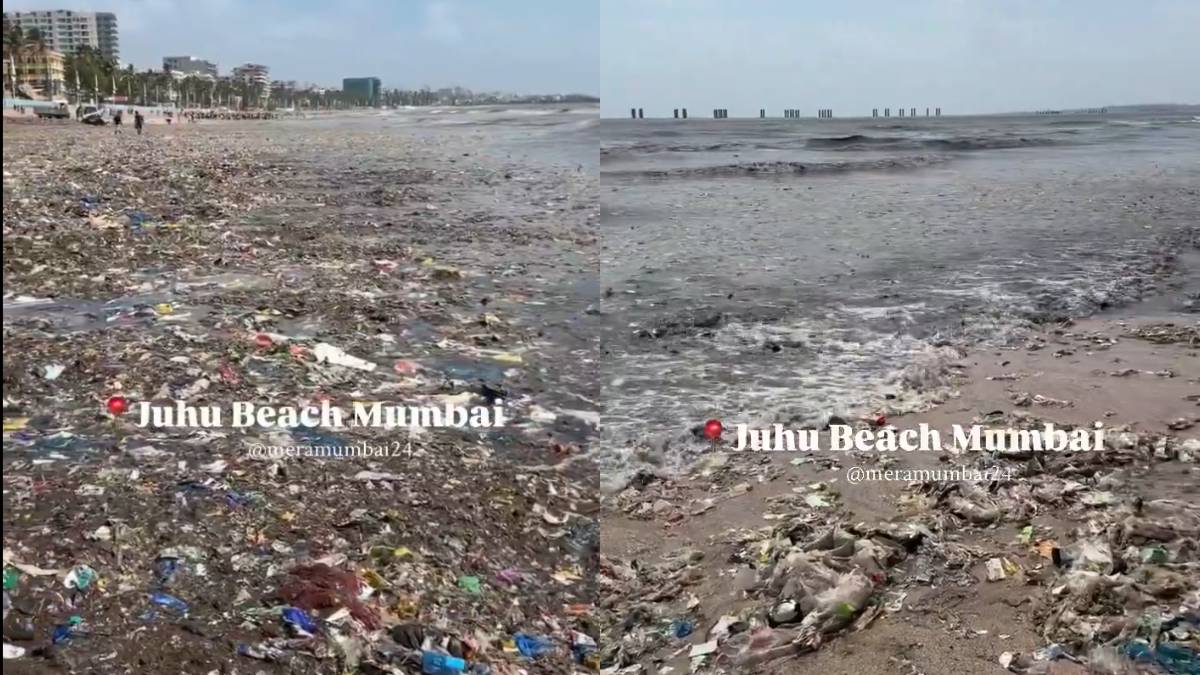
Thousands of people visit Juhu Beach every day, and the number of people coming and going is so large during weekends, public holidays, and the festival season. And although the popularity of the beach is a boon for Mumbai and the local economy, it puts enormous pressure on the beach’s fragile coastal environment. Plastic bottles, food wrappers, disposable cups, and other litter are frequently dumped along the beach, especially on busy weekends or large public events.
Another issue is the accumulation of marine debris brought ashore by tides. Plastic waste, fishing materials, and other discarded items from the Arabian Sea frequently wash up on the beach. The amount of debris in the water can increase quickly during the monsoon when rivers and stormwater drains carry waste into the ocean before it reaches the coastline.
The Ganesh Chaturthi festival also brings environmental problems. While authorities have promoted eco-friendly idols and designated immersion sites, all the Ganesh idols are very much decorative, and flowers and other waste can be left behind in large amounts in the large-scale immersion process. City workers and volunteers do a massive cleaning drive immediately after the festival to clean the beach.
BMC’s Beach Cleaning Campaign is in partnership with environmental organizations, residents, and volunteers. These initiatives focus on removing plastic waste, separating recyclable materials, and teaching the public about responsible waste disposal. Volunteers are now playing a key role, and it is important to have community involvement in maintaining the beach in a way that ensures the beach is maintained. Some of the citizen-led cleanup events have been taking place in Mumbai.
Public awareness campaigns have also encouraged visitors to avoid littering and to use designated waste bins installed along the promenade. Environmental groups have also highlighted plastic pollution to marine life and the harmful effects on turtles, fish, and seabirds that live/migrate through the Arabian Sea.
Coastal erosion is still a problem in addition to pollution. Natural wave action, changing tides, and extreme weather events associated with the monsoon gradually alter the shoreline. Scientists are still studying coastal dynamics to find sustainable measures to protect the beach and preserve its natural environment.
Despite all these concerns, Juhu Beach continues to offer a vibrant recreational environment. Families walk in the evening, kids run along the shore, fitness lovers jog along the beachfront, and Mumbai’s street food (pav bhaji, bhel puri, gola) is enjoyed by visitors. The beach is a place of cultural events, film shoots and public events and is one of Mumbai’s most recognizable landmarks.
More recently, waste management has been more stringent as sanitation workers were employed, machines for washing the beach were also installed, and garbage collection was taken into account.
Environmental experts say long-term improvement will be based on the elimination of waste at its source. Better segregation of household waste, better sewage treatment, stronger enforcement against illegal dumping, and more citizens’ involvement in the process are all essential to protecting Mumbai’s coastline. The use of sustainable tourism practices (e.g., less plastic, more responsible visitors) can also be of great contribution to the development of Mumbai’s coastline.
Juhu Beach is an emblem for both the beauty and environmental challenges of India’s urban coastline. Cleaning up has been a part of the past, and the beach has improved at various times, but for the government, environmental organizations, local people, businesses, and visitors to keep the place up, a necessary part of the city’s culture is to keep it clean from the shoreline.