Justice Surya Kant was sworn in as the 53rd Chief Justice of India (CJI) today. President Droupadi Murmu administered the oath of office at a ceremony held at Rashtrapati Bhavan, marking the beginning of his tenure at the helm of the country's judiciary.
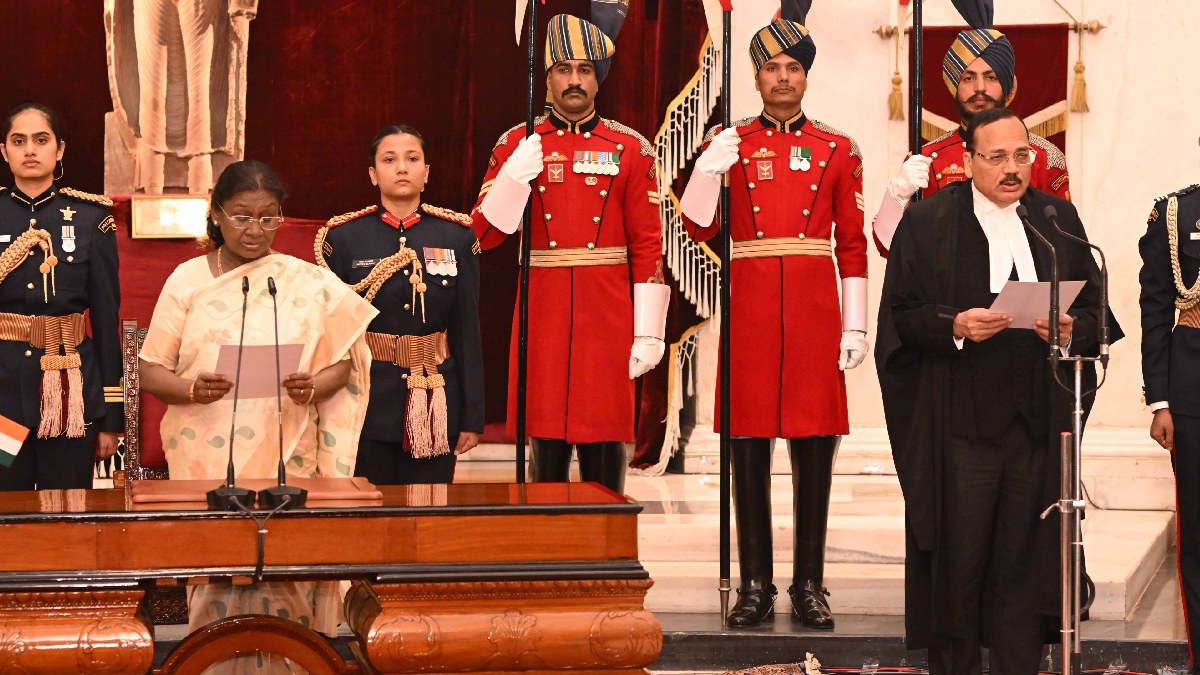
He succeeds Justice Bhushan Ramkrishna Gavai, who demitted office on Sunday, November 23, 2025. Justice Kant will serve a relatively long term of nearly 15 months, until his retirement on February 9, 2027.
A Focus on Pendency and Structural Reform
Upon taking charge, Justice Kant highlighted his central priority: tackling the massive pendency of cases across the country's court system, which stands at over 5.29 crore matters.
- Addressing Arrears: The new CJI plans to focus immediately on working with High Courts to identify and fill structural gaps in District and subordinate courts.
- Constitution Benches: He emphasized the need to constitute and decide matters before larger Constitution Benches (of five, seven, and nine judges) to resolve complex legal questions that currently cause thousands of other cases to be kept in abeyance.
- Mediation as a Game Changer: Justice Kant also expressed strong support for mediation, describing the alternative dispute resolution mechanism as a "game changer" for faster, off-court settlements.
Journey to the Apex Court
Justice Surya Kant's career is a testament to rising through the ranks of the judiciary:
- Early Life: Born on February 10, 1962, into a middle-class family in Hisar, Haryana, he was the first law graduate in his family.
- Advocate General: He started his practice in 1984 and later became the youngest Advocate General of Haryana in July 2000.
- High Court: He was elevated as a Permanent Judge of the Punjab and Haryana High Court in January 2004, and later served as the Chief Justice of the Himachal Pradesh High Court from October 2018.
- Supreme Court: He was elevated as a Judge of the Supreme Court of India on May 24, 2019.
His appointment to the highest judicial office is being viewed with great anticipation, given the length of his tenure and his stated goal of focusing on substantive reforms and judicial efficiency.