Karnataka is prepared to build up its internal security and policing capability with measures to combat organised crime, cyber fraud and terrorist threats. Chief Minister D. K. Shivakumar has promised to set up anti-rowdy squads in every region of the state including Bengaluru and the police force will also undergo specialised training from the National Security Guard (NSG).
The proposed anti-rowdy squads should run under the direction of separate IPS officers of each district. The initiative is to deal with people who are involved in organized criminal activities and residents will be safer, Shivakumar said. He also said the teams would be operated independently and without political pressure.
In Bengaluru, the Chief Minister said formation of the squads had already started. He said the dedicated teams would focus on controlling rowdy elements and maintaining peace, while keeping public safety as their primary responsibility.
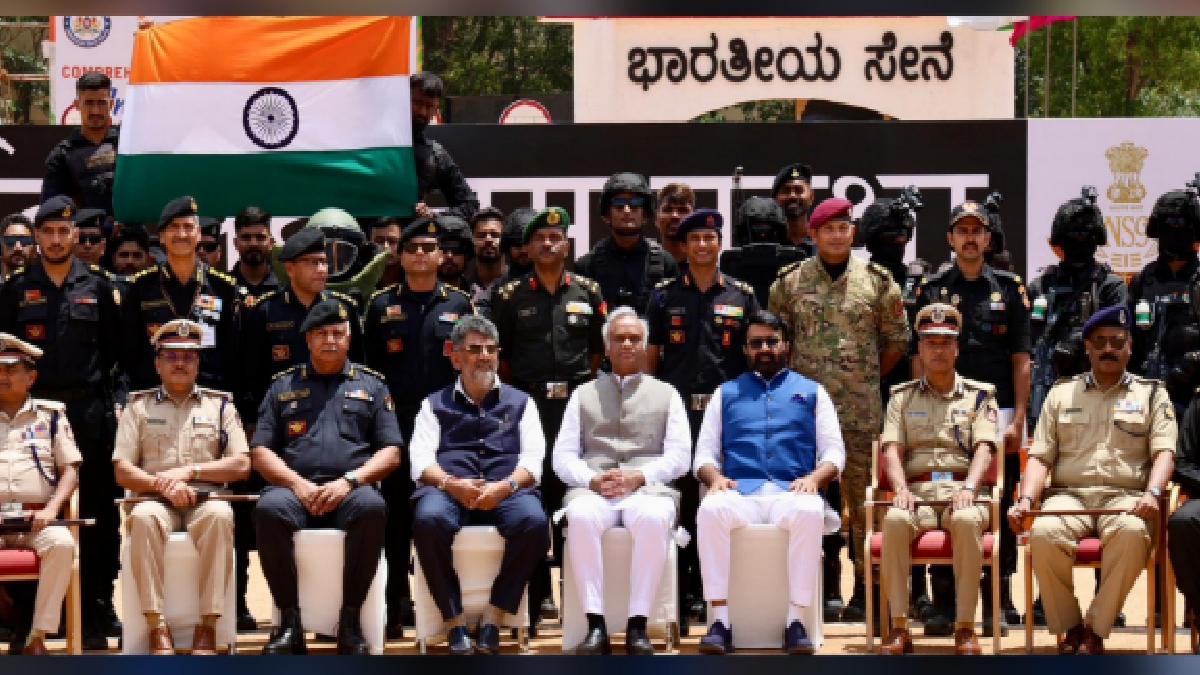
The announcement came after Shivakumar addressed a capacity-building training programme for Karnataka Police by the National Security Guard at the Manekshaw Parade Ground in Bengaluru on Friday. NSG training is intended to improve the response of state police to terrorist attacks and other major security challenges.
Karnataka Home Minister Priyank Kharge also stressed the necessity of the specialised training. “The programme will enhance the skills and capabilities of the Karnataka Police Department,” he said. The training will also enhance the preparedness to respond with specialised counter-terrorism and emergency response capabilities in case of an emergency.
Kharge also stressed the need for better coordination among government departments involved in security and emergency response. Intelligence agencies, specialised forces, forensic teams, fire services and civil administration all have critical roles in large security incidents. When incidents arise, the coordination between these departments will help in emergency response much more quickly and effectively.
Another major challenge to the Chief Minister was emergency preparedness in Bengaluru’s fast growing high-rise environment. Shivakumar said real estate developers should make sure of helipads on high-rise buildings as necessary. He said such facilities could be useful during emergency situations, notably fire or terrorist attacks.
The government will discuss with military and Air Force officials on the use of helipads in high-risk scenarios, he said. Such arrangements could also help to evacuate and rescue people from high-rise structures in times of high-rise structural problems, the Chief Minister said.
However, the availability and functionality of helipads on high-rise buildings remain a concern. Although many large buildings and hotels have helipads in their buildings, not all are operational or suitable for emergency use. Safety and operational requirements of such infrastructure would therefore be at the heart of any emergency response strategy.
The security push comes at the same time as Bengaluru’s growing concerns about cybercrime. It has been one of India’s major technology centers, and cybercrime for a long time has been a huge problem in Bengaluru: online financial fraud, and cybercrime using technology.
According to National Crime Records Bureau data, Bengaluru had 17,561 cybercrime cases in 2024, and the city has the highest cybercrime rate in the country. The magnitude of such crimes has increased the demands of law enforcement to develop specific technology-related crimes.
#WATCH | Bengaluru, Karnataka: CM DK Shivakumar says, "In Bangalore city, whatever the high-rise buildings are there, NSG, have been training our local officers. It is very risky. So, the Karnataka government today has announced that we will give 50% extra basic pay for those… pic.twitter.com/2j6kUXZj8e
— ANI (@ANI) August 28, 2026
Shivakumar said the government is using technology to fight cybercrime and is also considering the use of drones for national security purposes. Given Bengaluru’s global technology presence and the presence of major tech companies, cybercrime policing would boost public and business confidence.
At the same time, the government is also looking at measures to improve the welfare and working conditions of police personnel. Shivakumar said the government had agreed to increase the police hardship allowance by 50 per cent, citing similar measures in Andhra Pradesh and Telangana. Better housing facilities have also been proposed to support the force.
Taken together, these measures are part of a larger attempt to improve Karnataka’s policing infrastructure at every level. While anti-rowdy squads specifically aim to tackle local organised crime and public order issues, NSG-led training is focused on the preparation of the community against high-risk security threats. Cybercrime, emergency infrastructure and police welfare are also part of the overall security strategy.
For Bengaluru, the measures have special relevance because of the city’s rapid urban growth, large population, high-rise buildings and global technology hub. And authorities have to deal with traditional crime and to keep up in the face of increasingly sophisticated cyber and security threats too.
The success of the proposed initiatives will ultimately depend on effective implementation, coordination between agencies and adequate resources. Specialised teams and advanced training are great for police but ongoing monitoring and operational readiness will be needed to see if these are going to lead to an improved public safety in Karnataka.