Karnataka is banning gutkha and pan masala products containing tobacco or nicotine for a year, the state Food Safety Commissioner said. The ban will be for production, storage, distribution, transportation and sale of such products in the state.
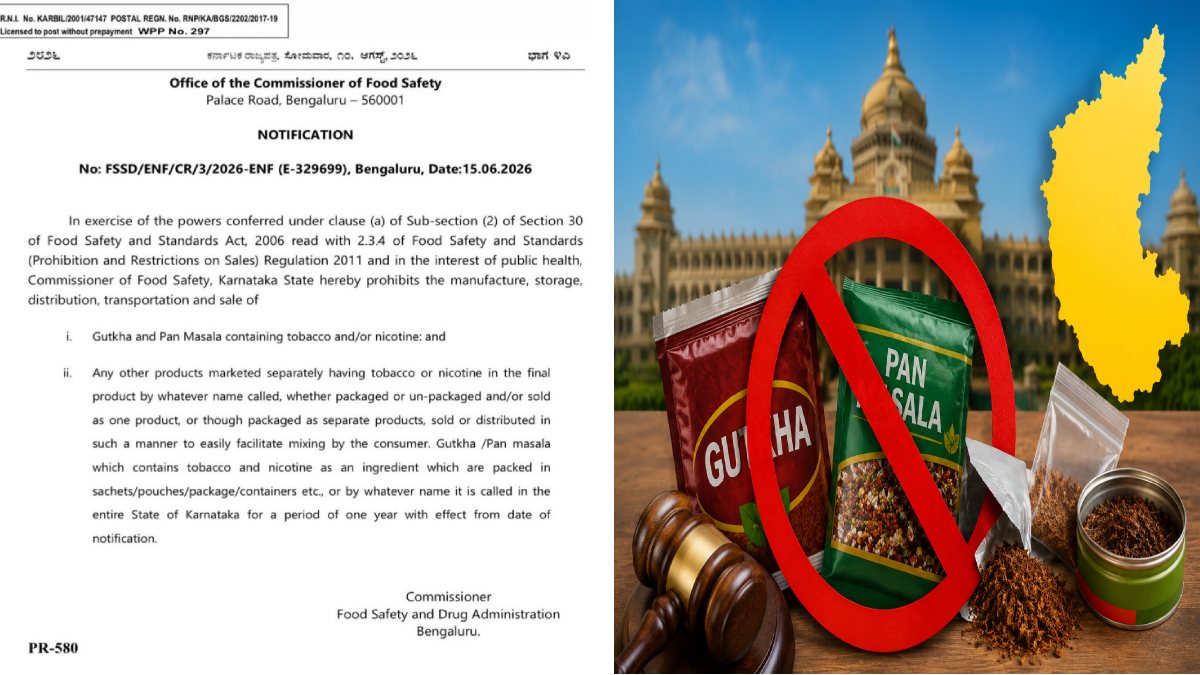
The order also addresses a method for which enforcement has become increasingly difficult: products sold separately but mixed before consumption. In addition to the prohibitions detailed in the order, tobacco products designed to mix with pan masala are also covered.
As such, the restriction is not limited to a single packet containing both pan masala and tobacco. The larger aim is to prevent manufacturers, distributors and sellers from circumventing restrictions by keeping the ingredients in separate packages.
It is in this context that the Karnataka government is taking the initiative in response to the continuing concern of tobacco use and the health effects of smokeless tobacco products. Tobacco and nicotine are prohibited in food products under Food Safety and Standards. The central government has told us that gutkha and pan masala containing tobacco or nicotine are in line with this policy.
The development follows comments made by Karnataka Chief Minister D.K. Shivakumar in June 2026 that if pan masala, gutkha and other products were found to contain intoxicating or narcotic substances, the government would take action. The chief minister had been worried about substances being added to products to create a drug-like effect and had said the government would take stronger action.
The one-year prohibition places manufacturers, wholesalers, distributors, retailers and other businesses involved in the supply chain under an obligation to follow the order. Food safety restrictions are enforced and establishments that are not meeting these laws can face inspection and penalties.
Such prohibitions are particularly important to enforcement of restrictions as tobacco-containing chewing products can still be circulated through informal retail networks even after restrictions are announced.
The decision also underscores the continuing challenge of preventing products from being repackaged or sold in ways that allow consumers to mix separately sold ingredients. In its specific reference to separately packaged tobacco products to mix, the order closes a potential loophole in enforcement.
The use of tobacco is still a major public health problem in India. Smokeless tobacco products are associated with serious health problems including cancer of the mouth and other diseases. The World Health Organization has repeatedly raised the issue of the adverse effects of tobacco use and the necessity of complete tobacco-control measures.
For consumers, the Karnataka order means products covered by the prohibition cannot legally be manufactured, stored, transported, distributed or sold in the period set by the Food Safety Commissioner. The restriction is therefore wider than just stopping retail sales. It is in the commercial supply chain at different stages.
But the move is also significant from an enforcement point of view because not only traditional gutkha products but products that are marketed in ways that will not necessarily be classified can be detected. Separate packaging of tobacco and pan masala can make enforcement more challenging since they are sold together at a time to be mixed later. This prohibition is aimed at making it more comprehensive.
Karnataka has been subject to national tobacco-control regulations regarding tobacco and nicotine in food products since 2014. A Ministry of Health and Family Welfare release from 2014 listed Karnataka among states and Union Territories that had issued orders implementing food safety regulations banning the manufacture, sale and storage of gutkha and pan masala containing tobacco or nicotine.
The renewed prohibition is therefore another step in Karnataka’s ongoing push to regulate tobacco-containing chewing products. It also comes at a time when the state government has been publicly stressing efforts to address substance use and promote a drug-free environment.
The ban will also put retailers and distributors who previously sold affected products out of business. Businesses will have to make sure that their inventories and business plans comply with the requirements of the order. Enforcement agencies will monitor markets and supply chains, particularly in areas where such products have historically been available.
For the public, the measure is presented as a health-protection initiative. Restricting tobacco and nicotine-containing chewing products is intended to reduce exposure and support broader tobacco-control efforts. But the policy will only work so long as it is consistently enforced and illegal supply channels are not replacing regulated sales.
The Karnataka government’s decision also shows us again the importance of people’s awareness of the potential dangers of tobacco products. And even if restrictions may take away access to tobacco products, long-term public health outcomes are also dependent on education, prevention and support for people who wish to move away from tobacco use.
The Karnataka government has banned the sale and distribution of gutkha, pan masala, and other tobacco and nicotine products for one year. The Food Safety and Drugs Administration has intensified inspections across the state following a government notification issued on August… pic.twitter.com/kdzpSGC9It
— IANS (@ians_india) August 12, 2026
With the Food Safety Commissioner’s one-year prohibition covering manufacturing, storage, distribution, transportation and sale, Karnataka has taken a broad regulatory approach to the products covered by the order. The inclusion of separately packaged tobacco intended for mixing is particularly significant because it seeks to prevent attempts to bypass restrictions through separate sales.
The development will be closely followed by retailers, tobacco-control advocates, public-health authorities and consumers in Karnataka. The next few months will show how much of the order is being implemented and if enforcement agencies are able to prevent the prohibited products from returning through alternative supply routes.