The Karnataka government has once again brought the controversial Karnataka Government Parks (Preservation) (Amendment) Bill, 2026, for reconsideration in the state Cabinet after protests by members of the public and opposition parties over the proposed tunnel road project in Bengaluru.
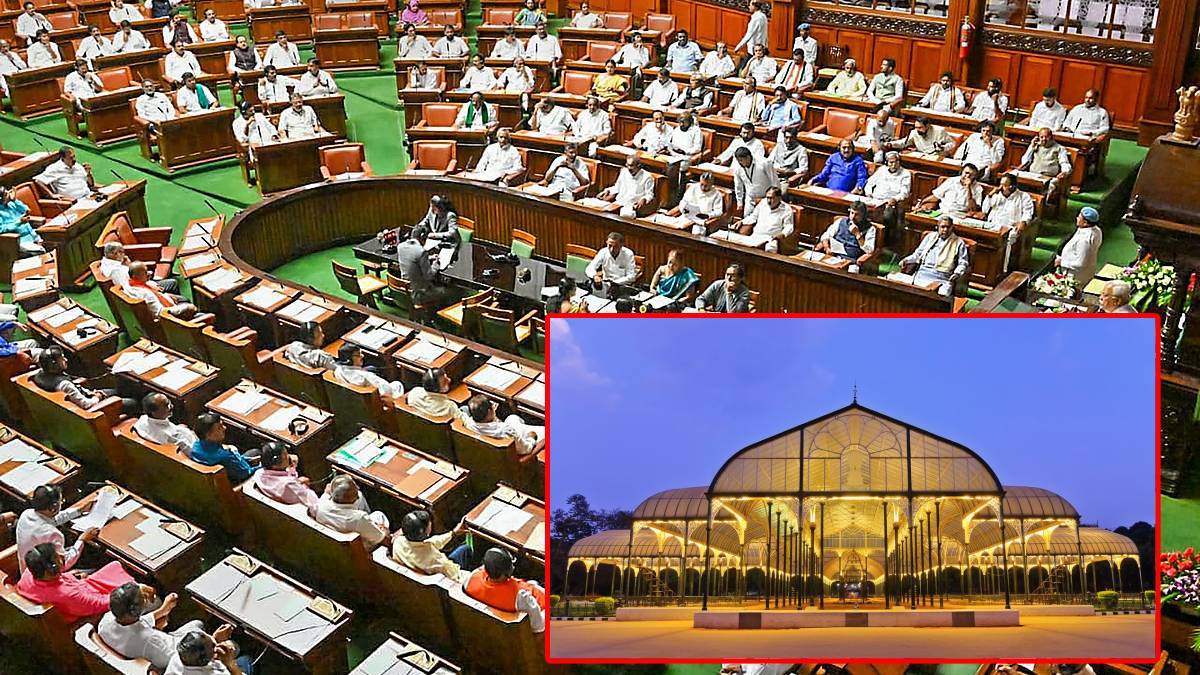
The amendment has drawn criticism because it would enable the state government to alienate up to 5% of park land for infrastructure projects, like the proposed tunnel road that is planned to pass below Lalbagh. Groups have been worried about the effect of the project on one of Bengaluru’s most prominent green spaces.
Still, the bill is pending before the Governor for approval, but for now, the Karnataka government has brought it back before the Cabinet for further discussion on the basis of the growing controversy. The process of reconsideration would enable the government to take stock of the proposed amendments and respond to the concerns of the protesting and opposition parties.
The tunnel road project is intended to provide an alternative underground route through Bengaluru and could alleviate congestion on some of the city’s increasingly crowded roads. Major underground infrastructure projects believe that tunnels can provide more transport capacity while also having less surface-level road expansion.
But the proposal to use a portion of park land has become an issue. Lalbagh is one of Bengaluru’s most important public green spaces and is noted for its extensive vegetation, historic landscape, and botanical collections. So any proposal with land associated with the park has environmental and public-interest implications.
Protesters have challenged the amendment because, without park land being taken off the table for infrastructure development, it would set the precedent for such protected or public green spaces to be lost to development in future projects. Opposition parties have also protested the proposed change and tunnel road plan.
Bengaluru’s government is in the position of balancing its infrastructure needs and maintaining its remaining green spaces with the need to build faster and more urban areas as the city has witnessed massive population growth and traffic congestion, and authorities are exploring large-scale infrastructure solutions, including underground road networks.
The latest Cabinet discussion is important because the amendment has already passed through the legislative process and is currently awaiting the Governor's decision. Changes to the legislation could thus be made if Cabinet talks again in the future.
The controversy has also revived the environmental impact assessment and planning challenges associated with large infrastructure projects in Bengaluru. In the Lalbagh area, the road will pass underground, and there are questions about the impact of construction activity, access points, and any associated infrastructure on the ecosystem of the park.
For residents and environmental groups, the main issue isn’t just the amount of potential land to be alienated but the larger idea of preserving Bengaluru’s public green spaces. Infrastructure development should be carefully planned so that the city’s environmental assets are not compromised, they say.
The tunnel road is being considered by the state government in the context of more general strategies to solve Bengaluru’s chronic traffic problems. The city has been under increasing pressure on its existing road network, especially during peak commuting hours. Underground transport infrastructure would help to add much more capacity on top of current urban roads, without having to demolish or expand the surface roads.
The Cabinet's reconsideration of the Parks (Preservation) Amendment Bill therefore comes at a crucial stage. Any decision will have implications not only for the proposed Lalbagh tunnel road but perhaps also for how the state will use public park land to make future infrastructure projects.
The government will now assess the concerns raised about the amendment and consider the project's broader transportation objectives. The Cabinet’s decision on whether to proceed with the bill or make further changes could influence its passage.
The Lalbagh tunnel road controversy has thus become an issue of development versus environmental conservation in Bengaluru. As the government is assessing its next steps, public interest is going to be focused on whether the proposed infrastructure could be put in place with the city’s precious green spaces to protect, as well as what is being built.