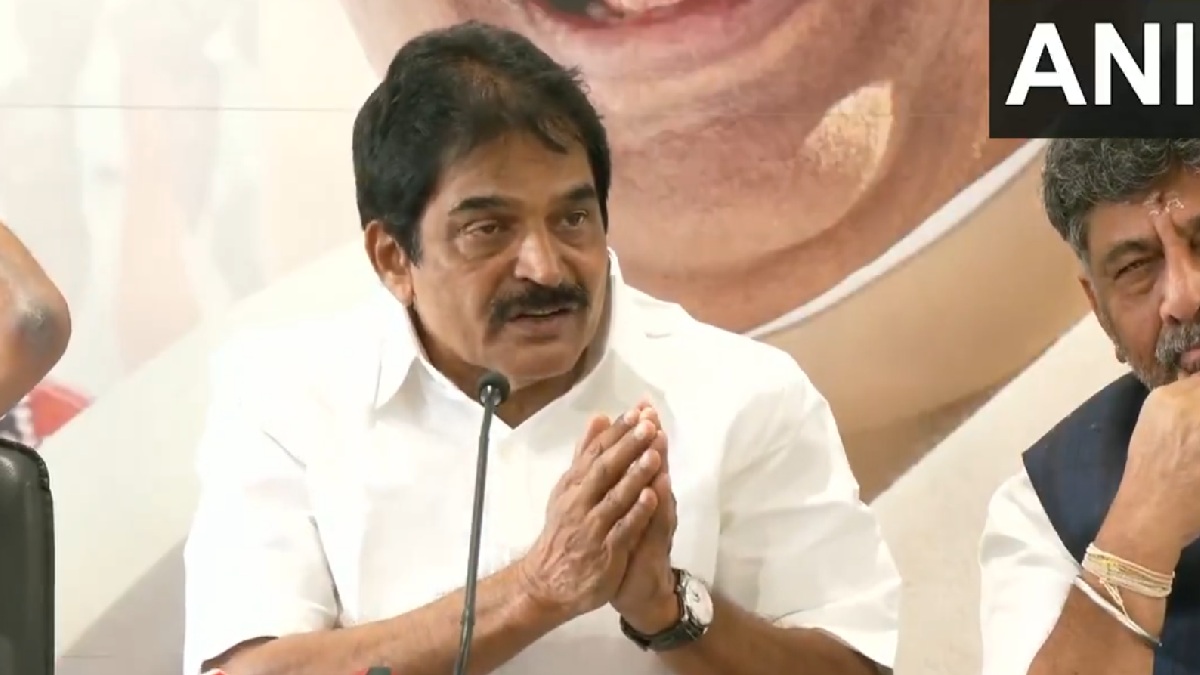
Congress general secretary K.C. Venugopal has rubbished the newly introduced Merchant Discount Rate (MDR) system for Unified Payments Interface (UPI) transactions and termed the 0.4% charge as a “new Modi Tax” in his speech to parliament on Saturday. Venugopal said that the new payment charge would add to the financial burden of the common people and linked it to the government’s approach to the United States.
He also said that the Modi government is putting extra pressure on the common man. His comments came just a week after NPCI changed its MDR rules for certain UPI merchant transactions.
Under the new framework, a 0.4% MDR will apply to person-to-merchant UPI transactions above ₹2,000 from October 15, 2026. The charge is capped at ₹300 per transaction and transactions of ₹75,000 and above will be subject to the maximum MDR of ₹300.
The new framework does not cover person-to-person UPI transfers and payments will be free, irrespective of the amount transferred. Payments to merchants up to ₹2,000 will be free and certain categories like fuel, insurance, telecommunications and railway services will have a flat MDR structure.
As Venugopal says, the new UPI payment is a policy and not just a tax. The Congress leader described MDR as a tax and said it would make things difficult for everyone. His comments are the Congress party’s stance on the new system. The government’s narrative is very different: It is the Ministry of Finance’s word that MDR is not a tax, it is not a charge that the government or NPCI will be imposing on UPI payment.
The government has also emphasized that consumers are not supposed to pay the MDR directly. Banks have been recommended to ensure merchants do not pass the MDR to customers, and UPI application providers have been prohibited from charging platform fees or hidden charges under the new framework.
The government estimates 96% of merchant UPI transactions will remain unaffected, because transactions below ₹2,000 threshold and transactions covered by the zero-MDR framework for small merchants will continue without MDR.
#WATCH | Bengaluru | On UPI MDR transaction charges, Congress General Secretary KC Venugopal says, "New Modi Tax has been enforced in this country through this UPI - 0.4% tax. That is a new Modi tax. That tax has come because of the surrendering attitude of PM Modi to the US.… pic.twitter.com/9HUApYIFYz
— ANI (@ANI) September 16, 2026
The new framework will provide a revenue stream for the rest of the UPI ecosystem after years when UPI payments operated without a standard MDR on merchant transactions. According to the government information, person-to-person payments account for a large share of UPI activity and will remain outside the MDR system. Small merchants with up to ₹1 lakh per month through UPI QR codes under the small merchant category will also receive zero-MDR treatment.
The government has said that the framework will help sustain India's digital payment infrastructure and grow it over time while protecting people and small businesses.
The introduction of UPI MDR will therefore be at the center of political and economic debate in the coming weeks. The Congress has criticised the move and Venugopal has used the term “Modi Tax” to describe it, while the government insists that MDR is an addition to the merchant-side payment system as opposed to a tax on the consumers. The practical impact will largely depend on how merchants and payment providers implement the new framework after it comes into effect on October 15.
For users, the key provisions are that person-to-person transfers remain free, merchant payments up to ₹2,000 remain free and eligible merchant transactions above ₹2,000 will attract the prescribed MDR in the payment ecosystem.