Italian Prime Minister Giorgia Meloni has taken an audacious step to protect her identity from the growing threat of artificial intelligence-generated deepfakes. Meloni has applied to the European Union Intellectual Property Office (EUIPO) to trademark her voice, potentially giving her a legal challenge to unauthorised commercial use of AI-generated replicas.
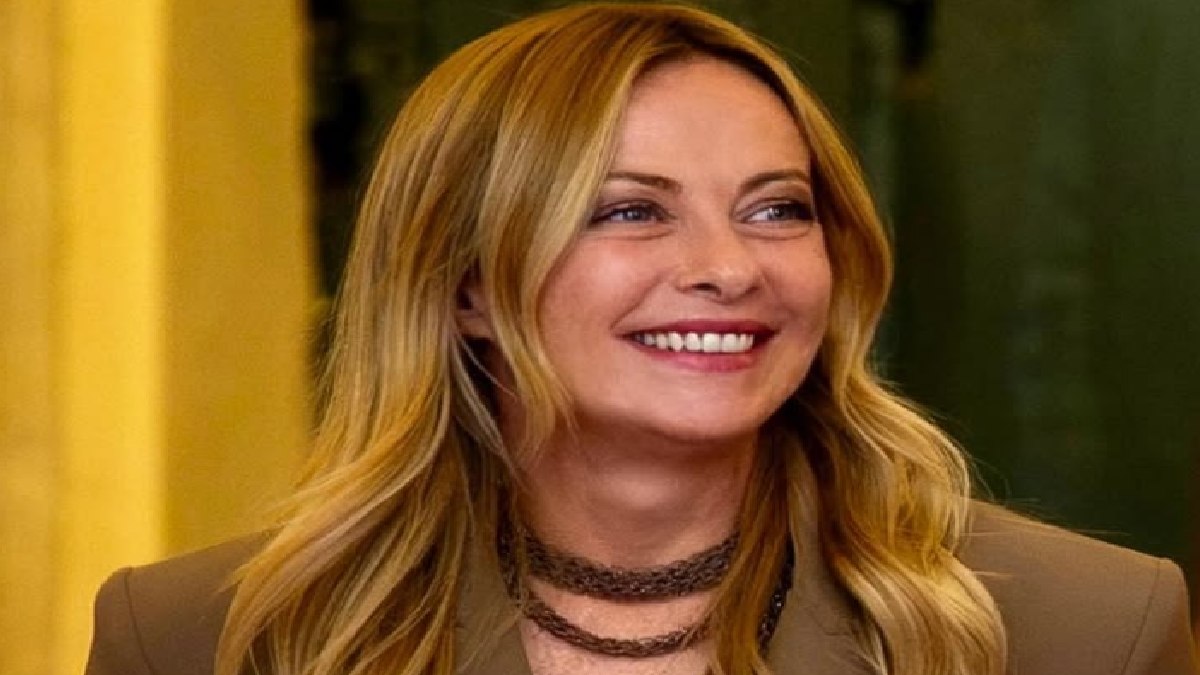
The application was filed on October 5 and confirmed by Meloni’s office. It includes a four-second audio recording in which the Italian prime minister says “Io sono Giorgia Meloni”, or “I am Giorgia Meloni” twice. The application is still under examination, so the proposed voice trademark has not yet been approved.
The term has a strong association with Meloni. She famously said “Io sono Giorgia” during a political rally in 2019. The expression would later come to define her 2021 autobiography. The book was also published in India, and Prime Minister Narendra Modi wrote the foreword for the Indian edition.
What would a voice trademark mean?
A successful trademark application would not make Meloni’s voice impossible to reproduce with artificial intelligence. Instead, it could bring her another legal route to challenge certain unauthorised uses of her distinctive voice or audio mark in areas covered by the registration.
The EUIPO's reports indicate that the application covers downloadable multimedia content, cultural activities and the organisation of political events. So if the registration is granted, it would have legal scope rather than a blanket protection against every AI-generated imitation.
Voice cloning technology has become more and more sophisticated. AI tools can create convincing audio that appears to show public figures saying things they don’t. Such information can be used to sow misinformation, entice audiences or damage reputations.
Meloni has also warned about the dangers of deepfakes. Manipulated content can be deceptive and hurt people, she has said, and public figures may have more resources for defending themselves than ordinary people.
Meloni’s Previous Deepfake Concerns
The Italian prime minister has herself been targeted by manipulated digital content. Sexually explicit deepfake images falsely depicting Meloni have circulated online.
In 2024, Meloni filed a civil lawsuit against a Sardinian man accused of creating and distributing fake pornographic images using her face. The case is still before an Italian court.
Her effort is part of a wider debate about how existing intellectual property and personality rights laws can respond to rapidly developing AI technologies. Traditional copyright and trademark rules were not designed for today’s more realistic voice and image cloning devices.
Other Public Figures And Voice Protection
Meloni is not the only public figure seeking better protection from unauthorised digital replication. Italian singer Giusy Ferreri has also registered a voice mark; voice actor Luca Ward also sought trademark protection for his distinctive voice.
International celebrities have also been at odds with AI-generated replicas. Singer Taylor Swift and actor Scarlett Johansson have both been at odds about the use of artificial intelligence to reproduce aspects of their identities.
Johansson, for example, objected to an AI voice developed by OpenAI that she said sounded similar to her own after she had declined to participate in the project. OpenAI denied copying her voice and subsequently withdrew the feature.
Japan has also seen legal developments on AI-generated voice replicas. A recent court ruling recognised the protection of a human voice in a case in which an anime voice actor sued for an AI-generated clone.
Meloni’s application emphasizes the increasing legal challenges created by AI-generated content. With voice cloning becoming more realistic, governments, courts and intellectual property authorities are increasingly being asked to determine how individuals can protect their voices, likenesses and identities in the digital age.