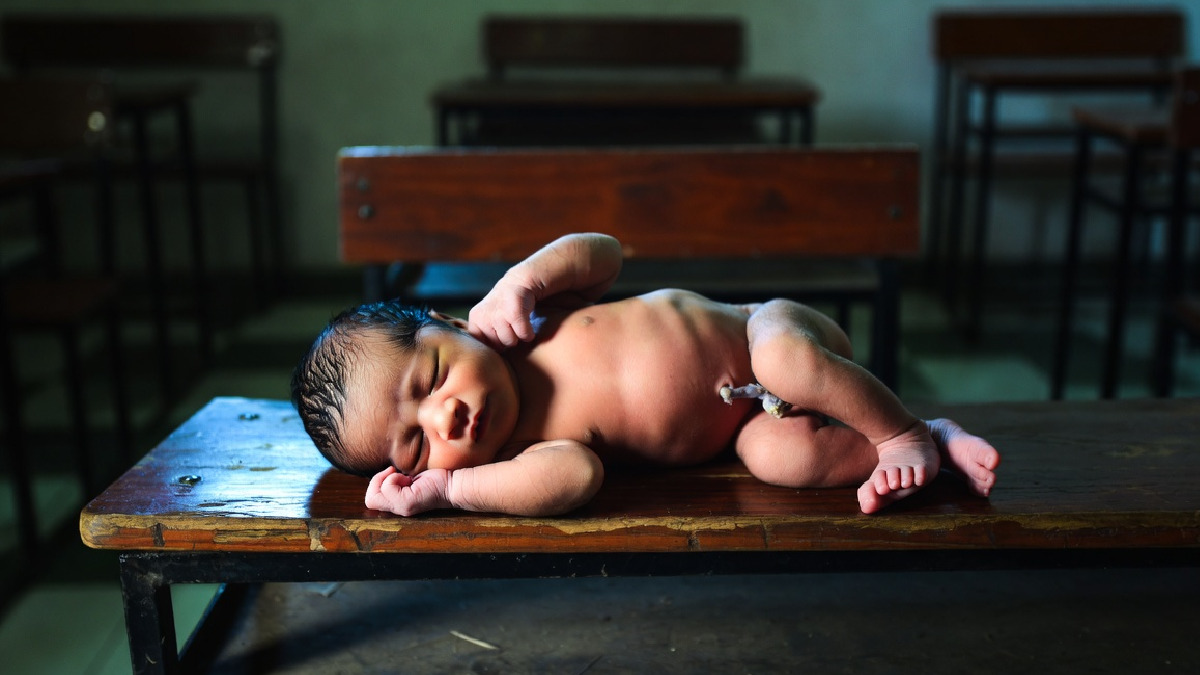
An eye-breaking incident in Madhya Pradesh’s Mandla district has raised questions about access to emergency maternal healthcare after a woman gave birth to quadruplets in an auto-rickshaw while being taken to a hospital after she was in a medical emergency to the hospital.

Early reports suggest that the family had not got the ambulance services and immediate medical help to attend to the pregnant woman and that they had to take her to a private vehicle. All four babies died and the situation has been brought to the fore and emergency healthcare services in the area are to be investigated.
According to local reports, the woman went into labour and her family tried to find emergency medical transport to send her to the hospital. But they were unable to get an ambulance in time and she was taken by auto-rickshaw. She delivered four babies before she got to the hospital; she delivered four babies in the journey and even though they tried to give medical treatment to them after arriving, the newborns were not saved.
The incident has raised serious questions about the availability of emergency medical services to the rural and remote areas of the country where access to healthcare remains a challenge. In obstetric emergencies, families tend to turn to government ambulance services as late transportation to the hospital and the newborn can be critical for the mother and newborn. Delays in skilled medical care increase the risk of complications in childbirth.
Local health authorities have started an inquiry into the sequence of events to establish whether emergency ambulance services were contacted, the response time involved, and whether there were any lapses in medical assistance. They are also going to investigate whether the maternal healthcare protocols were followed and whether emergency response systems were improved.

The tragedy has reignited the debate on maternal and neonatal healthcare in rural India. Although institutional deliveries have increased significantly over the past decade as a result of government initiatives to promote safe childbirth, in some areas emergency transport, specialist availability, and access to advanced neonatal care is still a problem. Medical professionals say high-risk pregnancies, such as multiple births (e.g., twins, triplets, or quadruplets) require specialized medical supervision and immediate access to well-equipped healthcare facilities.
Medical professionals note that quadruplet pregnancies are extremely rare and are medically high-risk. Premature births often result in intensive neonatal care for a newborn baby, respiratory support, temperature control, and monitoring of the fetus. Premature births in hospitals that have several babies are usually planned in hospitals with obstetric specialists, anesthetists, and NICUs to improve survival for both the mother and infants.
Emergency ambulance networks are crucial to reducing maternal and child mortality, healthcare professionals say. Fast transportation enables pregnant women to get to hospitals where medical professionals can diagnose labour complications and respond to life-saving interventions when necessary. Delays in transportation, lack of medical personnel, or inadequate referral systems that are needed to manage obstetric emergencies can have life-threatening effects.
The incident has led to renewed calls for strengthening health infrastructure in poor areas. Public health experts recommend more ambulance service to be provided, better road connections, trained obstetricians and pediatricians, and more advanced neonatal care facilities in district hospitals. Better coordination between primary health centres, community health workers, and referral hospitals will also help to quickly deal with high-risk pregnancies before they get pregnant.
Social organizations and health providers have offered their sympathy to the grieving family and called for the government to conduct an investigation into the tragedy. They said accountability must also include systemic changes to prevent such tragedies in the future if such failures are found and systems need to be built around it. Many experts believe that rural healthcare, regular monitoring of emergency medical services, and the continuous training of frontline healthcare workers are fundamental to maternal and child health care.
Investigators will be looking for the statements from healthcare personnel, ambulance service providers, and the family to get a sense of what happened. Those findings could illuminate what is needed for emergency healthcare on the whole and how these can be improved.
The tragic loss of four newborn lives is yet another tragic reminder of the need for timely maternal care, emergency medical transport, and specialized care for high-risk pregnancies. And we are all in the business of making sure that every expectant mother gets immediate medical support, regardless of where she is located in India, so that we can help reduce the number of preventable maternal and neonatal deaths.