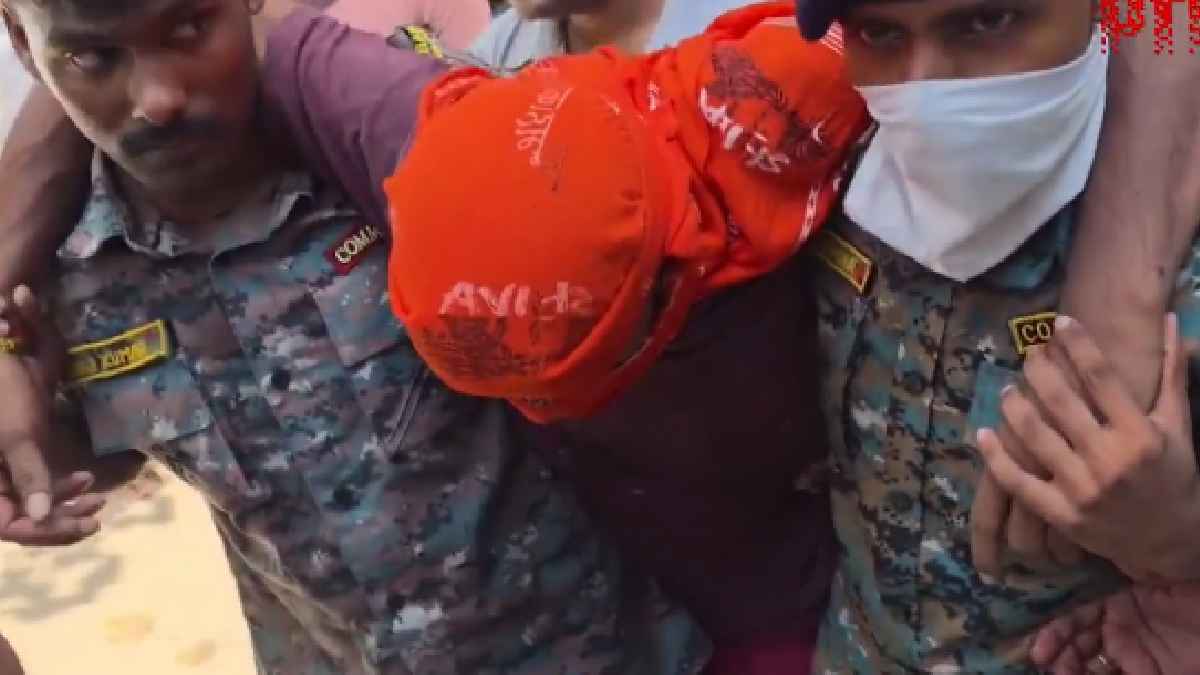
A rescue operation near Gajoldoba ended on a heartwarming note after a newborn elephant calf swept away by the Teesta River was rescued and reunited with its mother. The calf (around three to four days old) was found hours later three kilometers downstream from its mother in the river.
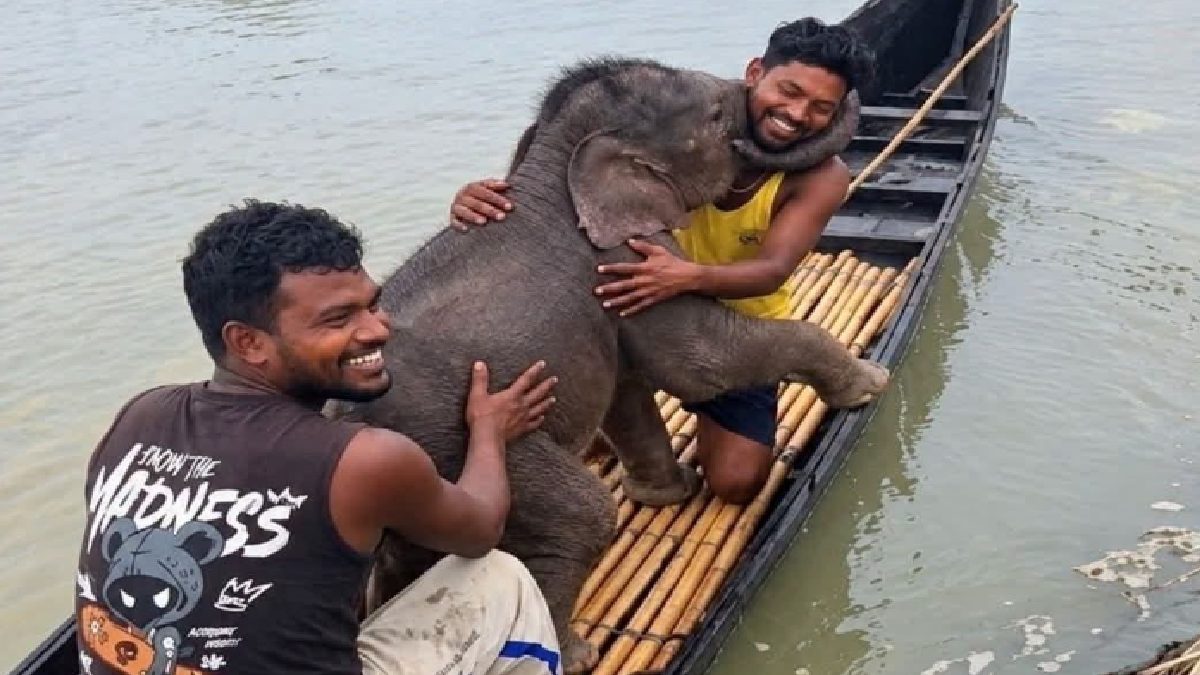
The incident happened near Gajoldoba where the young elephant was swept away by the strong current of Teesta River while its mother was nearby. The sudden separation left the extremely young calf vulnerable so fishermen and forest agents were quick to take action to help it.
According to the information about the rescue, local fishermen helped to locate and save the calf. The quick response was able to save the newborn elephant from being exposed to the river current and other hazards for a long time because the fishermen were able to rescue the calf and keep it safe until forest workers came.
The rescue effort was later supported by the Baikunthapur Forest Division who worked to facilitate the reunion between the calf and its mother. Reuniting a young elephant with its herd, and especially its mother, is a critical aspect of wildlife rescue work because newborn calves are highly dependent on their mothers for protection, nourishment and survival.
The calf was found several kilometres downstream of the site where it was separated. Its extremely young age made things very delicate. At just a few days old, the elephant would have been extremely vulnerable without its mother and could have struggled to survive on its own.
When the forest staff took an interest, efforts were made to reunite the calf with its anxious mother. Ultimately, the operation worked and the young elephant was returned to its mother. The reunion brought an emotional closure to what could have been a very dangerous situation for the newborn.
The incident also highlighted the crucial role local communities can play in wildlife conservation. Fishermen and other people living or working close to forest and river areas often are among the first to notice animals in distress. In this case the fishermen’s quick responses and willingness to help the calf provided a chance for the calf to survive.
The involvement of forest officials was equally important. Wildlife rescue operations involving elephants require care because adult elephants, especially mothers separated from their young, can react defensively when humans approach. So forest staff have to strike a balance between the immediate safety of the animal and the avoidance of human interference.
The Teesta River is characterized by strong currents and animals passing through water adjacent to the river can become endangered in high water flows. For a newborn elephant, it is even more dangerous to be carried downstream because of its limited mobility and dependence on its mother.
The rescue near Gajoldoba has since gained recognition for the joint efforts of the local fishermen and forest department personnel. Their cooperation helped turn a potentially tragic wildlife incident into a successful rescue and reunion.
Such an amazing work. These are heroes.
— Parveen Kaswan, IFS (@ParveenKaswan) September 22, 2026
Yesterday a small calf of 3–4-days was swept away by the Teesta River near Gajoldoba and found several kilometres downstream. While mother was looking after it. See how it was saved by fisherman and united with the help of forest staff. pic.twitter.com/LDxJVERvpn
The heartwarming episode is also a reminder of the close relationship between wildlife and communities living around natural habitats. Quick reporting, responsible intervention and cooperation with forest authorities can make a significant difference when wild animals are found in distress.
For the newborn elephant the best outcome was to return to its mother. After being carried by the Teesta and several kilometres downstream, the calf was given a safe passage back to the animal that was looking after it.
The successful rescue and reunion is a good example of how caring, awareness, and early action can help protect wildlife. Both fishermen and Baikunthapur Forest Division staff worked so that the newborn calf could get back to its mother after a frightening separation in the river.