One of the most striking reminders of the changing Odisha coastline has come at Podampeta Sea Beach in Ganjam district where the spire of an old temple has emerged again after years under sand. Local people think it is the Gangadevi Temple, a place of worship that was there in their village before the ocean gradually changed the landscape.
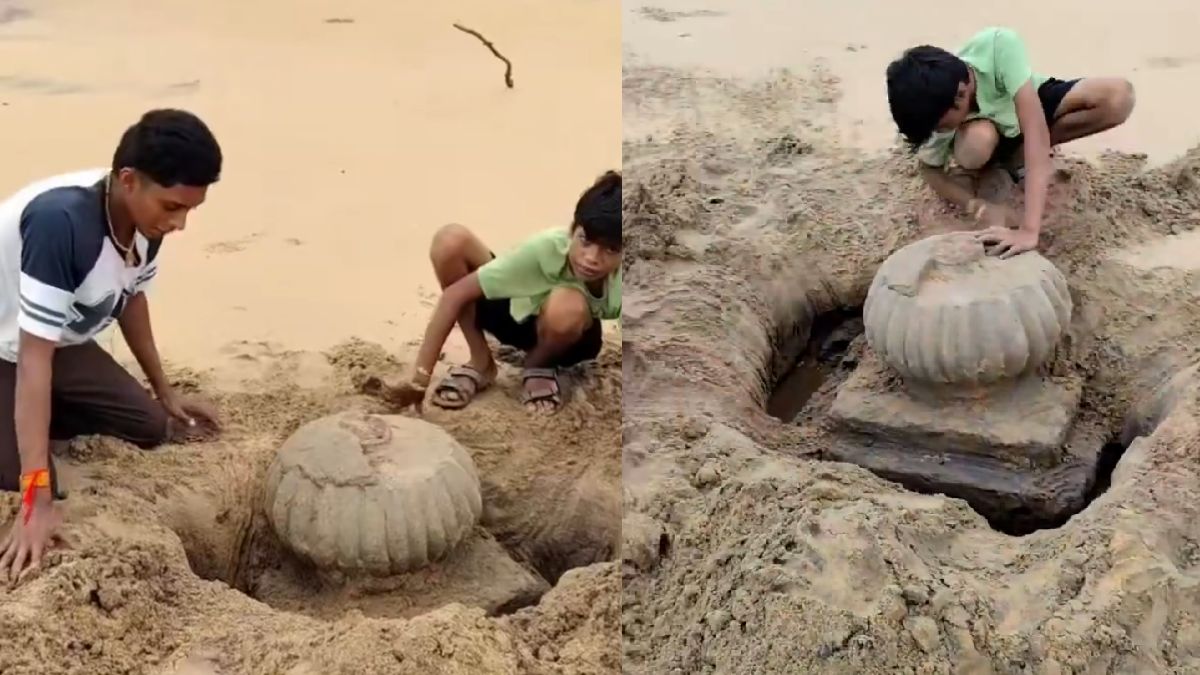
The temple spire’s re-appearance has brought the issue of coastal erosion back to mind. Podampeta, once a coastal settlement with homes and community buildings, has changed drastically in the past few decades as the sea has approached areas of the land that was once inhabited. Much of the old village has been swallowed by the sea so that we can still see evidence of the community that lived there.
According to local inhabitants, the temple was part of the old Podampeta village and was washed away or overtaken by the sea years ago. The remains were covered by sand for years so the structure was hidden from view. The temple's chuda, or shikhara, has recently made it back into public view.
The sight is particularly significant to people who remember the original village. The temple is a place for them, not just a historical landmark on the beach, but a physical connection to a settlement that has changed so dramatically. The re-appearance of the spire has revived memories of the village, its religious beliefs and the people who used to live close to the coastline.
Another example of coastal erosion in Odisha.
— Manas Muduli (@manas_muduli) September 2, 2026
At Podampeta Sea Beach in Ganjam district, a temple that had been buried under sand for years has now re-emerged, with its spire (chuda/shikhara) visible once again.
The old Podampeta village itself has now been almost swallowed by… pic.twitter.com/3M7ZYKURkP
Podampeta is among the coastal areas of Odisha that have experienced shoreline changes and erosion. Coastal erosion occurs when waves, currents and other natural processes remove sediment from the shoreline. The process can gradually alter beaches and threaten settlements, roads, agricultural land and other structures situated close to the sea.
The Bay of Bengal coastline is particularly dynamic and seasonal weather systems, cyclones, storm surges and changing coastal conditions influence the shape of the shoreline. Odisha's coast has been hammered by cyclones several times, which can accelerate erosion and cause major changes to beaches and coastal settlements.
These changes can be felt in communities for very long periods of time and Podampeta’s story demonstrates how much these changes can affect communities. A village that once had houses, religious spaces and other community spaces can lose its land over time as the shoreline changes. In some places the sea is so close to its coastline, residents have been forced to move further inland as the sea approaches their homes.
The appearance of the spire doesn’t mean the temple is completely uncovered; it is the visible part that may be the structure that has been hidden from the shifting sand. A structure that has been covered by sand for years can be exposed again when waves, currents and shifting sediment change the beach.
For local residents the temple is the Gangadevi Temple and to them it is a cultural sign. Gangadevi is associated with local religious practices and villages’ temples like Gangadevi Temple have played an important role in the social and cultural life of coastal communities.
And the discovery also raises questions about how to document heritage sites in coastal areas with high vulnerability. When erosion threatens historic temples, homes and other structures, documenting what they are like, how they are doing, and how they’ve deteriorated can help to preserve knowledge of communities that may otherwise disappear in the physical landscape.
Hence coastal scientists often examine shoreline movement over time using satellite images, field surveys and historical records. Such studies can detect areas at high risk of erosion and help authorities to plan protective measures and/or relocate people if needed.
The Podampeta temple’s re-emergence is more than just the sight of an old building falling from the sand. It’s a window into the history of a village that has been profoundly affected by changes along the coast. The spire is the only thing to note: coastal communities have always been connected to the sea, for better or worse, and that if the shoreline changes so do they.
The episode has also aroused the interest of people who want to know more about the old Podampeta settlement and the temple’s history. Residents’ memories and oral testimony could be a useful resource to get more details about the structure - its location, age and role in the former village.
The temple might be affected again by shifting sand and waves as the coastline continues to evolve. The extent to which more of the structure is visible or it disappears under the sand again will depend on future coastal conditions.
For now the re-emerged spire at Podampeta Beach provides a powerful visual reminder of Odisha’s changing coastline. It links the present-day beach with a village that once stood there and highlights the long-term human and cultural consequences of coastal erosion.
The Gangadevi Temple story, as seen by local residents, is at a very basic level about memory, heritage and a coastline ever moving. The temple’s brief return to view is an opportunity to document the history of old Podampeta and raise the awareness of communities living on Odisha’s sensitive coast.