Narendra Modi will be in a two-state visit to Rajasthan and Gujarat next Saturday for two-state affairs in Balotra and Sanand, where he will inaugurate India’s first greenfield integrated refinery-cum-petrochemical complex and one of the country’s first commercial semiconductor assembly plants in Sanand. The Prime Minister will also inaugurate and lay the foundation stone on infrastructure and development projects worth over ₹1.06 lakh crore.
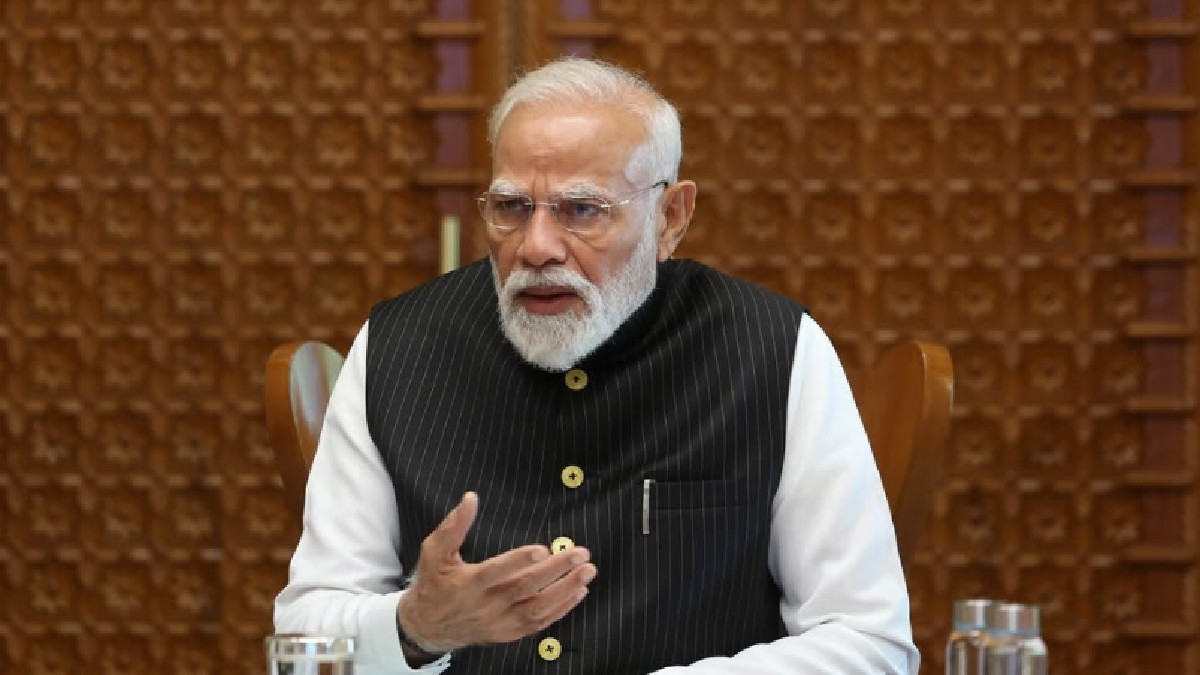
The Prime Minister will start his Rajasthan visit in Jodhpur, where he will inaugurate the newly built terminal at Jodhpur Airport and launch the modified UDAN (Ude Desh ka Aam Nagrik) scheme to improve regional air connectivity throughout the country.
Built at a cost of ₹480 crore, the new airport terminal covers 23,000 square metres and is expected to serve 20 lakh passengers annually. It is equipped with modern passenger facilities, energy-efficient systems, water conservation measures and sustainable design elements that will help it to be a 5-Star GRIHA green building.
The new UDAN scheme will bring a huge boost to regional aviation over the next decade. ₹28,840 crore has been earmarked to build 100 new aerodromes, set up 200 helipads, strengthen regional airport infrastructure and continue viability gap funding for airlines operating on underserved routes.
Later in the day, PM Modi will travel to Balotra, where he will dedicate, inaugurate and lay the foundation stone for projects worth around ₹1.06 lakh crore before speaking to a public gathering.

The centrepiece of the visit will be the inauguration of the 9 million metric tonnes per annum (MMTPA) greenfield refinery-cum-petrochemical complex in Pachpadra, developed through a joint venture with Hindustan Petroleum Corporation Limited (HPCL) and the Rajasthan government.
Built at an investment of over ₹79,450 crore, the integrated complex has a petrochemical production capacity of 2.4 MMTPA and is expected to improve India's energy security, reduce reliance on imported petrochemical products and drive industrial development in western India.
The refinery was scheduled to open in April, but the launch was postponed when a major fire erupted at the plant one day before it was due to open.
PM Modi will also lay the foundation stone for Phase II of the Jaipur Metro Rail Project with an investment of approximately ₹13,000 crore. The proposed 41-kilometre north-south corridor with 36 stations will connect Prahladpura to Todi Mod and connect the major residential, commercial and industrial nodes of Jaipur Airport, Sitapura Industrial Area, Vishwakarma Industrial Area, SMS Hospital and Vidyadhar Nagar.
Among other key infrastructure projects, the Prime Minister will dedicate the Churu-Sadulpur and Churu-Ratangarh rail line doubling projects, covering a combined distance of 104 kilometres at a cost of around ₹900 crore. To enhance road connectivity and reduce travel time, he will also inaugurate the four-laning of the NH-125A Jodhpur Ring Road Section-II (Karwar-Dangiyawas) project, developed at a cost of about ₹740 crore.
During the Rajasthan programme, PM Modi will also distribute appointment letters to approximately 54,000 newly recruited personnel across various departments of the Rajasthan government.
In the second leg of his visit, the Prime Minister will travel to Sanand, Gujarat, where he will inaugurate the CG Semi Outsourced Semiconductor Assembly and Test (OSAT) facility, which is now in commercial production on one of the first semiconductor projects approved under the India Semiconductor Mission.
The facility is scheduled to produce 5 billion semiconductor chips annually and will have around a capital investment of over ₹7,500 crore. The plant will provide advanced semiconductor assembly and testing services for automotive, telecommunications, industrial electronics, 5G, artificial intelligence and the Internet of Things (IoT).
The government perceives this project as a major milestone in India’s efforts to build a domestic semiconductor ecosystem and reduce reliance on imports. With growing demand for AI-driven computing and advanced electronics globally, the Sanand facility will be able to strengthen India’s position in the global semiconductor supply chain and enable the country to become a leading electronics manufacturing hub.
The twin-state visit is just one example of the Centre’s continued focus on building infrastructure, boosting manufacturing, strengthening energy security and accelerating India’s journey towards becoming a global technology and industrial giant.