North India's healthcare sector will get a boost as Prime Minister Narendra Modi and Union Health Minister JP Nadda are to visit Postgraduate Institute of Medical Education and Research (PGIMER), Chandigarh, on Friday to inaugurate two world-class healthcare facilities and lay the foundation stone for another important medical infrastructure project. The initiative will be worth nearly ₹1,200 crore and will increase tertiary healthcare services in the region.
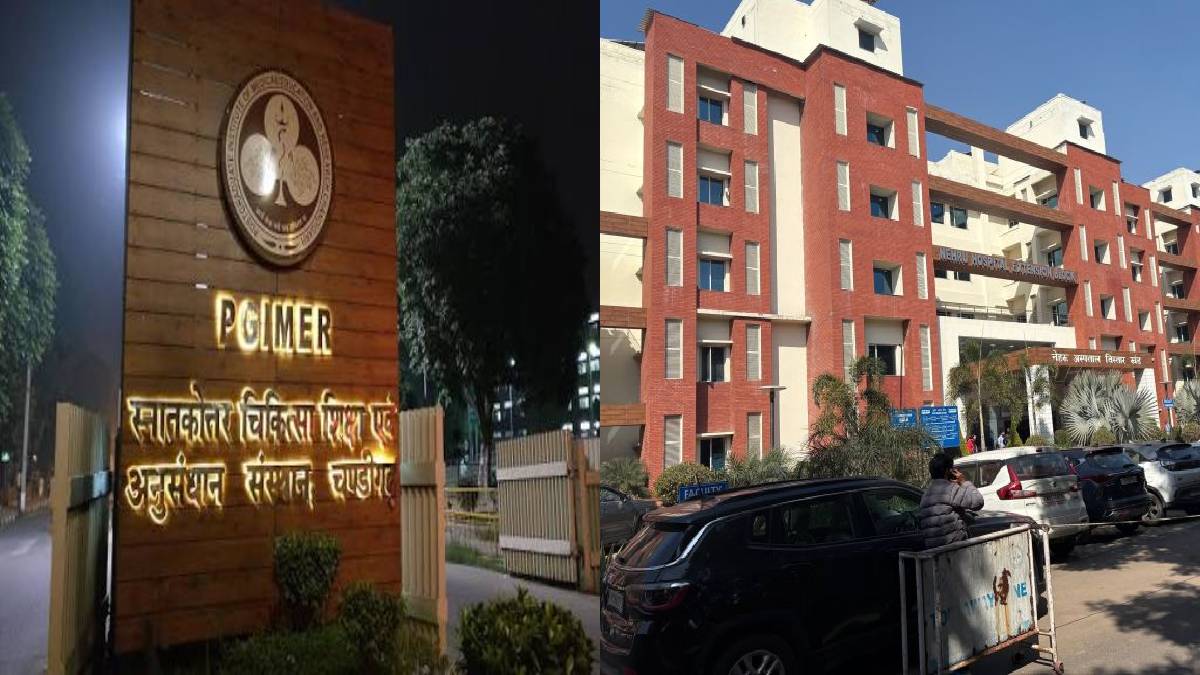
The projects include the inauguration of the Advanced Neurosciences Centre and the Advanced Maternal and Child Care Centre, and the foundation stone laying ceremony for a new Critical Care Block. These facilities are intended to increase access to specialized healthcare, improve patient outcomes and enhance PGIMER’s stature as one of India’s best medical institutions.
The Advanced Neurosciences Centre will provide comprehensive treatment for neurological diseases such as stroke, epilepsy, brain tumors, spinal disorders, and neurodegenerative diseases. With state-of-the-art diagnostic systems, operating theatres, as well as intensive care units, the facility will serve to enhance the treatment capabilities and support leading neurological research as well as education.
The Advanced Maternal and Child Care Centre will enhance services for women, newborns, and children and offer very high-quality obstetric, neonatal, pediatric, and gynecological care in one place. It will reduce wait times and improve access to specialist care and support high-risk pregnancies with state-of-the-art medical equipment and trained healthcare professionals.
The Critical Care Block, whose foundation stone will be laid during the visit, will further enhance emergency and intensive care infrastructure at PGIMER. The new facility will increase the institute's capacity to care for critically ill patients during medical emergencies, disease outbreaks, and other large-scale healthcare situations requiring advanced intensive care services.
PGIMER Chandigarh not only serves patients from Punjab, Haryana, Himachal Pradesh, Jammu and Kashmir, Ladakh, Uttarakhand, and Chandigarh but also many other parts of the country. Each year, millions of people come to the institute for treatment based on its reputation for medical care, research, and education.
The expansion is part of the Central Government’s larger initiative to modernize India’s healthcare sector and improve access to advanced medical services. The government has spent a lot of money to upgrade AIIMS institutions, to build medical colleges, to fortify district hospitals, and to build specialized healthcare centers across the country.
The new facilities will curb patient congestion and help in modernizing the health system to meet the growing demand for specialized medical services in North India, medical professionals say. Better infrastructure will also create more clinical research opportunities, postgraduate medical training, and interdisciplinary collaboration between healthcare professionals, they say.
The projects are consistent with the long-term vision of building a better, technology-enabled healthcare system to serve both routine and complex medical needs in India. Investments in neuroscience, maternal and child healthcare, and critical care are especially crucial given the rising burden of neurological disorders, high-risk pregnancies, chronic diseases, and emergency medical conditions.
The visit by PM Modi and Health Minister Nadda underlines the government's thrust on building a better healthcare system that provides more advanced medical facilities to healthcare and makes it accessible to a growing population. PGIMER Chandigarh will be further elevated in the future with the completion of these projects to become one of the most advanced centers in India for patient care, medical education, and biomedical research.
The much-needed investment of ₹1,200 crore is a major step in the development of healthcare infrastructure in North India and will benefit millions of patients in the years to come by providing world-class treatment closer to home.