Telangana Chief Minister Revanth Reddy’s comments against Lord Shiva and Lord Ram have triggered a political controversy, and BJP leader and Union Minister Bandi Sanjay Kumar strongly condemned the comments. Reddy made the comments at a press conference in New Delhi and has also spoken about political and cultural differences between northern and southern India.
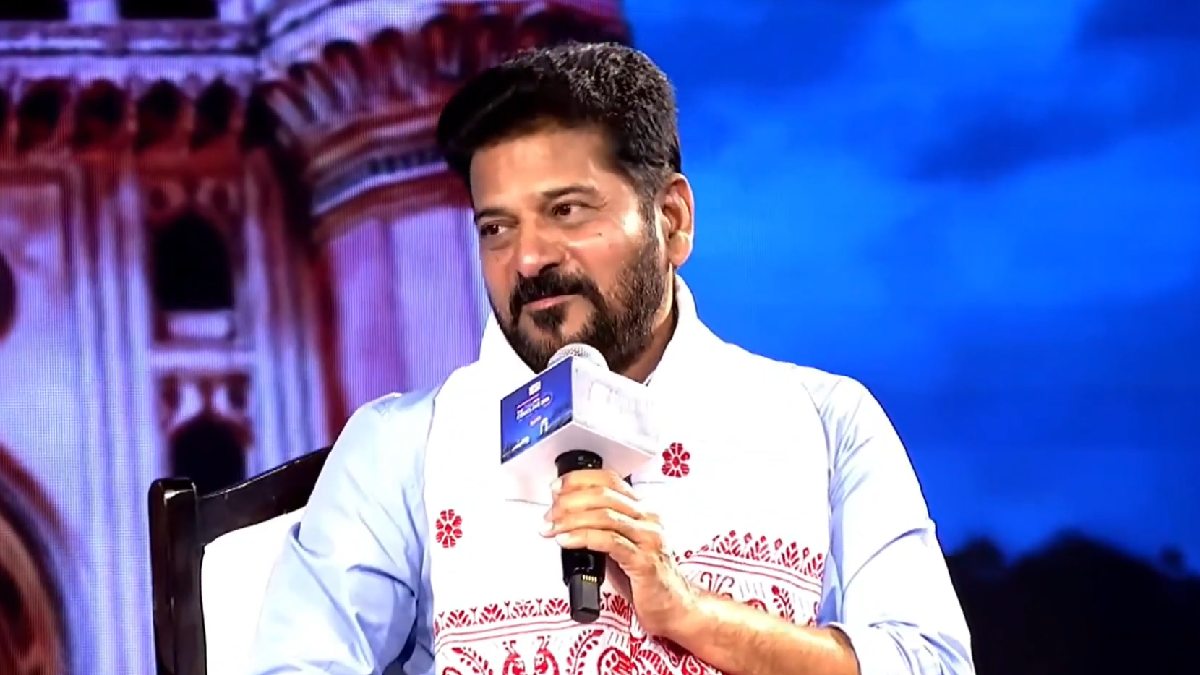
Reddy also questioned the BJP’s repetitive use of the “Jai Shri Ram” slogan and why Modi and other BJP leaders did not use the slogan “Har Har Mahadev” so prominently, he said. Reddy says Lord Shiva and Lord Ram were revered deities, and that the two traditions are politically and culturally different.
Reddy was reported to have said: “We are Dravidians; they are Aryans,” and described the distinct political and cultural character of southern and northern India. He also said that the people in the South were devotees of Lord Shiva and in the North of India people were devotees of Lord Ram. Shiva was the “God of the poor” and Ram the “God of the rich,” he said.
The comments were made in the wider context of Reddy’s criticism of the BJP’s political messaging and its use of religious symbolism. The Telangana chief minister questioned why slogans associated with Lord Ram received such prominence in BJP political campaigns while slogans associated with Lord Shiva were, in his view, not similarly emphasised.
The comments were immediately condemned by Bandi Sanjay Kumar. The BJP leader noted that Reddy’s comments were carving a division between the believers of Lord Shiva and Lord Ram. Sanjay also pointed out some major religious sites in Telangana (Vemulawada and Bhadrachalam) and challenged the idea that worship of the two deities could be divided along north-south lines.
Sanjay said Telangana has both “Dakshina Kashi” at Vemulawada and “Dakshina Ayodhya” at Bhadrachalam and that in the state Shiva and Ram traditions are in common. His reply also included the association of Prime Minister Narendra Modi with the Kashi Vishwanath Temple and Modi’s visit to Vemulawada.
The BJP leader has also accused Reddy and the Congress of attempting to use religious and regional identities in political mobilisation. These are political allegations made by Sanjay and were not independently supported in the reports reviewed.
CM Revanth Reddy says Rama is god of rich and Shiva god of poor. PM Modi, BJP never say Hara Hara Mahadev. They are aryans, we are dravidians.
— Karthik Reddy (@bykarthikreddy) September 28, 2026
How ignorant can this man get?
Who re-developed Kashi Vishwanath corridor in UP?
Who Somnath Swabhiman Parv at Somnath Temple in…
The controversy is happening in the context of a larger political debate about the relationship between northern states and southern states and the possibility of future Lok Sabha constituency delimitation being taken into account. Reddy has been among the southern leaders who have been fretting about how population-based seat distribution may affect parliamentary representation of states that have made population-control measures in mind.
Delimitation refers to the assignment of parliamentary and assembly constituencies and redrawing the boundaries. The issue has become politically sensitive in various southern states because population-based changes could change the distribution of Lok Sabha seats. Reddy has linked it to larger questions about the political representation and influence of southern India.
His latest remarks therefore combined religious references with a larger argument regarding regional political differences. The BJP’s response, on the other hand, was to focus on the religious comparison and Shiva and Ram traditions being present in Telangana.
The exchange is the latest in a series of political conflicts between Reddy and BJP leaders in recent months. Bandi Sanjay has previously hit out at the Telangana Chief Minister for other statements in the past and Reddy has continued to accuse BJP on issues from regional representation to national politics.
For now, the problem is how Reddy’s comments should be taken in the context in which they were made. His supporters may see them as a part of a political debate about regional identity and representation; BJP leaders have dismissed the remarks as dividing religious traditions. The two responses point to the political sensitivity of religious symbols and the north-south fight in Indian politics.
The controversy is also likely to keep attention focused on the larger questions raised by Reddy about southern representation in Parliament and the political use of religious slogans. As delimitation and regional representation are still being discussed, statements about religious and regional identities will be present in the political debate.