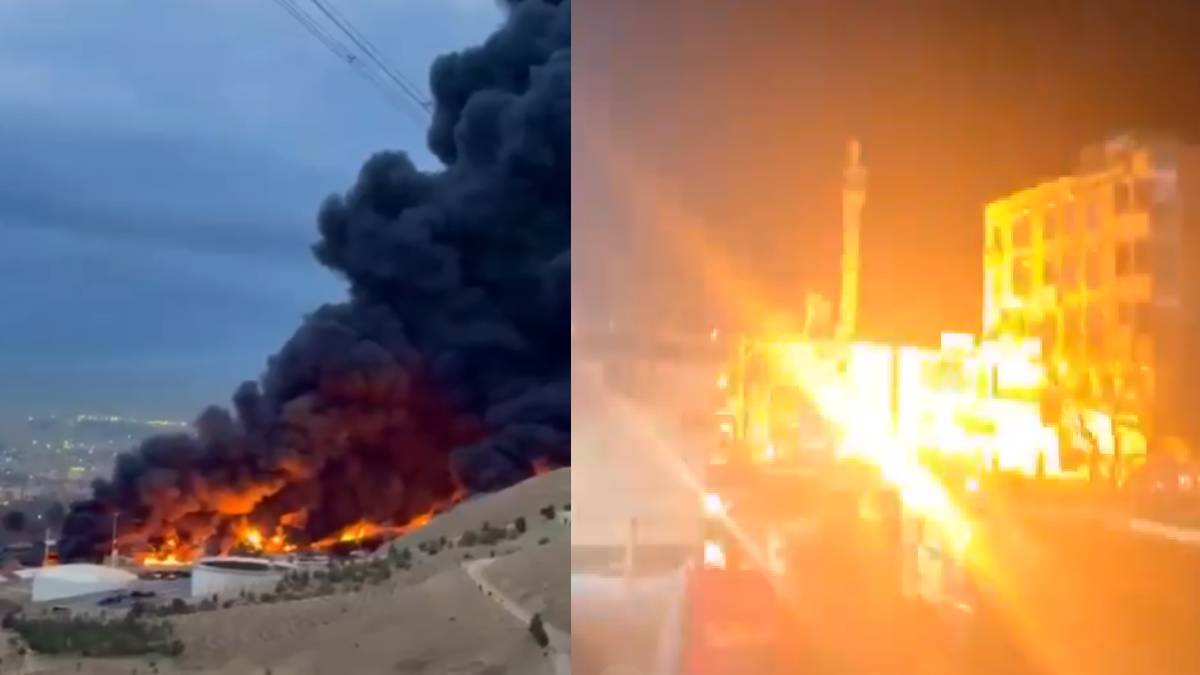
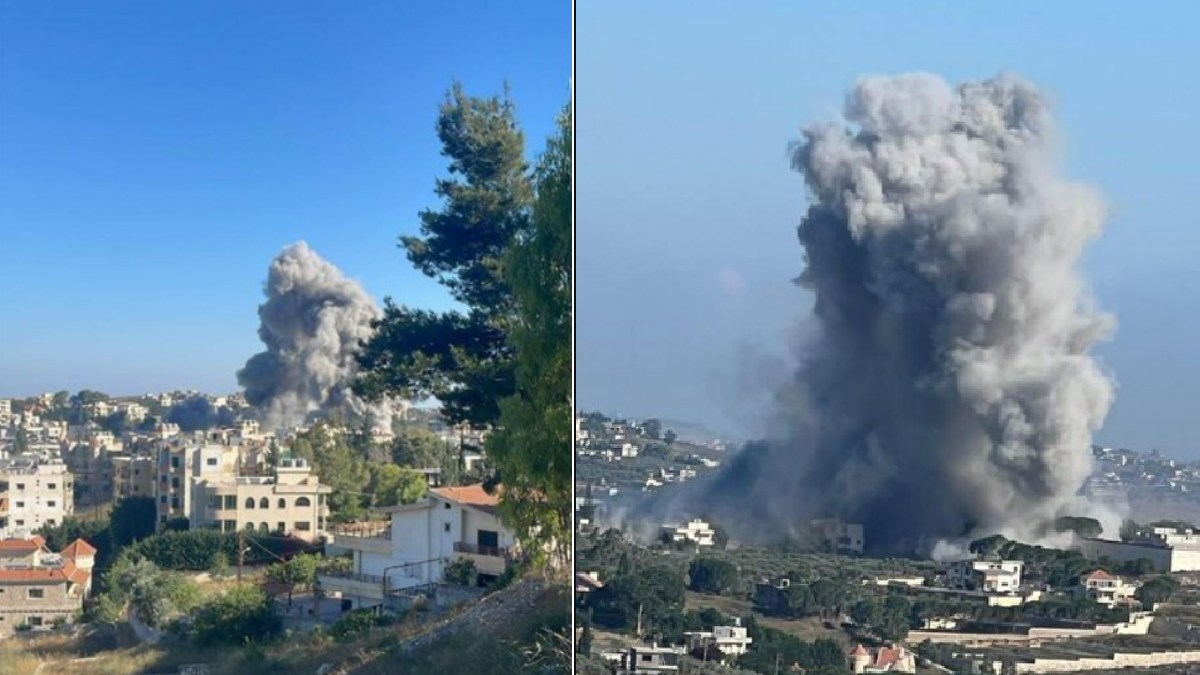
Rising tensions between Iran and Israel have drawn global attention, with millions of Non‑Resident Indians (NRIs) living in neighboring Middle Eastern countries. Many of these countries also have sizable Indian communities, many of whom play a substantive role in their local economies and also contribute large remittances to the country. Knowing where Indians reside in this part of the world can also illuminate the extent of that diaspora that could be affected by geopolitical tensions.
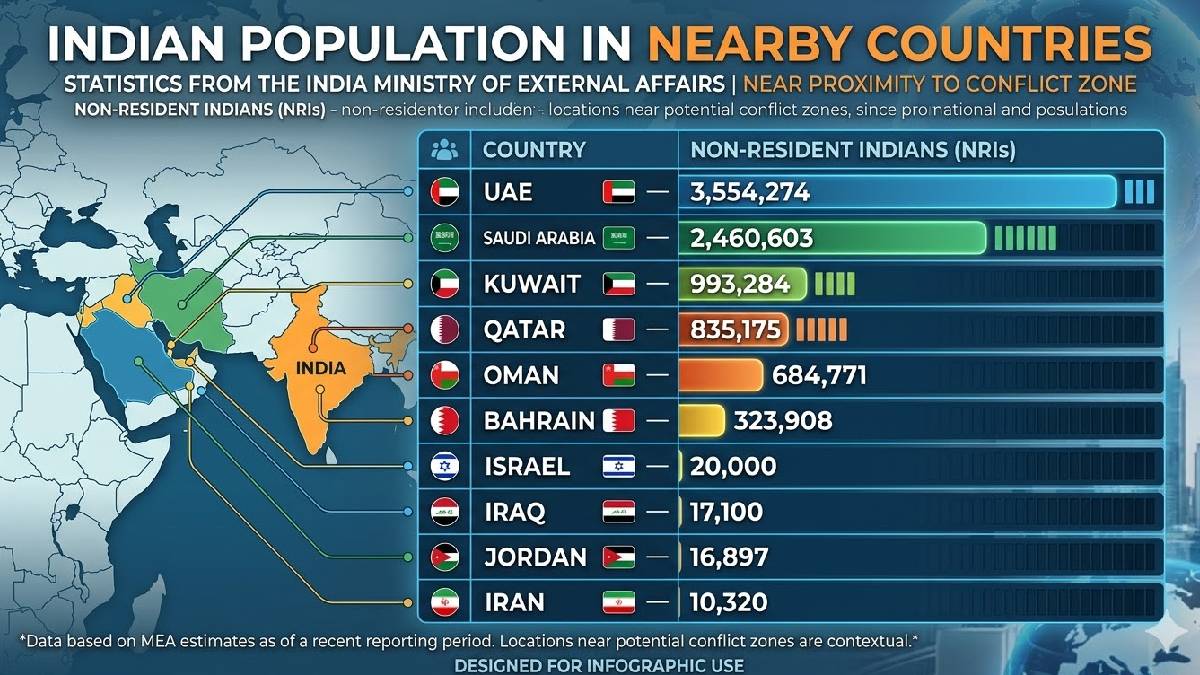
Indian Population in Nearby Countries
Statistics from the India Ministry of External Affairs reveal the Indian population in other countries in proximity to the conflict zone and include:
Country — Non‑Resident Indians (NRIs)
- United Arab Emirates — 3,554,274
- Saudi Arabia — 2,460,603
- Kuwait — 993,284
- Qatar — 835,175
- Oman — 684,771
- Bahrain — 323,908
- Israel — 20,000
- Iraq — 17,100
- Jordan — 16,897
- Iran — 10,320
The Largest Indian Communities Live in Gulf Countries
The majority of the Indians living close to the conflict zone belong to the Gulf area. The UAE and Saudi Arabia alone serve up to nearly six million Indians. These workers cover industries such as construction, healthcare, retail, logistics, oil and gas, and services. The Gulf has been one of the region’s key international centers for Indian workers and professionals for decades.
The Economic Value of the Indian Diaspora
Indian expatriates from these countries have significantly contributed to the Indian economy via remittances as well as other major services. The Gulf region regularly ranks as one of the world’s biggest sources of foreign remittances into India, supporting families and expanding economic activity.
Concerns When a Regional Conflict Occurs
Whenever tensions flare up in the Middle East, governments observe, often in extreme detail, the safety of their citizens abroad. The Indian government has worked with embassies, airlines and local officials to make sure evacuation plans or safety advisories can be issued when needed. India has previously successfully carried out large evacuation missions like Operation Ganga and Operation Kaveri to return citizens from conflict areas.
Millions of Indians in Middle Eastern countries serve as part of the global workforce for the Indian state. But despite geopolitical tensions such as the current Iran–Israel tension, diplomatic coordination and preparedness remain key to assuring the safety, comfort, and security of Indian nationals living overseas.