India has increased its semiconductor ambitions significantly with the launch of Semicon 2.0, a ₹1,27,500 crore programme to enhance India's position in the global chip industry.
This is a continuation of the first India Semiconductor Mission and will see greater government support in sectors of the semiconductor value chain.
The programme is in the middle of a period when semiconductors have become a key component of many sectors from smartphones and automobiles to artificial intelligence, telecommunications, defence and data centers.
In order to tackle supply chain vulnerabilities, India wants to develop domestic capabilities and to better be a part of the electronics world.
Six pillars of Semicon 2.0
Unlike a typical strategy focused on chip factories, Semicon 2.0 covers six important areas: chip design, semiconductor fabrication, advanced packaging, equipment and materials, research and development and talent development.
The design component aims to enhance the chip-design ecosystem in India and the establishment of semiconductor intellectual property, chips, system-on-chip and modules.
The government also stressed the importance of developing domestic knowledge in the field of computing, memory, networking, sensors and power.
Manufacturing will be another big priority. Under the programme, silicon semiconductor wafer fabs can receive fiscal support of 40% of eligible project costs and advanced packaging projects can receive support of 35%.
Semiconductor equipment, chemicals, gases and materials needed for chip production are also supported.
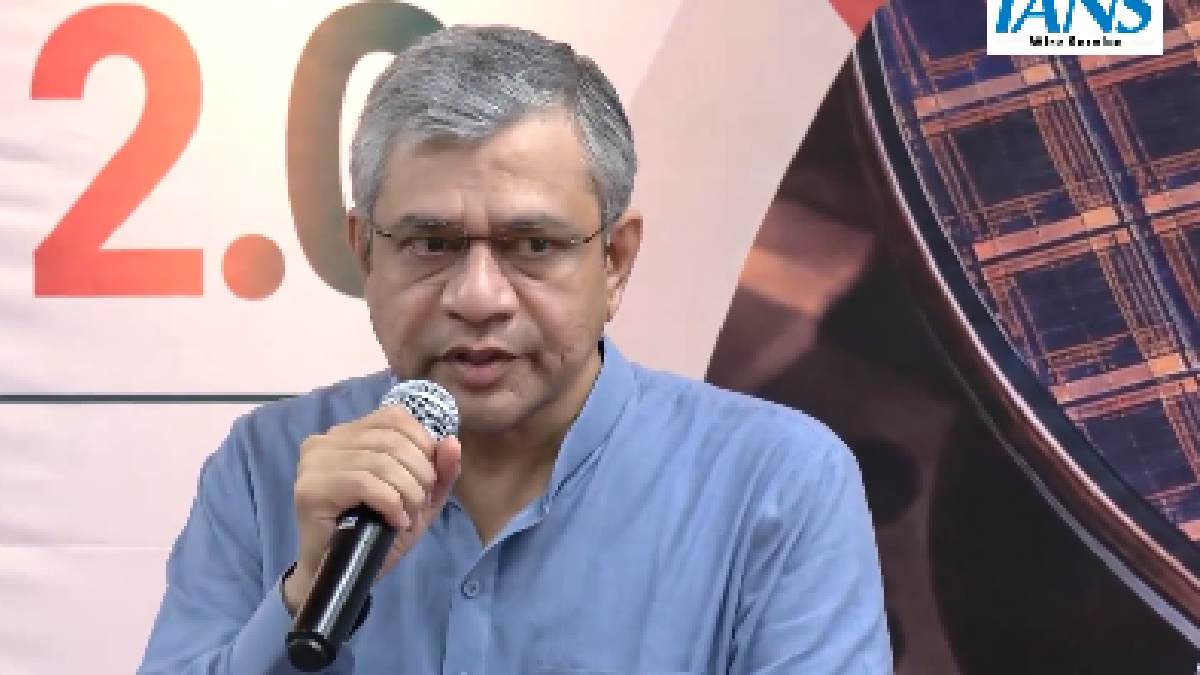
Delhi: On the launch of Semicon 2.0, Union Minister Ashwini Vaishnaw says, "That time, the global semiconductor industry majors had a serious doubt about whether this can really happen in our country. That doubt is no longer there. That doubt is now replaced by confidence. There… pic.twitter.com/fXf6VSqc11
— IANS (@ians_india) August 31, 2026
Bigger investment and production goals
The government expects Semicon 2.0 to attract around ₹4 lakh crore investment. It has also set an indicative target of ₹2 lakh crore in production and about ₹1 lakh crore in exports through the programme.
These goals are indicative of the government’s larger goal of moving India beyond electronics assembly into higher value semiconductor manufacturing and technology development.
The programme also emphasises research and skilled personnel. Semiconductor manufacturing requires highly specialized engineers, researchers and technicians so talent development is a key part of India's long-term strategy.
Building on Semicon 1.0
Semicon 2.0 follows the ₹76,000 crore first phase of India's semiconductor programme. 12 semiconductor projects had been approved under the earlier programme, with investment of more than ₹1.64 lakh crore by the government’s numbers.
Three facilities had already started commercial production, an early step from policy announcement to actual manufacturing.
Therefore, the new programme is part of a larger effort to create an end-to-end ecosystem rather than relying heavily on imported chips and components.
What it means for India
A strong domestic semiconductor industry would improve India’s supply chain resilience and build high-skilled employment and attract international technology companies. It might also strengthen capabilities in strategic areas such as AI, telecommunications, automobiles, aerospace and defence.
But building a competitive chip industry will take sustained investment, advanced infrastructure, reliable utilities, specialised talent and close cooperation between government and industry.
With ₹1.27 lakh crore for the next phase, India is signalling that its semiconductor ambitions extend far beyond the factory.
The bigger picture is to build a technology ecosystem that can design, manufacture and export chips on a scale that will help India to become the semiconductor superpower in the world.