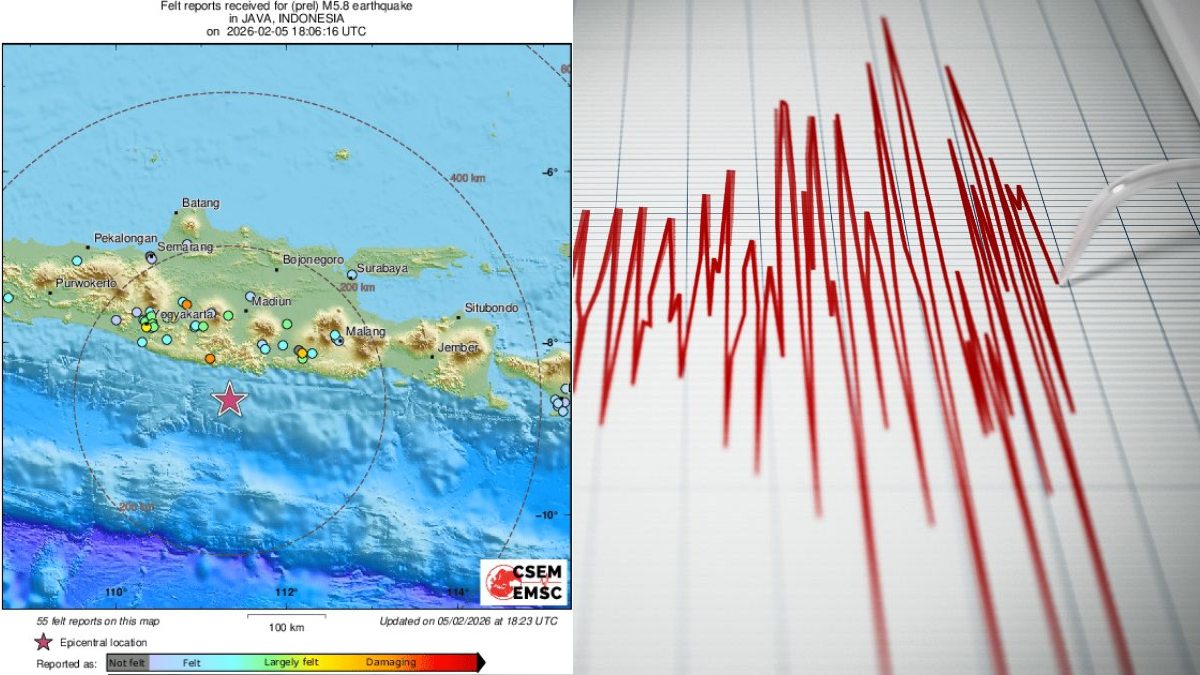
Seismic jolts also struck the Himalayan state of Sikkim on February 6, 2026, in the early hours, putting residents on high alert. The worst of those jolts, a 4.5-magnitude quake, occurred near Gyalshing in West Sikkim and its nearby area, and it was followed by a series of smaller tremors, some of them felt as far as North Bengal and parts of Bangladesh.
The Timeline: A Dark Time of the Night
The first earthquake occurred around 1:09 AM IST on Friday. From data published by the National Center for Seismology (NCS), the quake hit at a shallow depth of 10 kilometers, which amplified the vibrations felt in the shallow soil. Things didn’t end as quickly. Many districts reported tremors within two hours:
- Gyalshing (1:09 AM): The primary 4.5 magnitude jolt.
- Gangtok (1:15 AM): A 3.1 magnitude quake at 12 km northwest of the capital.
- Namchi (3:11 AM): A shallow 5 km 4.0 magnitude quake.
- Mangan: between 2:00 AM and 5:00 AM, a cluster of micro-tremors of 2.2 to 2.8 magnitude were recorded.
Local Impact and Panic
In Gyalshing and Sumbuk, residents reported a "blast-like sound" after which their furniture as well as ceiling fans underwent shaking for anywhere from 5 seconds up until 7 seconds. Thousands of people were streaming out of their homes into freezing night air, worrying that structural forms would crumble. “I felt as if this huge thing had struck the ground.
We didn’t wait for the second shock; we just took the blankets and ran out,” said a Gyalshing resident. Across the border, tremors were felt in northern Bangladesh those in Panchagarh, Dinajpur, and Thakurgaon as people felt faint to moderate shaking for a few seconds. Current Status: No Significant Casualties
The Sikkim State Disaster Management Authority (SSDMA) confirmed on Friday morning that no catastrophic structural damage or casualties were reported. Still, municipal administrations in West and South Sikkim are inspecting older buildings and mountain roads looking for new cracks or landslides. Sikkim remains extremely vulnerable to such events for it is in Seismic Zone IV, which in turn is bounded by the Main Boundary Thrust (MBT) and Main Central Thrust (MCT) fault lines.