Shrikant Shinde has attracted attention for handling a series of unpredictable questions from Gen Z with a straight-to-the-point and confident response to what was raised directly by the public. All the questions raised were about examination paper leaks and how the competitive examination system could be rebuilt.
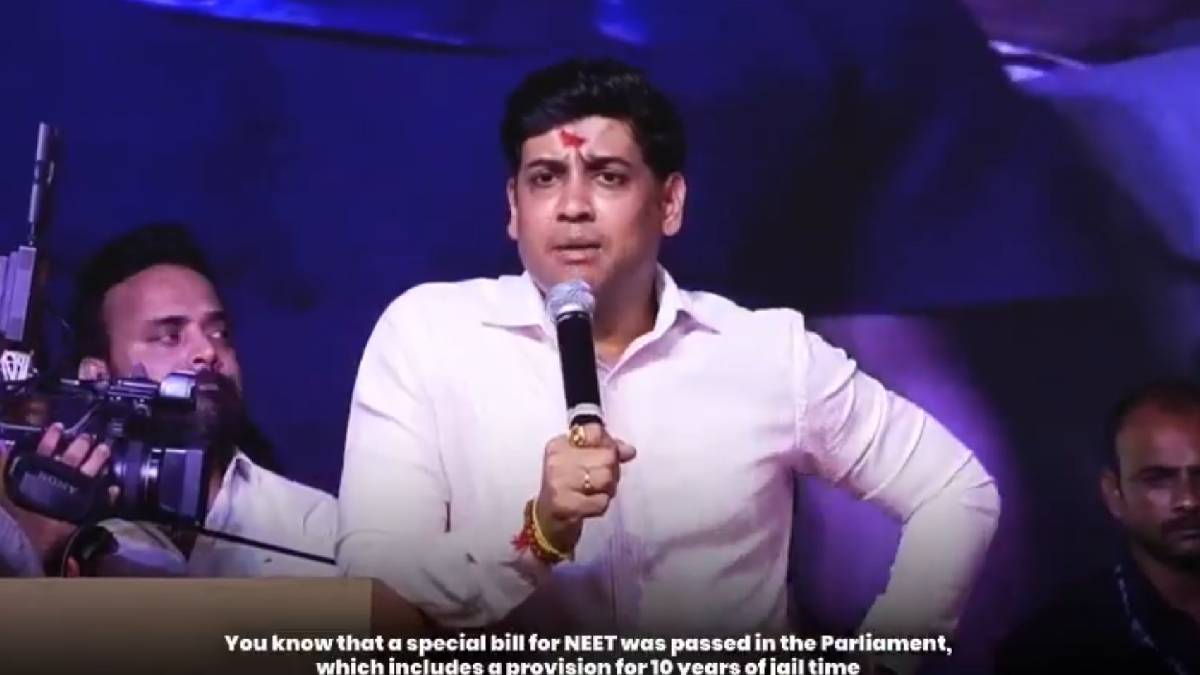
Shinde’s message on paper leaks was straightforward: They must be stopped completely. His reply comes as a national debate on examination reforms and tougher action against those who leak question papers is taking place. The new Public Examinations (Prevention of Unfair Means) Amendment Bill, 2026, provides for tougher penalties for organised examination-related offences, including imprisonment that can go up to 10 years and fines of up to ₹10 crore.
Such issues have been particularly personal for students as well as for young aspirants, many of whom spend years preparing for highly competitive exams. A paper leak can undermine months or even years of preparation -- and lead to frustration and questions about fairness and accountability.
Shinde further emphasised that punishment alone would not solve the problem. His approach means that the examination system must be technologically modernised too. As technology becomes more sophisticated, the systems used to conduct examinations must evolve at the same speed to avoid manipulation, unauthorised access and other forms of malpractice.
The proposed legislation is indicative of this approach. Organised examination-related crimes would be subject to a minimum of 7 years of imprisonment and up to 10 years of fine, while the maximum fine would be from ₹1 crore to ₹10 crore. The Bill also proposes greater penalties for service providers involved in examination offences.
But the bigger problem is to establish an examination ecosystem that makes leaks very challenging in the first place. Technology can play a major role in secure digital transmission, stronger authentication, encrypted systems, traceable question papers and better monitoring mechanisms. Such measures can complement strict laws by reducing opportunities for individuals or organised networks to exploit vulnerabilities.
MP Shrikant Shinde shows how it’s done 👏
— Megh Updates 🚨™ (@MeghUpdates) August 27, 2026
Facing unpredictable Gen Z questions taken straight from the public, he answers head-on.
On paper leaks, he makes it clear: 100% must stop. The government is working on a technology-driven, foolproof mechanism. The NEET bill provides… pic.twitter.com/8bMq1IblRU
Shinde’s interaction also stands out because of the format of the questions. Rather than sticking with conventional political talking points, Gen Z questions asked were about issues that directly affect ordinary citizens and students. His willingness to address those questions head-on has attracted attention online.
For young Indians going for entrance exams, government recruitment tests and other competitive assessments, the central demand remains simple: a fair exam for everyone.
It is therefore not just a matter of legislation or punishment in the anti-paper-leak debate. It is about rebuilding trust in the examination system. Law enforcement will be better when the technology is in place, the procedures are transparent, and the accountability is strong.
Shinde’s message ultimately binds those two elements: zero tolerance for paper leaks and technological progress. With the government making progress in strengthening the legal framework, the next big test will be to implement the process and ensure that every student, regardless of background, enters an exam hall confidently with the assurance that it is safe, transparent and fair.