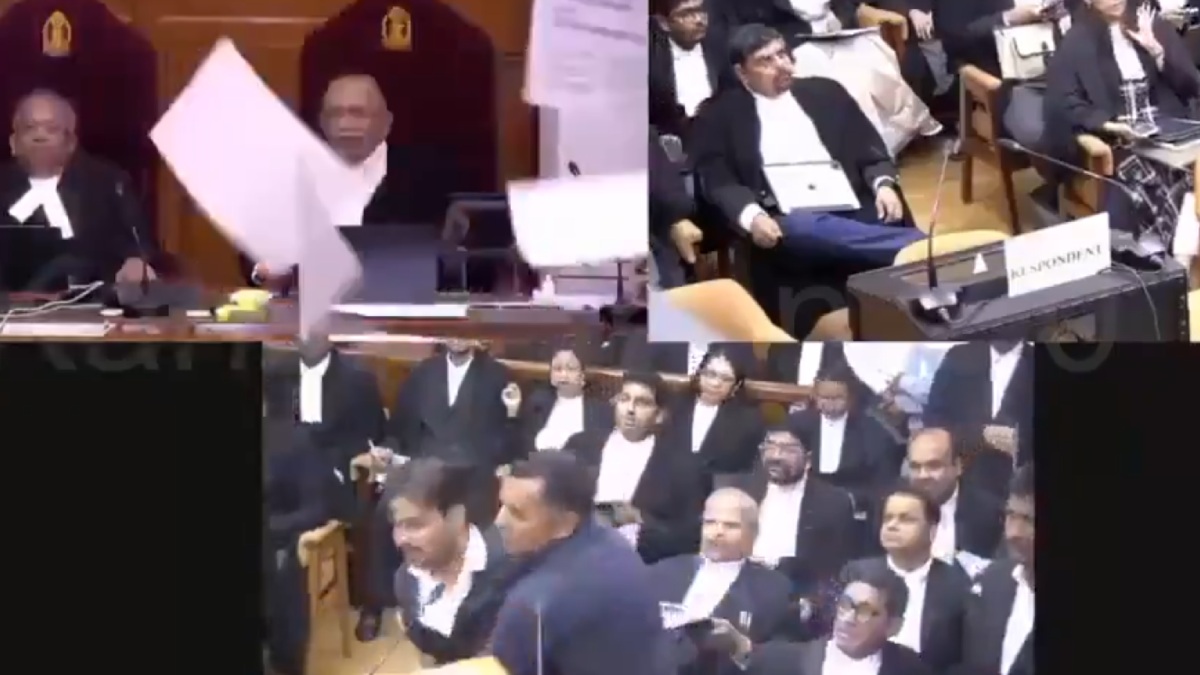
The Supreme Court has given the unequivocal clarification on abetment of suicide: just filing a criminal complaint or initiating legal proceedings cannot automatically cause the accused to commit suicide. Even if the FIR is later found to be false, there must be evidence of direct instigation, conspiracy or intentional assistance before a person can be held liable for abetment.
A bench of Justices Manoj Misra and Vijay Bishnoi made the comments when it heard an appeal against a Gujarat High Court order which did not quash criminal proceedings against family members of a woman. The woman’s parents and brother were alleged to have helped her husband commit suicide after she took legal action against him, according to the court.
The issues began when the wife had been harassed and subjected to domestic violence in a domestic relationship, she said. She filed an FIR against her husband under Sections 498A and 323 of the Indian Penal Code. The complaint was followed by a medical examination, in which she recorded several contusions on her body. She also sought maintenance through legal channels.
After the wife's husband died by suicide, there were allegations against her family members. The argument was that the criminal case and other legal proceedings initiated against the deceased were harassment and had driven him to take the extreme step. They were booked under abetment of suicide laws.
The matter eventually reached the Supreme Court after the Gujarat High Court declined to quash the proceedings. The appellants contended that the allegations presented at face value did not establish the ingredients essential to constitute abetment of suicide.

The Supreme Court agreed with the appellants and emphasized the distinction between exercising a legal right and actively encouraging or facilitating suicide. According to the court, approaching the police, filing an FIR, issuing a legal notice or seeking maintenance are legitimate avenues available to individuals seeking protection of their rights. The fact that a person against whom such proceedings are initiated later dies by suicide cannot make those legal actions into criminal abetment.
The bench also referred to the principles of Section 107 of the IPC, which defines abetment. Abetment can happen by instigation, participation in a conspiracy for the commission of an act, or intentional assistance through an act or illegal omission. So, the evidence of a connection between legal proceedings and a subsequent suicide is insufficient unless the prosecution can show the required mental element and conduct constituting abetment.
The court found that the deceased took the extreme step because of his own frustrations instead of because the accused had motivated him to commit suicide. That is because criminal liability cannot be based only on the unfortunate sequence of events.
The ruling also has an impact on those who seek legal protection in cases of domestic violence, harassment, maintenance disputes and other interpersonal disputes. If the plaintiff’s legal action could automatically expose complainants and their relatives to allegations of abetment whenever the other party later dies by suicide, that may deter people from approaching law enforcement and courts.
At the same time, the judgment does not imply that a person can never be prosecuted for abetment in the course of legal proceedings. If there is independent evidence of an accused intentionally threatening, coercing, instigating, conspiring with others or intentionally aiding a person in committing suicide, the legal position would be different. The question is whether the specific ingredients of abetment are established by the evidence.
So the decision reaffirms that criminal charges must be based on the statutory requirements of the offence rather than the timing or consequences of a person’s actions. A person exercising the right to seek legal remedies cannot ordinarily be held responsible for another person's subsequent decision to end their life without evidence establishing a legally recognizable act of abetment.
The Supreme Court’s ruling shows us that the evidence for abetment of suicide must be carefully looked at as an individual of the accused person’s actual conduct, intention and role in the act. A false or unsuccessful legal complaint could have serious consequences in other cases, but simply filing, without direct instigation, conspiracy or intentional aid connected to the suicide, does not by itself satisfy the legal test for abetment.
With the Bharatiya Nyaya Sanhita, 2023 replacing the IPC, these provisions have also been renumbered. But the bedrock principles of abetment remain fundamental in determining if criminal responsibility can exist in these situations. The Supreme Court’s recent observations therefore highlight the need to distinguish between legal recourse to the justice system and actions that actually encourage or facilitate suicide.