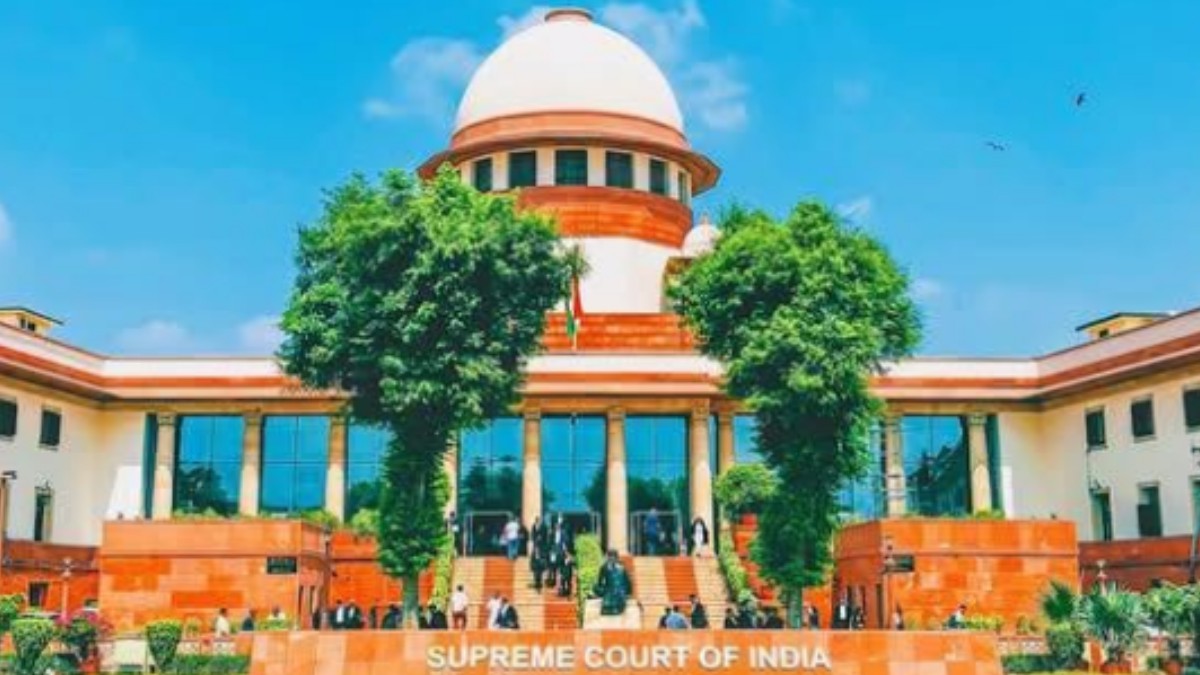
The Supreme Court has deferred the hearing on a motion seeking confiscation of movable and immovable properties belonging to people accused of involvement in examination paper leak cases and their family members. The matter was heard on September 25 by a bench of judges P S Narasimha and Alok Aradhe who directed the respondents to complete their pleadings before the case is taken up again after six weeks.
The petition was filed by advocate Ashwini Kumar Upadhyay and calls for a host of measures to prevent examination paper leaks. The court had sought responses from the Centre and state governments on August 18. Additional Solicitor General Aishwarya Bhati, appearing for the Centre, told the bench that the Union government and states would have to file their respective pleadings. The court ordered the respondents to submit their counter affidavits.
The latest order does not mean that the properties in question should be taken away. The court is currently considering the petition after responses from the Union government and states are on record. The next hearing will take place after the six-week period directed by the bench.
What Does The Paper Leak Plea Seek?
The petition asks for a detailed examination of the assets of the alleged perpetrators and their family members in examination paper leak cases. It further asks authorities to make use of the provisions of laws (e.g., Prevention of Corruption Act and Prevention of Money Laundering Act) that apply as applicable. The original petition also referred to the Benami Property Transactions Act and the Black Money Act.
A key part of the plea is a request to obtain movable and immovable property linked to the perpetrators and their family members. The petitioner has argued that financial investigations should accompany criminal investigations in cases of organised examination fraud.
The plea also asks the court to consider how sentences in paper leak cases should operate. It requests sentences be served consecutively instead of concurrently. The petition also asks the Law Commission to investigate international practices for handling examination paper leaks and produce a report within three months.
Public Examinations Law And The Petition
The petition at first included a request for measures to ensure time-bound investigations and trials in paper leak cases. But during the August 18 hearing, Upadhyay said he was no longer pressing that request after the passage of the Public Examinations (Prevention of Unfair Means) Amendment Bill, 2026.
The legislation was cited as strengthening the legal framework of unfair practices in public examinations. As a result, the focus of the current petition has shifted towards other proposed measures - asset assessment and confiscation, sentencing and examination of international practices.
The Supreme Court had issued notices to the Union government and state governments when that matter was previously heard. The fact that all states have been made parties to the petition means their responses will be part of the proceedings before the next hearing.
Why Paper Leaks Are A Major Concern For Students
The petition underlines the impact examination leaks can have on students and their families. When the exam is compromised, students who have been preparing for months or years can face disruption of their academic and career decisions.
The plea is about what was said to be mental and physical trauma, loss of educational and employment opportunities, and financial strain faced by students and families. It also points to the larger repercussions of continuous examination disruptions and loans and other expenses associated with preparation.
The petitioner has framed these concerns in the context of fundamental rights under Articles 14, 16, 19 and 21 of the Constitution. They will be taken up as part of the larger legal concerns before the court as we move forward.
Supreme Court To Consider Responses Before Next Hearing
The next step in the case is for the Centre and the states to file their counter affidavits and complete the pleadings. Only after hearing the responses will the Supreme Court further examine the prayers made in the petition.
The court’s decision on 25 September keeps the issue open for further discussion. The proposed confiscation of properties, assessment of assets, use of anti-corruption and money-laundering laws, and consecutive sentencing are among the issues raised by the petitioner.
This case could have wider implications for how authorities investigate the financial aspects of examination paper leak cases if the court eventually issues directions on the prayers. However, no such directions have been issued, and the petition is under consideration.
Next hearing after six weeks will then be a matter of Centre and state governments’ responses and arguments. The Supreme Court will decide how the specific reliefs in the petition will be addressed.