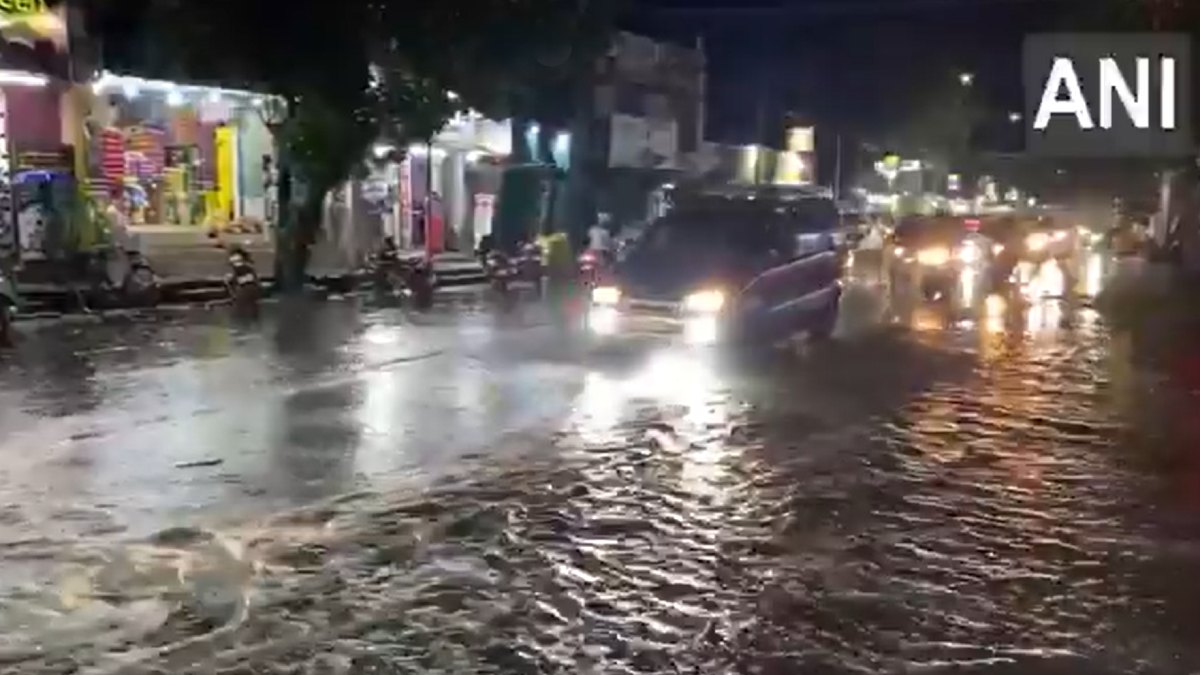
A seamless morning rain hit the coastal city of Thoothukudi on Wednesday 25th February 2026, bringing unseasonal heavy rainfall to a great and deadly halt. As the storm surged ahead which lasted for hours and led to serious waterlogging in some low-lying districts of the city, the residents floundered as they faced flooded streets and submerged residential settlements.
The rain described by local meteorological experts as ``highly unusual'' for the month of February stems from a prolonged weather system resting on the equatorial Indian Ocean and southwest Bay of Bengal. Whereas February traditionally is one of the driest months of southern Tamil Nadu, an easterly trough with warmer sea surface temperatures creates an unstable atmospheric environment and thus causes this unexpected wet spell.
Disruption of Daily Life and Infrastructure
By late Wednesday, several key areas in the city were reported to have knee-deep water. Visuals on the ground revealed a wide area of waterlogging at:
- Postal Telegram (P&T) Colony
- Rajiv Nagar
- Bharati Nagar
- KVK Nagar
- Asoke Nagar
The heavy flooding resulted in major traffic jams on major thoroughfares such as Palayamkottai Road and WGC Road. Water reportedly entered the porticos of many houses in residential neighborhoods, keeping people indoors. It was a traumatic time for commuters, with many two-wheelers and auto-rickshaws stalled in stagnant water. Shops in those areas said they took a hit in business while waterlogged streets discouraged customers.
Economic effect
Salt production comes to a screeching halt The timing of the rain has been especially brutal for the region’s salt industry. Thoothukudi, now known as the “Salt Capital of South India,” was only just starting to ramp up production for the season. But an avalanche of rainwater entered the salt pans which has stopped all operations.

“The salt pans are now small ponds. It will take two to three months for this water to recede or evaporate before starting the production,” said a worker at a municipal salt pan. Industry sources say if the stagnant water is not drained, the livelihoods of 500 families who rely on the salt pans in the Kalavasal and the suburbs could be put at risk.
Government and Business Response
The Thoothukudi City Municipal Corporation has also installed high-power motor pumps to extract water from key regions and hospital areas. Officials are also watching the water levels of the drainage outlets in the local area to ensure a seamless flow to the ocean. Although the RMC forecast a gradual deceleration of the weather system from February 26, a yellow warning is still in effect in parts of the district. Residents have been instructed to be thoughtful and call the corporation’s toll-free helpline about any emergencies.