In a big step towards protecting the sanctity and spiritual atmosphere of places of worship, the Tamil Nadu government has banned mobile phones in all the major temples in the state from September 1. The decision was made by Tamil Nadu Hindu Religious and Charitable Endowments (HR&CE) Minister S. Ramesh, who said that it is to safeguard the temple atmosphere and prevent illegal photography and videography.
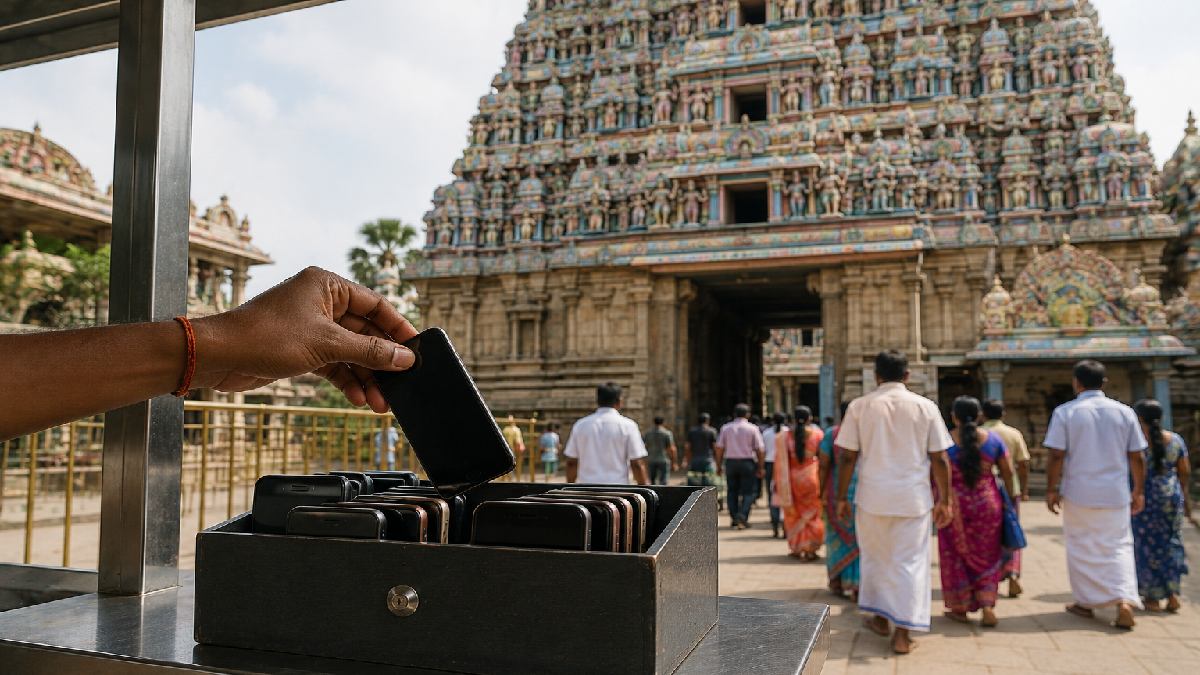
The minister told journalists at Srirangam in Tiruchirappalli on Saturday that worshippers visiting famous temples in Tamil Nadu will be asked to deposit mobile phones before entering the temple premises. Therefore, dedicated counters will be set up outside temples or near the entrance gates where visitors will be allowed to leave their mobile phones behind while they participate in worship and darshan.
The minister also said this move was taken as devotees and visitors have been taking videos and pictures in temples and other sensitive areas. Videos of temple rituals, sanctum sanctorums, and religious ceremonies have been a common feature on social media in recent years.
The HR&CE Department has particularly expressed concern over the growing trend of creating social media content such as reels, short videos, and live streams inside temples. Many visitors are also recording more on video than doing religious activities, and that is distracting for other devotees and is an issue of dignity, officials say.
To facilitate the smooth implementation of the new policy, the government will create special mobile phone deposit counters at all major temples in the department. They will provide safe storage places for the mobile phones so that the devotees can leave their devices until they have finished their visits. In some cases, they will pay only ₹5 for storage.

The government has also introduced stricter regulations on visits by VIPs, politicians, film celebrities, and other prominent individuals. All VIP visits must be communicated to the HR&CE Commissioner at least one day in advance, according to the new guidelines. Organizers will have to inform the date of the visit along with the number of people accompanying the dignitary.
The department emphasized that the rules are to prevent inconvenience to ordinary devotees. Even in cases of urgent or last-minute VIP visits, temple authorities have been directed to make sure the darshan experience of regular worshippers is not disrupted. Management of crowd and access for all devotees are high priorities, officials said.
But in practice, the restrictions on photography and videography will be applicable to VIP visitors as well. The government has said no special exemptions will be granted to anyone recording videos and photographs inside temple premises, and no individual will be allowed to do so, regardless of status. This is so that the rules will be followed as a whole and the temple itself is always a spiritual place for everyone; it is the reason behind the requirement of such kind of law enforcement and the enforcement of the rules and not only is it to keep the temples more or less the same.
There has been considerable debate about the decision both among devotees and the public. While some have welcomed such a move as a necessary step to preserve the sacredness of temples, others have voiced skepticism about convenience and implementation. They say the ban will promote a more peaceful and devotional environment, so that worshippers will pray and reflect instead of using phones.
Tamil Nadu is home to some of India’s most venerated temples, like the Srirangam Temple, Meenakshi Amman Temple, Arunachaleswarar Temple, and many of the other historical Shiva temples. The government believes the new policy will keep order, respect Hindu customs, and protect the sanctity of worship.
When the September 1 implementation date comes around, temple administrations across the state are preparing to build the necessary infrastructure and inform people of the new regulations. This is one of the nation’s largest temple management shifts in recent years and represents a major shift in government policy to reconcile modern technology with traditional religious values.