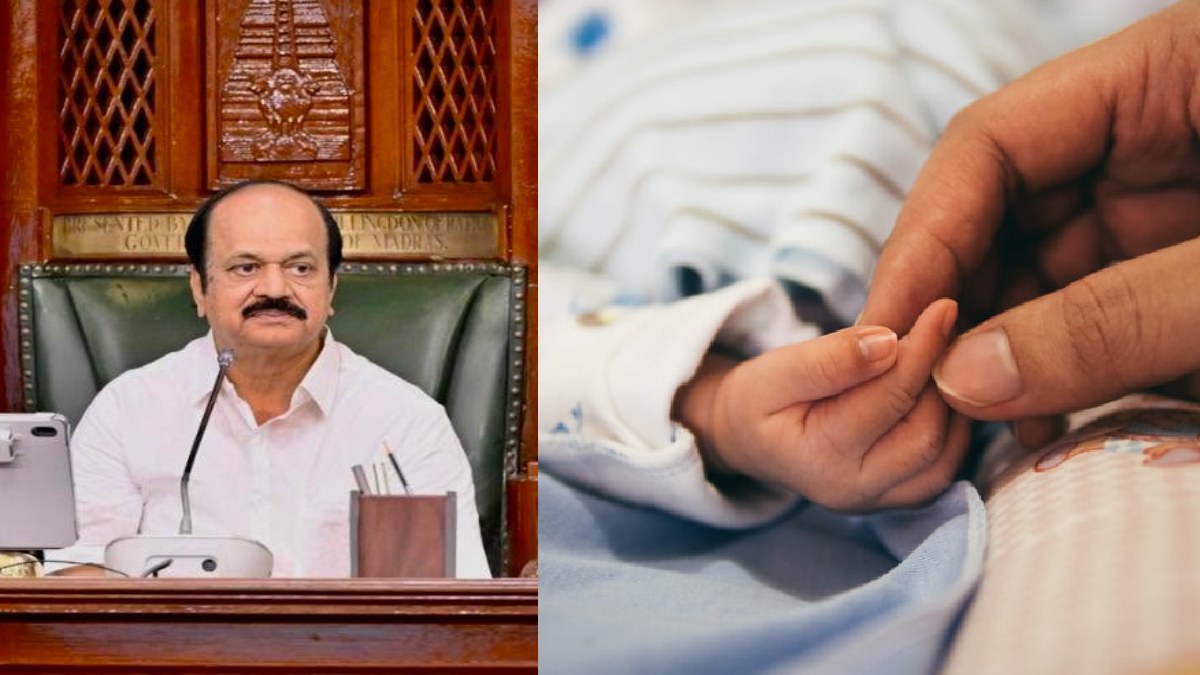
The presence of Tamil Nadu Assembly Speaker JCD Prabhakar at an anti-abortion rally in Chennai has triggered a political and social controversy, as women's rights activists and political opponents oppose his appearance at the event and his comments on abortion. This comes after he was the chief guest at the 5th National March for Life organized by Archdiocese of Madras-Mylapore on August 8 and 9.
The gathering, held at Stella Maris College in Chennai, was estimated to have attracted more than 5,000 people who are champions of unborn life and those wanting to oppose abortion. The event also raised questions over India’s Medical Termination of Pregnancy (MTP) Act, which is the legal framework in which abortion is performed in the country.
Prabhakar also expressed views associated with the anti-abortion movement, among them, the statement that “life begins at conception,” he said. He also spoke about the dignity of unborn children and described children as blessings from God.
"Every unborn child has dignity. I see this event as an expression of it. All children are God's blessings. No one should have any intention of thinking about any of them. The idea of pro-life is not only about one child,” Prabhakar said.
His participation drew criticism because the Speaker of a state legislative assembly has a constitutional function to keep political neutrality and preserve democratic institutions. Critics said that it could be seen as a sign of support for a particular religious or ideological position of the Speaker at an abortion rights event.
Women's rights activist Shalin Maria Lawrence strongly criticised Prabhakar's participation and questioned whether Tamil Nadu Chief Minister MK Stalin was aware of the rally's point of view. In a post on X, she claimed that abortion rights and women's reproductive autonomy are protected under India's constitutional framework and questioned the Speaker's decision to associate himself with a campaign opposing abortion.
The controversy is also being criticized by political rivals. BJP leader Narayanan Thirupathy called Prabhakar’s participation “controversial,” pointing out that slogans raised during the procession declared abortion as murder and called for opposition to existing abortion laws.
Thirupathy argued that abortion is legal in India under certain circumstances and said the Assembly Speaker taking part in a procession opposing abortion law and women’s rights was inappropriate. His comments added a political dimension to an already heated debate around reproductive rights.
At the center of the controversy is India's legal framework on abortion. Abortion is legal in India under the Medical Termination of Pregnancy Act as well as many subsequent amendments and regulations for certain reasons and under certain gestational limits. It has changed in recent years so that it is more available and a woman’s health and mental health, fetal abnormalities, rape and other situations can be recognised.
In fact, the Supreme Court has also acknowledged reproductive autonomy as a fundamental aspect of a woman’s right to privacy, dignity and personal liberty under Article 21 of the Constitution. In its landmark 2022 judgment in *X v. Principal Secretary, Health and Family Welfare Department, Government of NCT of Delhi*, the court recognised reproductive choice as a key aspect of individual liberty and that access to reproductive healthcare cannot be restricted on discriminatory grounds.
That is why the issue is especially sensitive because the pro-life movement and reproductive-rights advocates view abortion from fundamentally different perspectives. Anti-abortion groups care about protecting and defending unborn life, while reproductive-rights advocates are on the side of women’s bodily autonomy, healthcare access, privacy and the right to make decisions about pregnancy.
Tamil Nadu Health Minister KG Arunraj tried to stop the controversy from spreading, saying he was not aware of the exact context in which Prabhakar voiced his views. Abortion is regulated in India by the MTP Act and medical professionals might consider abortion a necessary medical intervention in some cases, he said.
"Abortion is regulated through the Medical Termination of Pregnancy (MTP) Act," the minister said when explaining the government's legal and medical position.
He also noted that, under current law, women can get abortions within certain gestational limits and under specific conditions. Abortion can be a definitive medical necessity in the medical field depending on the circumstances, the minister said.
When asked about the constitutional and political implications of the Speaker’s reported remarks, Arunraj seemed to distance the government’s health policy from Prabhakar’s comments. He said he did not know the context in which the Speaker had made the statements and urged people not to misunderstand them.
The controversy highlights the continuing debate in India over abortion, reproductive healthcare and the balance between individual autonomy, medical necessity and competing moral or religious beliefs. While freedom of expression allows individuals and organisations to campaign for changes in abortion policy, questions can arise when constitutional officeholders publicly participate in events advocating a particular position on a contentious legal and social issue.
For now, the episode has put JCD Prabhakar’s position and words on the line, and activists and political leaders want more clarity on whether he was acting as a sign of his own belief in abortion or to support the anti-abortion campaign. The debate is likely to continue as India grapples with questions surrounding reproductive rights, women’s autonomy and the legal protections governing abortion.