Last week, a heatwave that has raged across much of Telangana killed at least 16 people over the past few days as temperatures in the state have still shot through the roof.
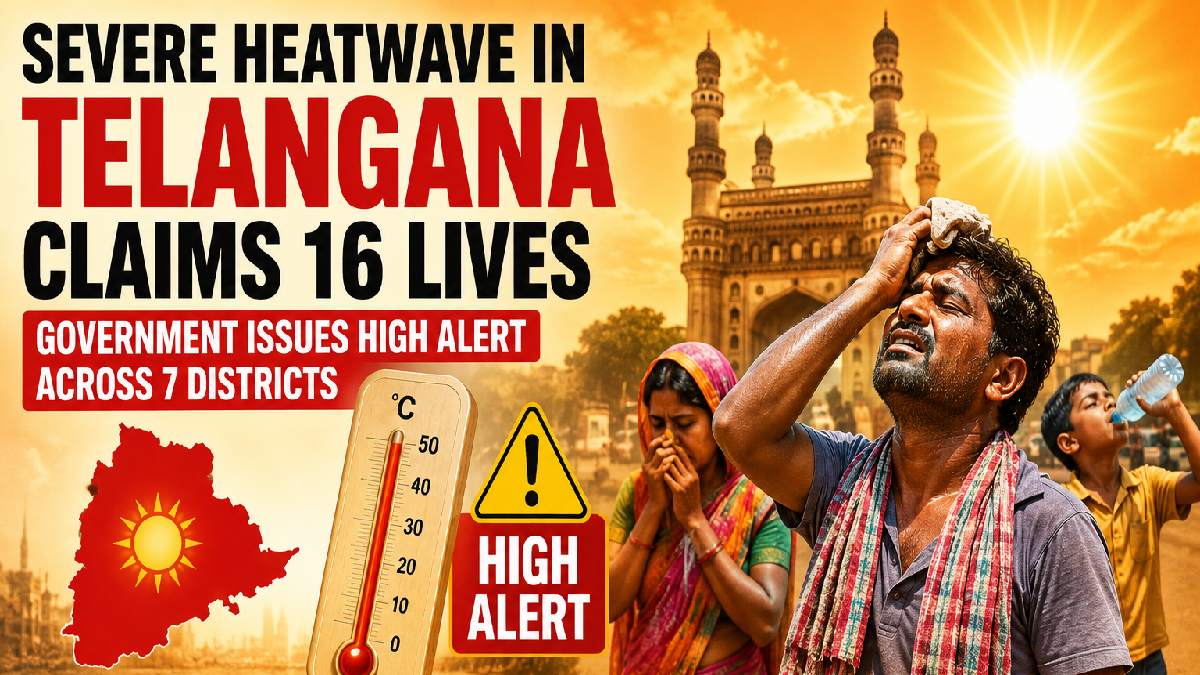
The deaths are reported to be from seven districts, while at this moment they are on an alert and in need of emergency response, the state government said. Ponguleti Srinivasa Reddy, a member of the Secretariat of Hyderabad, shared shocking news at the disaster review meeting.
According to the report, four deaths in the Jayashankar Bhupalpally district were registered, while three in Warangal Urban, Karimnagar and Nizamabad were recorded, district officials said. Jogulamba Gadwal, Rangareddy and Suryapet districts had one death each reported.
The Government also ordered the immediate compensation of Rs 4 lakh per person for the families of the victims who died from heatstroke based on the orders of Chief Minister Anumula Revanth Reddy at the time.
However, the India Meteorological Department (IMD) has shown that the heatwave is extended to May 26 due to the effect of El Niño. Hyderabad and the districts Karimnagar, Peddapalli, Mulugu, Khammam, Nalgonda and Mahabubnagar are on high alert and will be on alert for the next three days.

Among officials who recommend prioritising public safety and availability of essential heat-relief measures as it relates to the state throughout the year are the following. The government has ordered officials to provide cold drinking water, buttermilk and ORS packets on bus stands, marketplaces and factories where workers work.
Warnings have also occurred for at-risk groups such as elderly people, pregnant women, children and people with health issues. You have been warned not to get outside (unless necessary, between 11 am and 4 pm). Village and local bodies have also been ordered to establish drinking water facilities for birds and animals.
The heat is also putting animals and humans living in the areas at risk. The periodic heatwave will dramatically disrupt daily life in sections of Telangana, as health departments and community heads will be at war during emergencies. Experts recommend people stay hydrated, avoid too much sunlight and to see a doctor if they develop symptoms of heatstroke.