Tamil Nadu Chief Minister Thalapathy Vijay has announced a big expansion of maternity leave for women employees, as the third child would get a benefit of 12 weeks to 365 days. It’s an important change in maternity support that women working have to go through for recovery and childcare after birth.
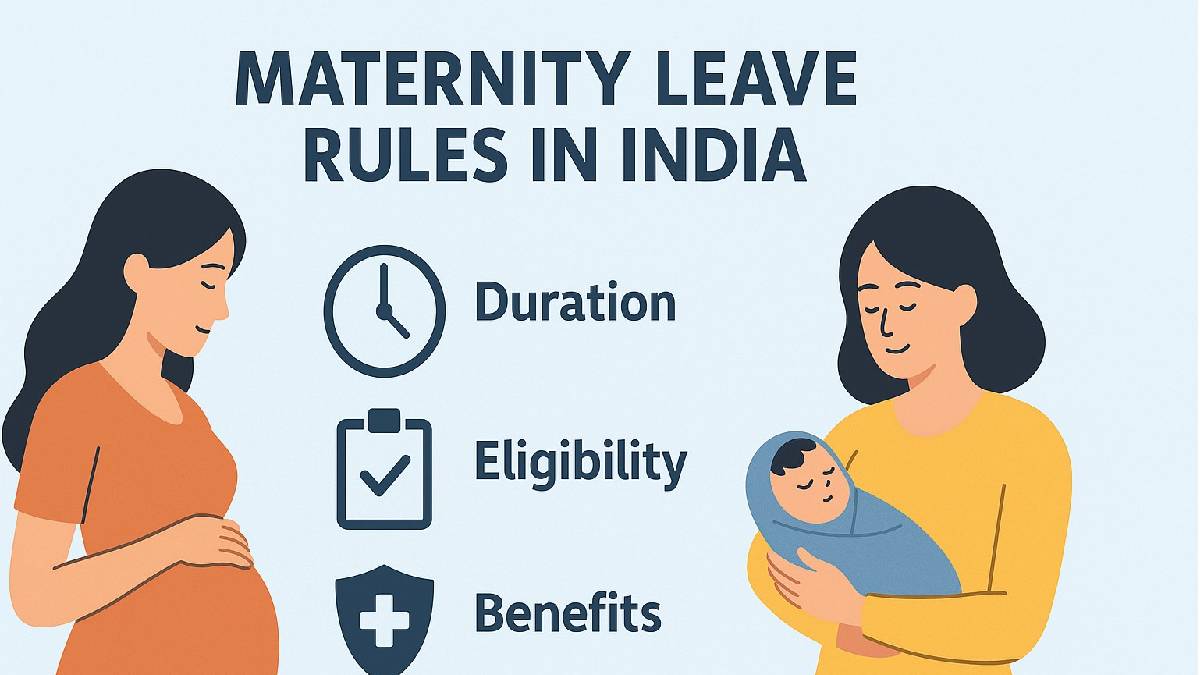
Under the plan, maternity leave for the third child would be increased from 12 weeks to a full year. It is billed as an attempt to better support women balancing work, motherhood and family responsibilities.
Maternity leave is intended to give women a period of time to recover physically after delivery as well as to give them the time to care for their newborns in the early stages. The longer it takes for a mother to develop a routine, manage childcare, and return to work, the more pressure that will be on her after she delivers.
The proposed expansion from 12 weeks to 365 days is a big step in the span of time for women who are eligible to work. The 12 weeks is equivalent to 84 days, so in the case of 365 days, the benefit would be 4 times more; that is to say, more than four times as much leave.
The announcement could also be the topic of a policy debate in Tamil Nadu, particularly regarding workplace welfare and support for women employees. Maternity benefits are now a staple in employment policy, and governments and organisations are trying to increase women’s participation in the labour market in a way that does not take away from families’ work.
The third-child provision is especially significant because maternity policy in many employment systems has historically differentiated benefits based on the number of children. Extending a full year's leave to the third child would represent a wider approach to maternity support, subject to the final rules and eligibility conditions issued by the government.
For women employees, the additional leave will provide more time for flexibility in pregnancy and the period after pregnancy and after delivery. The first year of a child’s life is a very important time to be concerned with caregiving and can entail feeding and medical appointments and vaccines and the basic needs of babies’ health care. A longer leave period, however, might allow for motherly involvement during this phase.
The proposed policy might also affect families where both parents are working. Childcare for a newborn can be very busy and expensive, especially for families that do not have extended family members close to them. More maternity leave might alleviate some of the immediate pressures of getting back into work.
From an administrative point of view, implementing such a policy would entail clear guidelines. The government would need to identify who would be eligible, the documentation required, how the leave can be applied for, and whether any conditions apply to the 365 days. Formal government orders and service rules would ultimately determine how the announcement is implemented.
That will also be the kind of discussion about gender equality in the workplace. Longer maternity leave proponents say that good maternity protection will help women stay connected with their careers and leave them enough time to cope with childbirth and early childcare. Where possible, criticism could be about implementation costs, staff availability and whether or not long leave is going to make women’s job prospects worse.
For the government, the challenge will be balancing employee welfare with administrative continuity. Departments and public institutions would need to plan staffing arrangements so that extended maternity leave does not disrupt essential services. At the same time, adequate maternity protection is an important component of employee welfare.
The news has thus put the 12-weeks-to-365-days change at the centre of attention. The proposed move would be more than a small change in maternity leave for the third child.
The announcement and the final implementation framework are not necessarily the same thing. The exact details will be decided on the basis of the official government order, service rules and eligibility criteria. Until this is clear to the employees and public, we need to wait for clarification on how the proposed benefit will operate.
But the expansion in maternity leave could become a meaningful policy initiative in Tamil Nadu. From 12 weeks to 365 days, it would give women much more time after the delivery to recover and to care for their child.
It is the announcement that is part of the larger picture when it comes to women not having to choose between their professional and family interests. If it’s administered well, the longer paid leave will give working mothers more security and flexibility during one of the most demanding periods of family life.
As details come out, we will be more interested in the formal government notification, eligibility criteria, and the specific implementation mechanism. But for now, the 365-day maternity leave for the third child is a huge change from the 12-week maternity leave and is likely to remain a key topic for women's welfare and workplace policy in Tamil Nadu.