Shashi Tharoor has hailed the Indian government’s response to youth-led protests as flexible and responsive to public demands. At an NDTV event, Tharoor compared the experience of India to youth uprisings in other South Asian countries and said the Indian political system had a capability to respond to the pressures of public pressure.
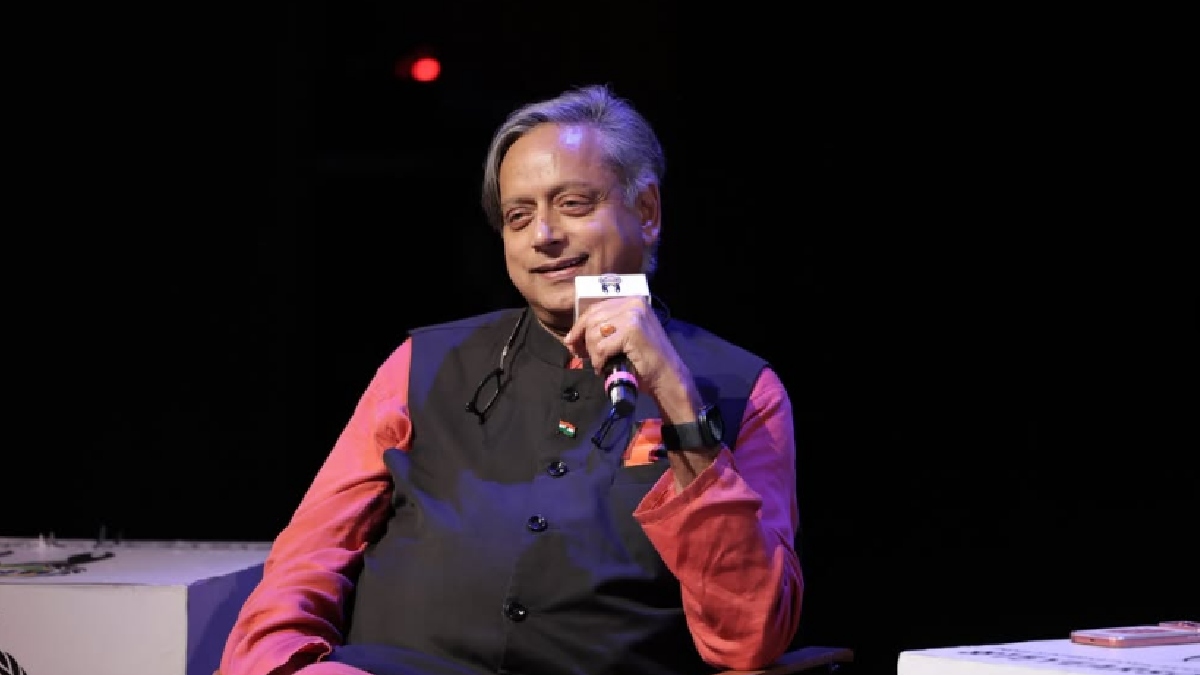
Tharoor said the response to the student protests showed that India’s democratic institutions could respond to changing public sentiment without breaking down. Praising the government’s decision to accept a major resignation after the protests, he described the situation by saying that the “system bent but didn’t break.”
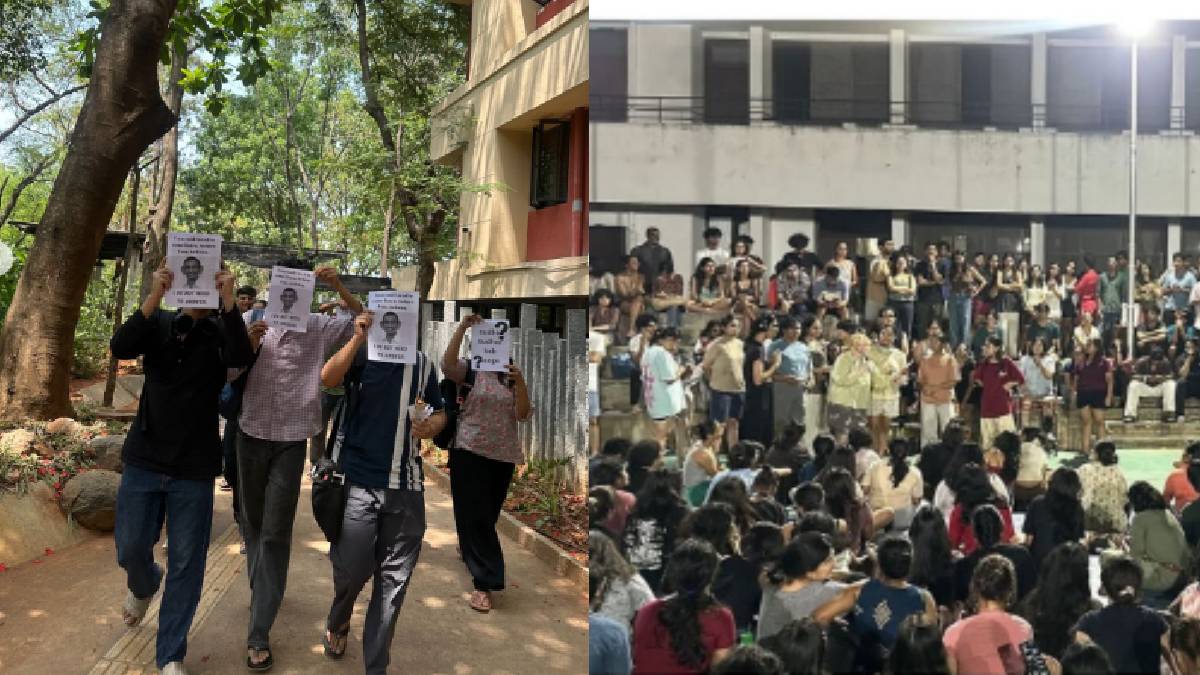
His comments came at the same time that there were protests over the NEET-UG paper leak issue and demands for the government to be held accountable. The protests attracted considerable political attention and students and opposition parties called for action over examination irregularities and the entire education system as a whole.
Tharoor used the Indian experience to make a larger comparison with youth movements in South Asia. He discussed trends in Myanmar, Sri Lanka, Pakistan, Bangladesh, Nepal and India, saying that young people in these countries increasingly took to the streets to express frustration with governments and political institutions.
Tharoor said the outcomes of these protests were different owing to the political structures and governing systems in each country. The response of governments to public anger was key to whether political institutions survived, changed or collapsed under pressure.
Tharoor said that youth-led movements had forced political leaders to relinquish power in Bangladesh and Sri Lanka. Nepal too saw a change in government, but the political system was still there. These changes, he said, were very different from those in Pakistan and Myanmar in which the military had a more direct role in determining the political outcome.
Tharoor argued that India’s experience was different because the democratic system was capable of correcting itself. He described the mechanism as “self-correcting” and said the system adapted to a new political reality with what he called “astonishing speed.”
The Congress leader also highlighted the political significance of a government responding to demands for accountability. Opposition parties had repeatedly approached senior officials for resignations in the past and received little support, he said. And because of the recent student demonstrations, public pressure could force the political establishment to respond, he said.
Tharoor did not directly mention the former Union Education Minister Dharmendra Pradhan but cited the resignation as evidence the political system has taken steps to address the situation. It is a democracy that can understand public sentiment and adjust accordingly and that’s an important strength of the Indian system, he said.
Tharoor said that the Indian example inspired him as an opposition leader. India’s democracy was still flexible and responsive to popular movements, he said, at a time when young people are more and more using protests and online platforms to express their concerns.
A Congress MP also mentioned that his party had struggled to connect with the concerns of Gen Z. He reflected earlier this month on the Congress’s student outreach programme ‘Chhatron Ki Goonj’ which had been focused on issues like examination paper leaks. Tharoor admitted the campaign didn’t have the same resonance as the recent youth-led protests.
He wondered if the Congress had not listened to younger voters or understood their concerns properly. Tharoor said the party needs to assess whether it had lost touch with the pulse of Gen Z and why the issues it had raised in the past did not get the same response as they had earlier.
The comments underscore the growing political importance of India’s younger population. Student protests over examination systems, employment, education and governance have become more and more critical signals of public sentiment. For political parties, it has to be not only to identify these but also to communicate with young people in a manner that matches their expectations.
Tharoor’s comments ultimately illustrated India’s response to the protests as an example of democratic adaptability. Although political differences between countries in South Asia were acknowledged, he said India’s institutions had adapted to the public pressure, made adjustments and continued operating without a breakdown of the wider democratic paradigm.