A video of a tourist questioning security restrictions on a road in Ladakh’s Minimarg area has set off a heated debate online, and social media users largely support the security forces and object to what they called an inappropriate response to restrictions in a sensitive border region. A similar debate on tourism, public convenience, and security has also revived in the area in which the border is located as well as the security of strategically critical frontiers.
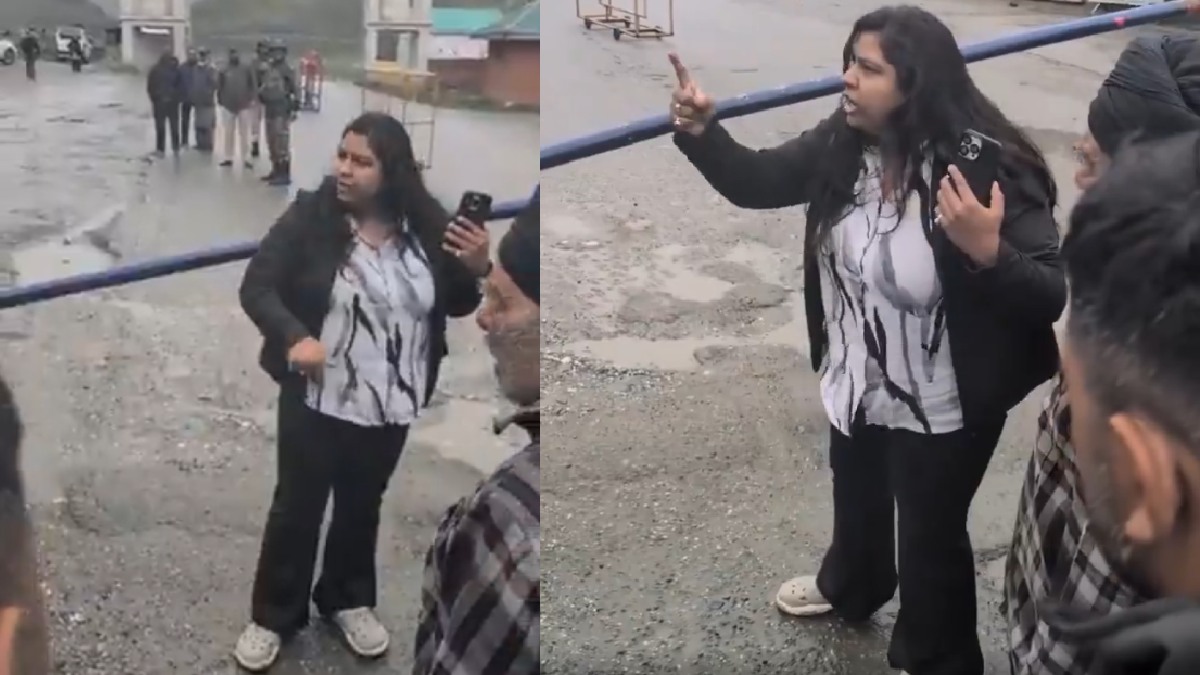
But in the video, you can hear the woman objecting to the closure or restriction of access to a road and asking why tourists were being inconvenienced by security measures. The restrictions imposed on tourists and problems that many people in Kashmir have faced over the years because of security-related measures that she says she compared to what the people in Kashmir have been facing. She soon gained attention on social media, where users were divided in their views about the incident.
A great deal of the online criticism focused on the location. Minimarg and neighboring areas of the Ladakh region are strategically sensitive due to their proximity to the Line of Control and other high-security zones. In these areas, roads, valleys, and other locations can be restricted depending on operational needs, weather, intelligence inputs, and the security situation.
Visitors should understand, those social media users said, that tourism doesn’t automatically override security protocols. They stressed restrictions imposed by the Army or other security agencies are often to protect military forces, but also civilians, particularly those who are not familiar with border areas and tourists who may not be familiar with the risks.
The debate takes place at a time of increased security challenges in Jammu and Kashmir after recent terrorist attacks. The April 2025 Pahalgam terrorist attack, which killed 26 people, had a particularly negative effect on the tourism scene in the area.
So the online response to the Minimarg video was very much shaped by this broader security context. And there were people who defended the Army, saying temporary road closures or restrictions shouldn’t be seen as an inconvenience. They said security personnel working in challenging terrain and close to sensitive borders have responsibilities that can entail access controls, diversions, and movement restrictions.
Some commenters also derided the woman’s reference to being part of “Gen Z,” arguing that generational identity has little relevance when security personnel are operating. Meanwhile, tourists are encouraged to be respectful of soldiers and security personnel when in areas where there may be restrictions based on information not available to the public.
At the same time, the controversy highlights an important issue concerning communication between tourists and security agencies. Visitors may not always know why a particular road has suddenly been closed or why access to a location has been restricted.
Clear communication from authorities can help avoid confusion and prevent confrontations. Meanwhile, tourists traveling to sensitive border regions have a responsibility to familiarize themselves with local rules and comply with instructions issued by authorized personnel.
Ladakh has become one of India’s most popular tourist destinations, and many people visit this area because of its mountainous landscapes and culture of people and things. But it is also a very strategic place. Tourist roads that appear to be ordinary travel routes may have military, logistical, or security value.
The viral video has made the conversation of responsible tourism, national security, and the difficulty of visiting the most dangerous border places a lot more than a dispute over a closed road. If you’re a tourist, we all want the most convenience and the least inconvenience, but security measures in public areas are often necessary and can change without notice.
If Army had closed the road, they must have had a reason. Instead of understanding the situation, she is shouting at the armed forces.
— Incognito (@Incognito_qfs) August 19, 2026
She said, these people lock Kashmiris and now doing the same with us tourists. I hope she gets a little famous and regret this moment.
These…
The episode is, after all, a reminder that traveling through border regions requires a different level of awareness and discipline. Security personnel in remote and difficult places work in conditions that tourists may not fully see. Following official instructions, avoiding confrontations, and staying in line with security measures can guarantee safer travel for everyone while allowing the tourism sector in the region to continue to be responsible.