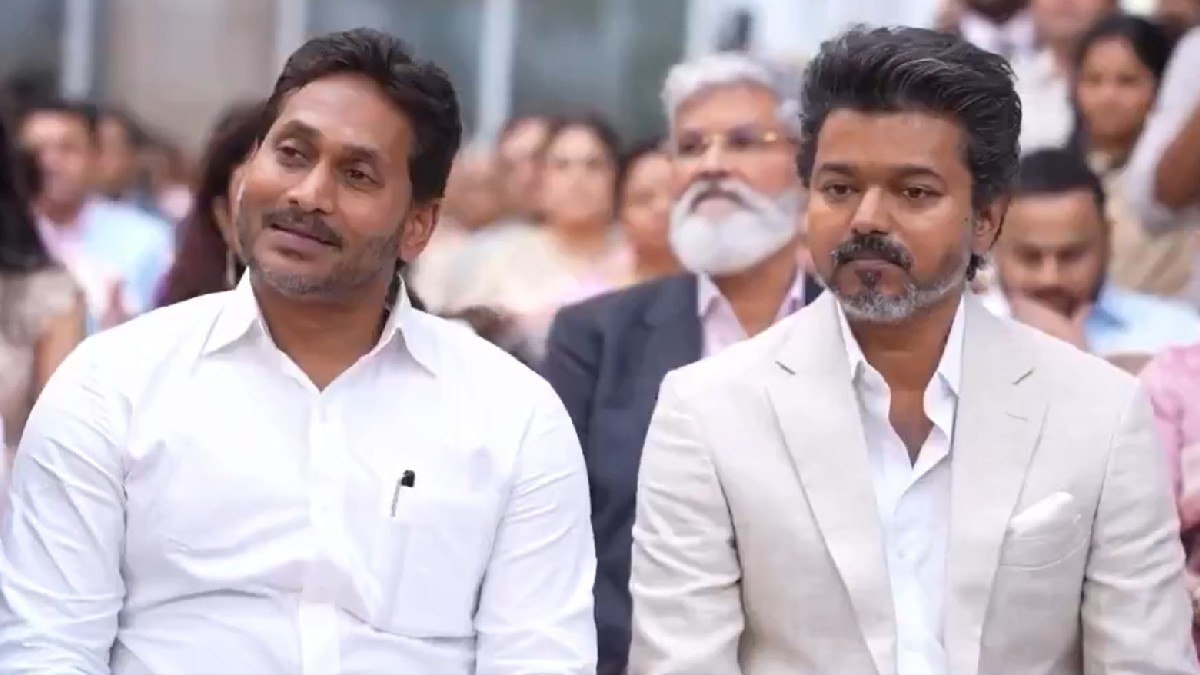
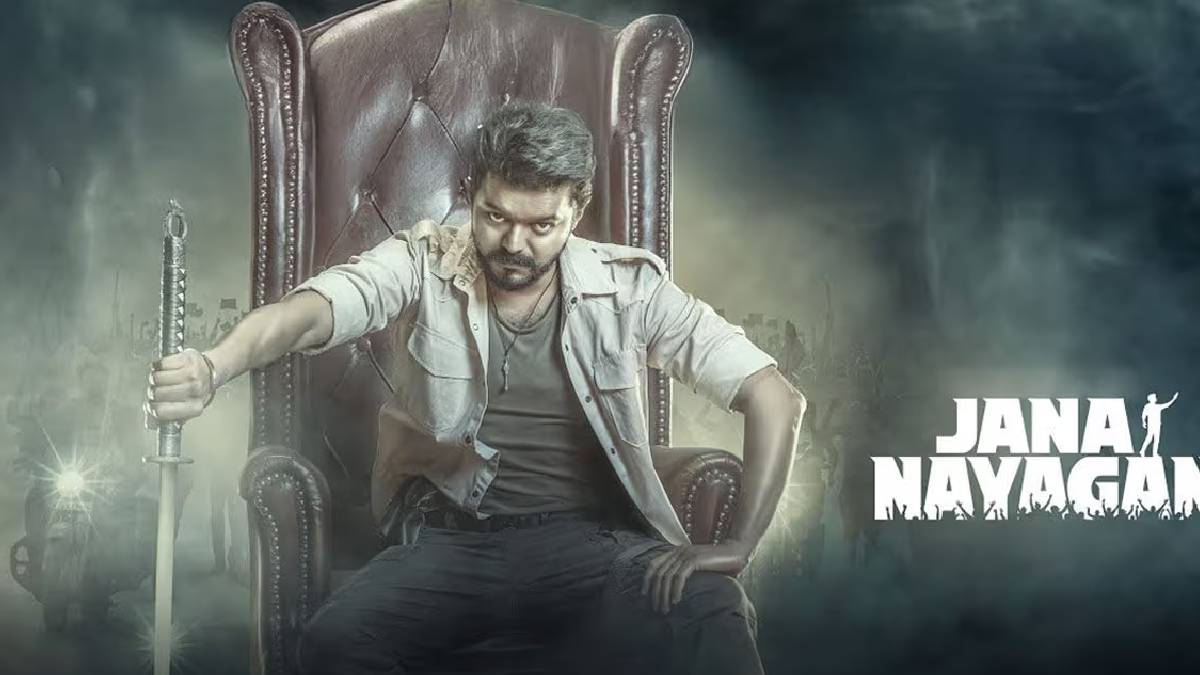
The ascent of actor-turned-politician Vijay to the level of Chief Minister of Tamil Nadu prompted not only discussions about his career, but also his way of working. Vijay is no longer a leader with an overly decorated, ritualistic demeanor and endless hours of dirty hand-wringing, like a typical Chief Minister—and his approach is often likened to one of the discipline and simplicity of government officials.
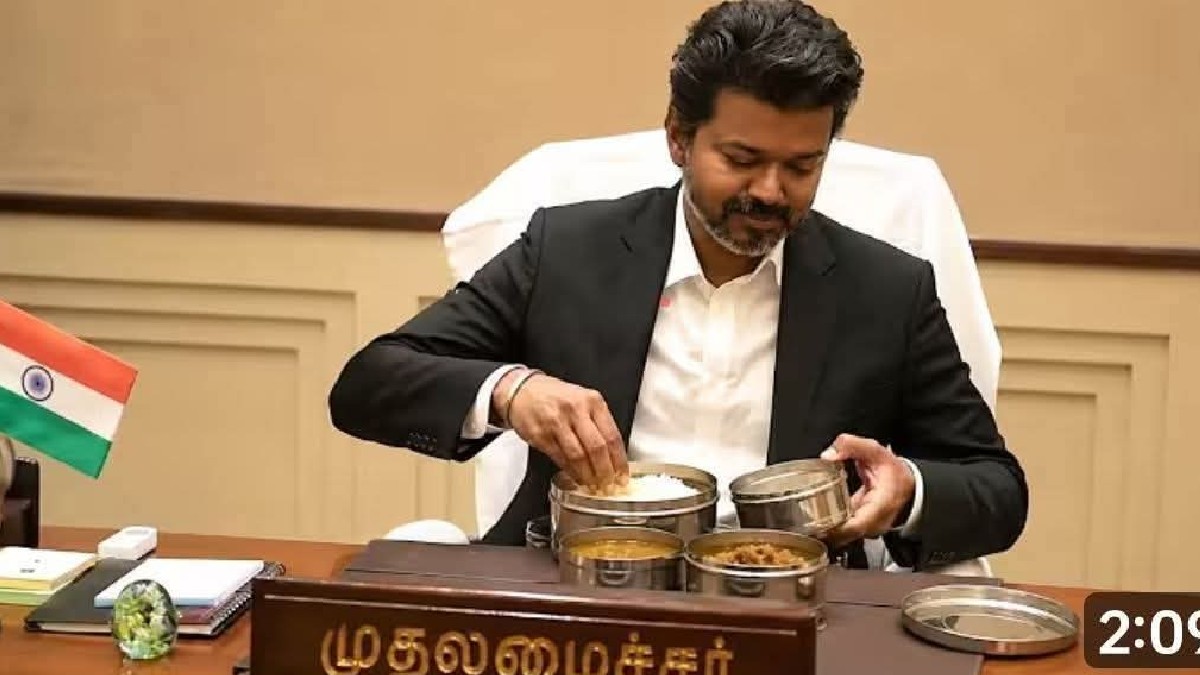
Reports and anecdotes shine a light on a routine that appears eerily ordinary but that holds great symbolic weight. Vijay reportedly gets to the Secretariat at the ten o’clock mark, bringing his lunch from home.
He eats it right there in the office, without elaborate arrangements or ceremonial meals, before resuming his work. By four in the evening he returns home, his work schedule echoing that of so many government employees throughout the state.
That daily behavior demonstrates humility, and groundedness. It indicates that leadership isn’t about overthe-top things, it’s about accountability. Vijay has the mentality of a civil servant, operating in a regimented working environment, working with files, making decisions and going about governance as opposed to performing. He takes the view that the Chief Minister is not a throne of privilege, but one of duty.
And to bring lunch from home is an especially strong symbolism. It symbolizes self-sufficiency, thrift, and a rejection of unnecessary luxury. Eating at the Secretariat alongside staff strengthens that message: governance is service, not self-indulgence. Going home at four in the evening adds to this feeling that the office is a work site, not a display in need of spectacle.

For people of Tamil Nadu, this depiction of Vijay is one they really relate to. In a political environment which has too often featured personality cults and big showboating, his simplicity feels somehow refreshingly ordinary. It’s a reminder to citizens that leadership can be about quiet efficiency versus spectacle.
Vijay’s manner of working as Chief Minister indeed stands for the values of humility, discipline and dedication. It’s an object lesson in how service is about constant presence, a consistent, unchanging service to the people we serve, and a reminder that a leader can serve the people best if he or she acts just like them — with steady feet, in real belief and without an act of pretension.