Baranika Elangovan wrote a new chapter in Indian athletics at the Asian Games when she became the first Indian athlete to win a medal in pole vault at the continental sport. Her historic bronze came after a dramatic competition in which she cleared 4.15 metres and eventually shared third place with Kazakhstan's Polina Ivanova.
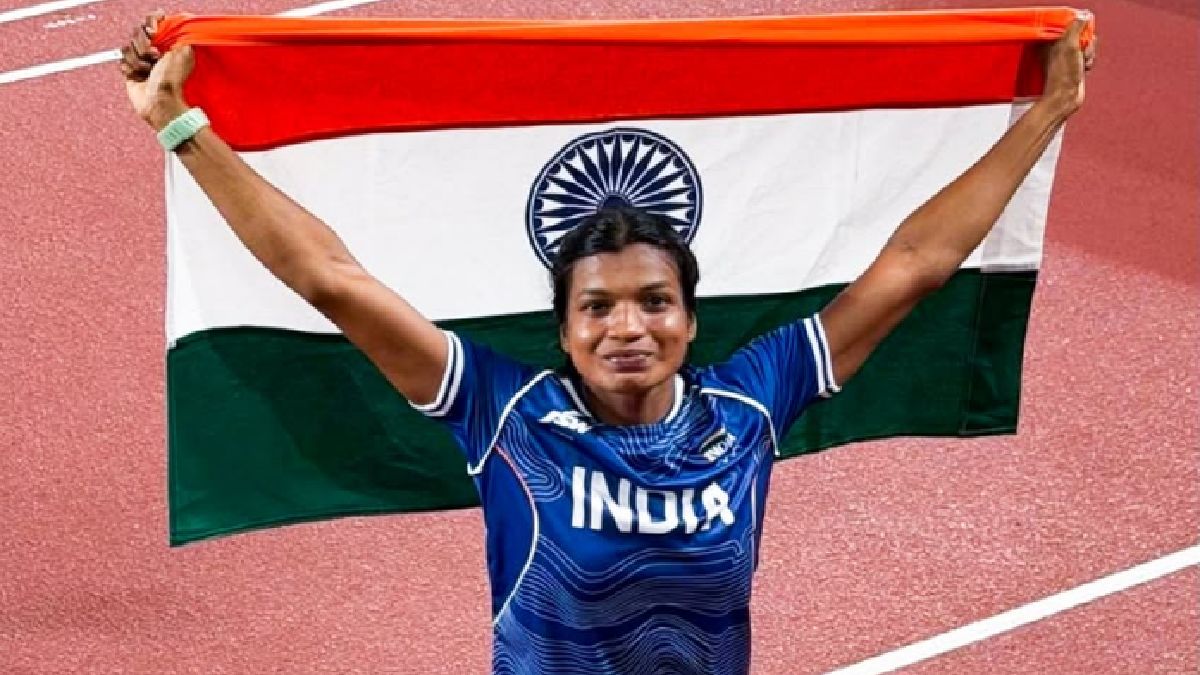
The achievement was especially significant for Elangovan because pole vault was not the sport she had intended to take. Speaking of her historic performance, the Indian athlete spoke of the unconventional path she took to enter the sport and how she had little idea that pole vault would eventually lead her to an international medal.
Elangovan said she competed at school in various sports. Her sport background was 100m, 200m, long jump and triple jump. She had already had a good career in college, however, and she was really into triple jump and wanted a coach who could help her continue to improve.
Instead, her college physical director suggested that she try basketball. Elangovan spent her first two years in college concentrating on the sport. But she continued to be interested in triple jump and kept asking for a good coach.
Her search changed the direction of her sporting career. She was introduced to the possibility of meeting a pole vault coach who was looking for athletes from the college. Elangovan had no intention of taking up the event.
It’s true that she only went to the stadium to tell the coach that she wasn’t interested in pole vault. The discipline was totally foreign to her and she admitted that she wondered how an athlete could run while carrying a pole and then use it to clear a considerable height.
Her view changed when she watched the event closely at the stadium. A senior athlete was attempting a five-metre jump at the time, and the performance immediately impressed her. Not wanting to go away, Elangovan decided to try pole vault.
What began as an experiment turned into a career-changing experience. Elangovan said she did not enter the event with the aim of winning national or international medals. She initially came to pole vault just because she wanted to try something different.
Her coach Melberg was a great influence on her approach to the sport. Elangovan recalled how he taught discipline and routine when she started training. The guidance and mental preparation she received then made her a competitive pole vaulter.
The historic Asian Games final was another memorable one. Elangovan cleared 4.15m, and Kazakhstan's Polina Ivanova also cleared the same height. Neither athlete was able to go over 4.15m. The number of failed attempts in the competition would determine the ranking and the two athletes decided not to tie the tie-break and share the bronze medal.
For Elangovan, it was after the competition had ended that she realized she had won an Asian Games medal. She said her goal before entering the pole vault arena was to get a personal best. She had been more concerned with improving herself than a medal.
The bronze she got instead was very much unexpected. One of her fellow athletes told her that she won a medal but Elangovan initially didn’t believe it. She checked the results over and over again until finally she realized she had secured a historic place on the Asian Games podium.
The medal is of great personal significance to the Indian athlete. Elangovan dedicated it to her coach Melberg for supporting her during the difficult times and the high points of her career.
Elangovan said that her coach always reminded her that she had more potential and that she could achieve much more. She was guided by his encouragement and mental preparation.
From competing in school athletics events to two years playing basketball and finally to finding pole vault almost by accident, Elangovan's path to the Asian Games podium has been anything but conventional. And her bronze medal now gives Indian athletics a new mark in women's pole vault and a new name in the list of Asian Games medalists.