
Argentina’s 3-1 victory in the quarter-finals of the FIFA World Cup 2026 has triggered one of the biggest refereeing controversies of the tournament, with a little-known FIFA law at the centre of the picture after the Swiss striker Breel Embolo was sent off after a VAR review.
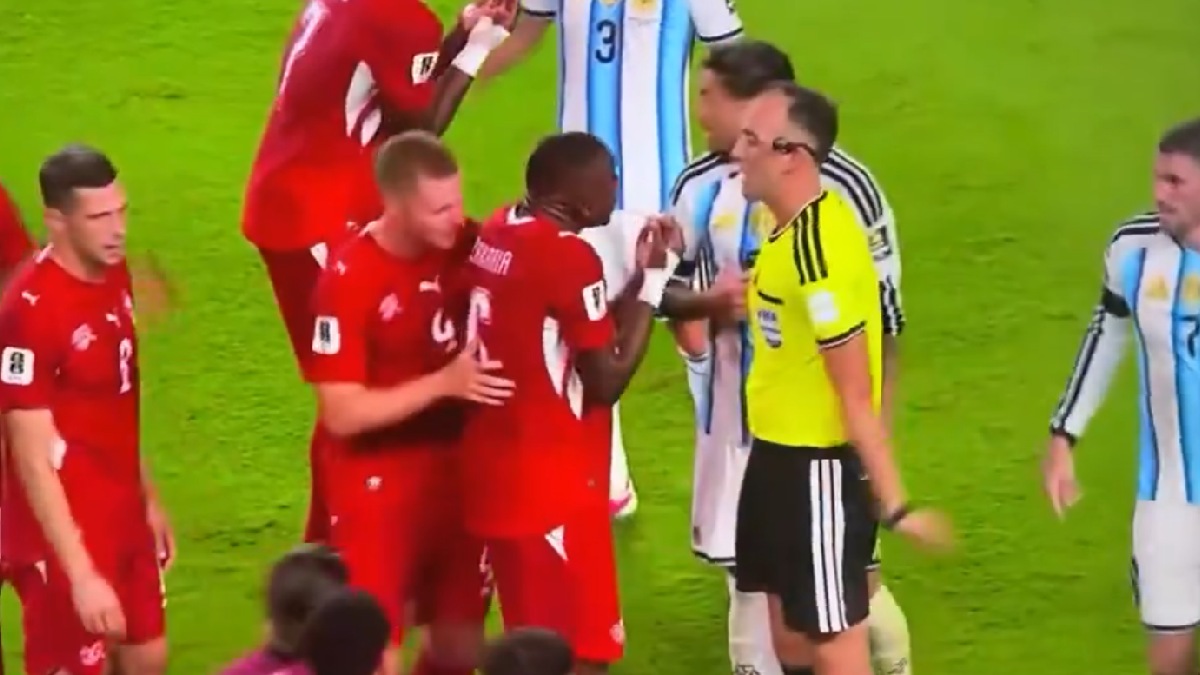
Lionel Messi's Argentina had a place in the semi-finals but much of the post-match discussion centered around Embolo's dismissal and the legal aspect of VAR being used to influence the match beyond the purpose of the refereeing.
What happened?
The incident occurred during a tense second half after Switzerland had equalised through Dan Ndoye in the 67th minute and appeared to be building momentum.

During an attacking move, the referee initially believed Argentina midfielder Leandro Paredes had committed a foul and showed him a yellow card.
However, the VAR suggested that an on-field review be made.
After watching the replay, the referee concluded that Paredes had not fouled Embolo. He instead found that the Swiss striker had simulated contact in an attempt to win a free-kick.

Usually, the yellow card given to Paredes would be canceled. But at the time of FIFA’s new IFAB ‘Mistaken Identity’ rule, that was not the case.
Why was Embolo booked instead?
Under the laws of the game, if the referee sees an offence correctly but mistakenly punishes the wrong player, then the disciplinary sanction cannot simply disappear.
This is not enough; a yellow or red card should be given to the player who actually committed the offence.
The law states:
If the referee has shown a yellow or red card but has clearly penalised the wrong player of either team for the offence in question; the offence itself cannot be reviewed except in the context of mistaken identity.
When the referee concluded Embolo had committed simulation, the yellow card initially shown to Paredes was reassigned to the Swiss striker.
Unfortunately for Switzerland, Embolo had already been booked earlier in the match, so the transferred caution was his second yellow card and resulted in an automatic red card.
What is the point of the rule?
The decision has reignited the debate on the growing influence of VAR.
In theory, VAR is only designed to correct “clear and obvious errors” involving goals, penalties, direct red cards, or mistaken identity.
In this instance, opponents of the decision believe officials have thoroughly reviewed an ordinary yellow card offence by using the mistaken identity provision, and there is no ambiguity over which player was involved.
However, the supporters of the decision say that when the referee decided the offence was simulation rather than a foul, the law required the caution to be issued to the correct player.
Switzerland Furious After Elimination
Switzerland head coach Murat Yakin did not hide his frustration after the match.
"We were punished because of a rule that in my opinion is completely unacceptable," Yakin said.
The Swiss manager said the players were more deserving of more after their fightback against the defending champions.
It’s really painful that we were eliminated that way. I don’t think we deserve that today, and in my opinion, my boys are the real heroes.
Yakin also questioned both the referee’s interpretation of the incident and the rule itself.
"The referee made the wrong decision. It was, in my opinion, a harmless foul, if it even was a foul. I know that they will protect their referee, but this rule destroyed our game today."
Not the First Time
This is not the first time the mistaken identity regulation has had a big impact on a World Cup match in 2026. In the U.S. team's group stage match against Paraguay, defender Tim Ream's yellow card was given to Miguel Almirón after VAR confirmed the Paraguayan attacker had dived.
But because Embolo’s transferred booking resulted in a sending-off during a World Cup knockout match, the current incident has received much more attention.
Because Argentina is now through to the semi-finals, the controversy has intensified calls for FIFA and IFAB to clarify whether the current application of the mistaken identity law gives VAR too much influence over yellow-card cases. That debate will continue for some time and football’s laws need to be re-examined to make sure that they are fair and the game is still a good one.







Comments